
Quick Verdict
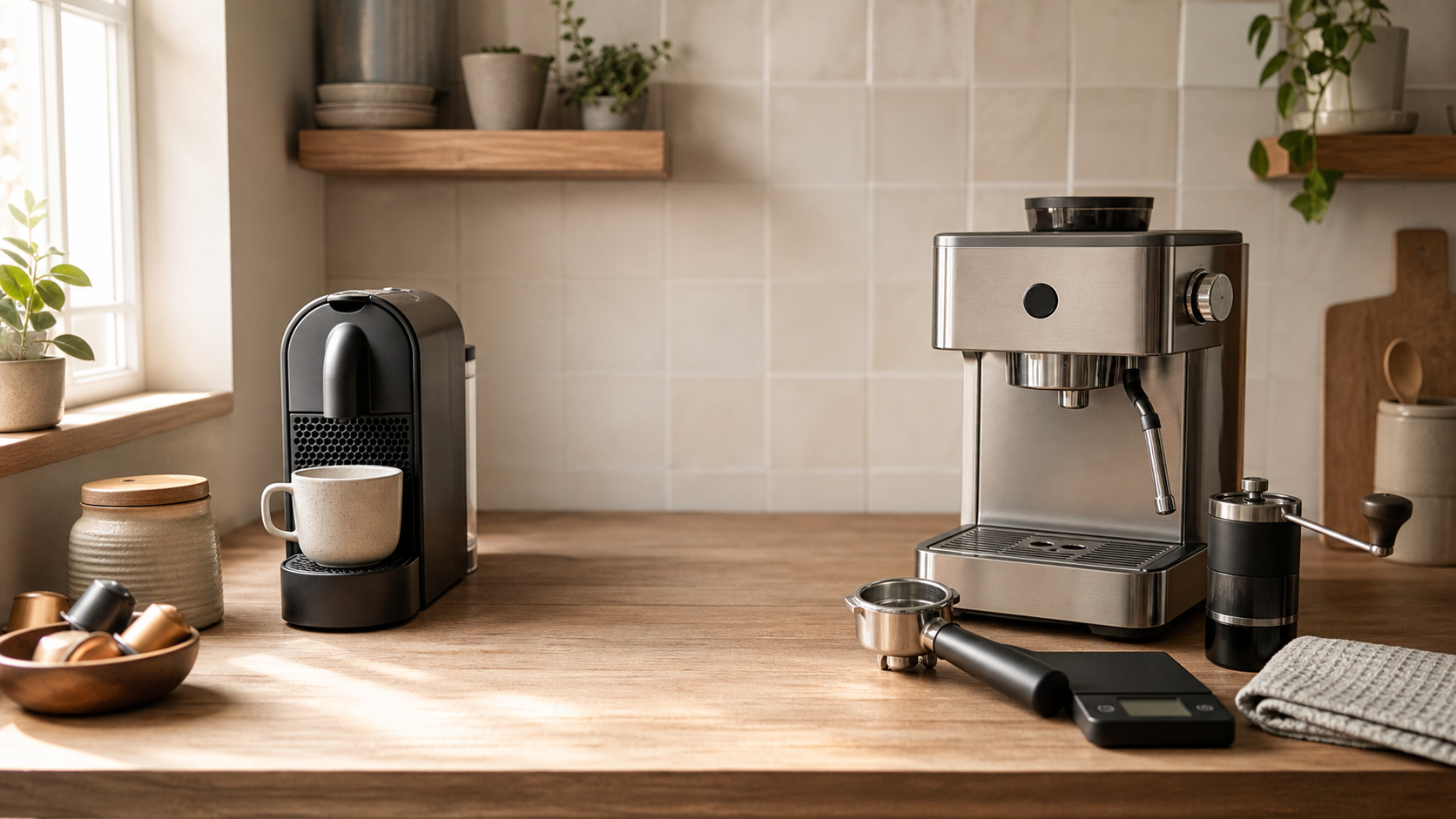
Choose a one-button coffee path if the most important thing is getting a repeatable drink with as few decisions as possible before work, school, or a busy household morning. A fully automatic machine can grind, brew, and handle a milk-drink routine in one appliance, but it is still a larger machine that needs counter space, beans, water, emptying, and cleaning.
Choose a hands-on espresso path if you are genuinely curious about using fresh coffee, adjusting a recipe, steaming milk, and accepting a short learning period. A compact semi-automatic machine can take less permanent counter width than a large all-in-one machine, but it does not make the grinder, dosing, cleanup, or practice disappear.
For a small apartment, the right answer is not “which machine makes the better coffee?” It is which routine will you still use on an ordinary Tuesday morning? Do not buy a cafe-looking machine if you mainly want a pod-like button press. Do not buy a large automatic machine only because you are nervous about learning, if you actually enjoy a small ritual and want to upgrade one piece at a time.
Apartment Barista uses Amazon affiliate links. As an Amazon Associate, this site earns from qualifying purchases. Prices, sellers, return terms, and availability can change, so check Amazon before buying.
Who This Guide Is For
This guide is for:
- pod or capsule users deciding what kind of upgrade they really want
- apartment renters with one small coffee spot, not a dedicated bar
- beginners who enjoy lattes, Americanos, or straight espresso but want fewer buying mistakes
- shared households where one person values speed and another may enjoy a more hands-on routine
This guide is not for:
- commercial, plumbed-in, or large entertaining setups
- readers looking for a promise that either path is maintenance-free
- anyone who has not measured a safe counter, outlet, water, and cleanup location
The Decision Is About Your Morning, Not the Machine Label
The phrase “espresso machine” hides two very different jobs.
A one-button or fully automatic setup makes more of the decisions inside the machine. You still choose beans and drink settings, but you do not need to weigh every dose, lock in a portafilter, or learn to change the grind for every bag before you get a drink. That can be a good fit when the household needs coffee to happen with very little attention.
A semi-automatic setup gives you more of those decisions. You fill a basket, make the shot, and use a steam wand if you want milk. That is not automatically hard, but it does reward a person who is willing to repeat a simple workflow and learn from it. Current public upgrade discussions make the same point: moving from a pod button to fresh-bean espresso is a meaningful change in effort, not a direct like-for-like replacement.
The useful question is not whether one path is morally “better.” Ask which of these sentences sounds more like you:
| If this sounds like you | Better starting direction | Be honest about |
|---|---|---|
| “I want coffee before I am fully awake.” | One-button convenience | You still need to clean milk parts, empty grounds, and keep beans and water ready. |
| “I like learning a repeatable kitchen skill.” | Hands-on semi-automatic espresso | A grinder, a scale, and a brief cleanup routine become part of the drink. |
| “Our household makes several drinks but nobody wants to tinker.” | One-button convenience | A larger all-in-one body may take over a small counter. |
| “I only make one or two drinks and want to buy gradually.” | Compact semi-automatic espresso | Learning can feel slower than pod coffee at first. |
A Five-Minute Reality Check Before You Buy
1. Count the actions you are happy to do every day
For a hands-on espresso drink, plan for grinding or measuring coffee, preparing the basket, brewing, wiping the steam wand after milk, and clearing the small work area. For a fully automatic machine, plan for refilling water and beans, emptying a drip tray and used-coffee container, and cleaning the milk system according to its manual. Neither route is “no cleanup.” The difference is where the work happens.
2. Measure the whole workflow, not just a machine body
Leave room for a cup, a portafilter handle, a small scale, a damp cloth, and access to water or waste containers. A compact semi-automatic machine may need a separate grinder beside it. A fully automatic machine combines more functions, but can be much wider or deeper as a permanent object. Read how much counter space you need for an espresso setup before relying on a product photo.
3. Decide how milk fits into your week
If you mainly drink a quick latte every morning, you may value a simple repeatable milk path more than manual control. If you enjoy learning to steam milk or only make milk drinks occasionally, a manual steam wand can be a reasonable tradeoff. Either way, set out a cloth and plan the rinse-and-wipe step; the steam-wand cleaning cloth routine explains the small daily habit that prevents a sticky counter routine.
4. Do not confuse a built-in grinder with a tiny setup
A built-in grinder means fewer separate appliances to shop for. It does not guarantee a smaller footprint, quieter use, or an easier cleaning path. Likewise, a narrow semi-automatic machine still needs a grinder plan if you want to move beyond a forgiving pre-ground workflow. The guide to starting espresso with pre-ground coffee helps you stage that decision without pretending a grinder must be bought on day one.
Two Product Roles, Not a Universal Ranking
Philips 3200 LatteGo: the button-first convenience path
Best for: A household that wants fresh-bean coffee and milk drinks with fewer manual steps.
Why it fits:
The Philips 3200 LatteGo represents the fully automatic route: the grinder, brewing workflow, and LatteGo milk system live in one appliance. It is the kind of path to consider if you would rather select a drink than measure and tamp every morning.
Good fit if:
- the people using it want a simple, repeatable drink routine
- you have a stable permanent counter location with room to access water, beans, and waste areas
- milk-drink convenience matters more to you than learning manual steaming
- you would rather clean a defined milk system than manage a portafilter and loose grounds
Skip it if:
- your counter is narrow enough that a larger all-in-one body will crowd cooking space
- you want to control each espresso variable and treat dialing in as part of the hobby
- you want the simplest possible cleaning routine; automatic does not mean no maintenance
Small-space tradeoff:
It replaces a separate grinder and espresso machine with one permanent appliance, which can simplify a shopping list. The tradeoff is that the appliance itself needs a realistic home, plus access for filling, emptying, and cleaning. In the Amazon check during this research, the listing used a third-party seller, so confirm the current seller, exact model, return terms, dimensions, included accessories, price, and availability before buying.
Breville Bambino: the compact hands-on learning path
Best for: A beginner who wants a smaller semi-automatic machine and is open to learning a short espresso routine.
Why it fits:
Current Breville materials describe the Bambino as a compact machine with both single-wall and dual-wall baskets. That makes it useful for a staged transition: a reader can begin with the more forgiving basket path, then add an espresso-capable grinder when they want to learn with fresh beans and a single-wall basket.
Good fit if:
- you can enjoy a few hands-on steps instead of expecting a pod-style button press
- you have room for a grinder now or a realistic plan to add one later
- you prefer a compact machine that leaves more choice over the rest of the setup
- you want a manual steam-wand route for occasional lattes or practice
Skip it if:
- nobody in the household wants to measure, prepare, and clean up after a shot
- you need several milk drinks with the least possible attention each morning
- you have no counter or cabinet plan for a grinder, scale, and drying cloth
Small-space tradeoff:
The machine's narrow body is helpful, but a separate-grinder setup is a small system, not one appliance. The upside is that you can choose a grinder and improve one part later. The cost is more objects, more decisions, and more daily contact with coffee grounds. Confirm the current Amazon seller, exact model, included basket and accessory details, dimensions, return policy, price, and availability before buying.
What I Would Do First
If your priority is least friction, keep the decision simple: choose a button-first path only after measuring the machine's full placement and reading the cleaning routine. Do not tell yourself you will turn it into a hobby later; buy it because easy coffee is the goal.
If your priority is learning and gradual control, choose a compact semi-automatic machine, reserve space for a grinder plan, and buy a scale before decorative accessories. Start with one repeatable recipe and change one variable at a time. You do not need a bottomless portafilter, a puck screen, or a large accessory kit to find out whether you like the routine.
If you are still split, keep your existing pod setup for weekday speed and wait before making a larger purchase. A staged upgrade is better than a counter full of equipment you avoid using. For the next decision, compare manual vs automatic espresso machines and from pod coffee to espresso in a small apartment.
Common Buying Mistakes
Buying an automatic machine because you fear every manual step
An automatic path may fit you well, but it still needs cleaning, beans, water, and a permanent location. Choose it for the workflow, not because it sounds maintenance-free.
Buying a semi-automatic machine because it looks more serious
The machine alone does not create an easy hobby. If you dislike routine measurement and cleanup, a cafe-style appearance will not make the process satisfying.
Treating a separate grinder as an optional detail
For fresh-bean semi-automatic espresso, the grinder is part of the plan. A forgiving basket can help you start gradually, but it is not a magic substitute for a grinder forever. Read is a burr grinder necessary for espresso? when you are ready to decide.
Forgetting the apartment reset
The best setup is the one you can return to a clean, usable kitchen after each drink. Plan where the cloth dries, where grounds go, and how the counter becomes food-prep space again.
FAQ
Is a fully automatic machine easier to own than a semi-automatic espresso machine?
It is usually easier to make a drink with fewer manual brewing choices, but it still needs regular water, bean, waste, and milk-system care. “Easier” should mean a routine you will actually maintain, not no work at all.
Can I start with a compact semi-automatic machine before buying a grinder?
Some machines include a more forgiving basket path for pre-ground coffee. That can be a reasonable staged start, but check the exact machine's included baskets and manual. If you later want fresh-bean, non-pressurized espresso, make room in the plan for an espresso-capable grinder.
Is a built-in grinder better for a small apartment?
It may reduce the number of separate appliances, but it does not automatically mean the whole machine fits your counter or workflow. Measure width, depth, height, access for water and beans, and the cleanup path.
What should I check on Amazon before buying either path?
Check the exact model and included accessories, dimensions, current seller, return terms, price, availability, and whether the electrical specifications fit your location. Re-measure your counter and leave room for the actions you need to do, not just the appliance body.
Disclosure
Apartment Barista uses Amazon affiliate links. As an Amazon Associate, this site earns from qualifying purchases. Product prices, sellers, bundles, and availability can change. Confirm the current listing and your own small-kitchen fit plan before buying.