
Quick Verdict
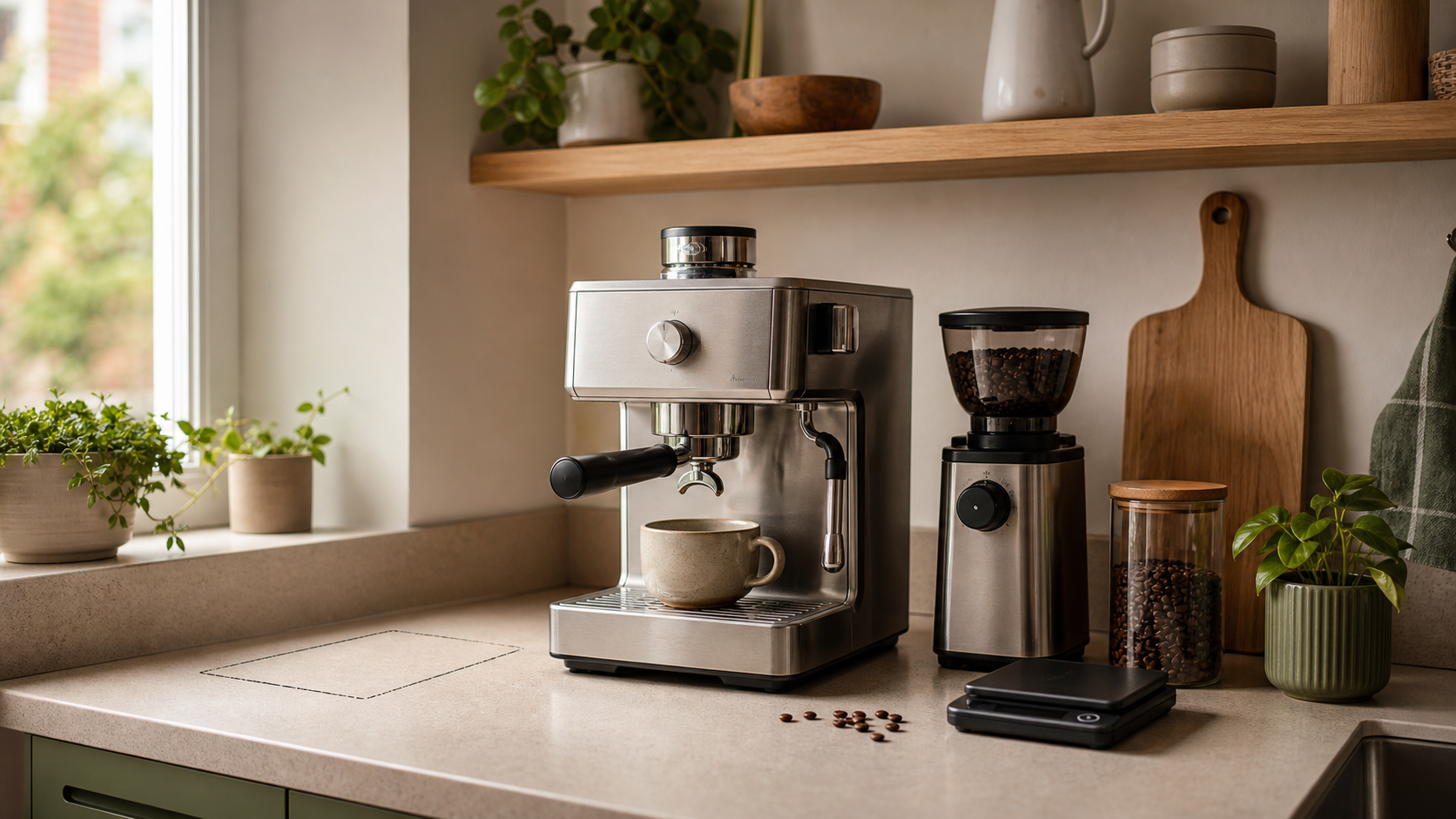
If you are moving from pod coffee to espresso in a small apartment, do not try to replace every pod-machine convenience on day one. Start with a compact espresso machine that lets you learn a simple workflow, plan a real place for an espresso-capable grinder, and add only a scale before chasing accessories.
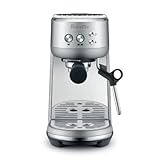
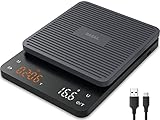
For most beginners who want to learn gradually, the Breville Bambino is a practical transition machine because its basket options can support an easier pre-ground start and a fresh-bean path later. Pair it with the Baratza Encore ESP when you are ready to use a non-pressurized basket and dial in coffee. The BAGAIL BASICS Coffee Scale with Timer is the small accessory worth adding early because it gives useful feedback without creating more clutter.
This is not a promise that traditional espresso will be as instant as pressing a capsule button. It is a different routine: measure, grind when needed, make the shot, wipe the machine, and reset the counter. In return, you get more control over beans and milk drinks without committing to a large coffee bar.
Read this alongside pressurized vs non-pressurized espresso baskets for beginners, is a burr grinder necessary for espresso, and how much counter space you need for an espresso setup.
Apartment Barista uses Amazon affiliate links. As an Amazon Associate, this site earns from qualifying purchases. Prices, sellers, return terms, and availability can change at any time, so check Amazon before buying.
Who This Guide Is For
This guide is for:
- pod-coffee drinkers who want to learn espresso and make more flexible milk drinks
- apartment renters with one small coffee corner rather than a dedicated bar
- beginners who want a clear upgrade order instead of a large accessories list
- people who can accept a short hands-on routine in exchange for more control
This guide is not for:
- people who need every drink to be fully automatic and nearly hands-off
- buyers who only want capsule convenience
- commercial or plumbed-in setups
- anyone who wants to buy a machine but has no safe counter, outlet, or cleanup area
The Real Change From Pods to Espresso
The jump is not simply from one appliance to another. Pod coffee trades control for a tidy, repeatable button press. A compact espresso setup asks you to make a few decisions: which coffee to use, how much coffee to dose, whether to use a forgiving basket while learning, and how to clean up before the small counter needs to become a kitchen again.
Public beginner discussions repeatedly show the same tension. Some people want a semi-automatic machine and a separate grinder. Others mainly want a pod-style routine with better milk drinks. Those are both reasonable goals, but they lead to different purchases. Do not buy a machine because it looks like a cafe machine if you actually want one-button coffee. Do not buy a large all-in-one machine solely to avoid learning whether you enjoy the routine.
For an apartment, the useful first question is: Do I want to learn a five-minute coffee ritual, or do I want the closest possible replacement for a pod button? If the answer is the ritual, a compact separate-machine path is usually easier to keep tidy and upgrade one piece at a time.
A Simple Upgrade Rule
Choose your path before filling the cart.
| If this sounds like you | Start here | What to delay |
|---|---|---|
| "I want to learn but I do not own a grinder yet." | Compact machine with a forgiving basket path | Extra baskets, bottomless portafilters, and specialty tools |
| "I want fresh beans and am willing to practice." | Compact machine plus espresso-capable grinder and scale | Decorative storage and advanced puck-prep tools |
| "I need a button-first routine every morning." | Keep a pod or automatic path while you research | A semi-automatic setup you will resent using |
| "My counter is already crowded." | Measure first; use a smaller staged setup | A machine plus grinder bought before a storage plan |
The likely beginner mistake is buying the machine first, then discovering that the grinder, scale, water-tank clearance, portafilter swing, and steam-wand cleanup have nowhere to go. A small setup can still work well, but it needs a real workflow zone rather than a machine squeezed into the last empty six inches.
What You Need on Day One
You do not need every accessory shown in espresso videos. For a staged apartment upgrade, the useful core is:
- a compact espresso machine
- an espresso-capable grinder when you want fresh-bean, non-pressurized espresso
- a small scale with a timer
- one clean damp cloth and a simple cleanup location
Start with the machine, grinder plan, and scale. Add a dosing funnel, WDT tool, fitted tamper, bottomless portafilter, or puck screen only when a specific problem remains after you have practiced the basic routine. Espresso accessories beginners can skip explains why waiting is often the cheaper decision.
Product Roles for a Small-Apartment Transition
Breville Bambino
Best for: Compact transition machine
Why it fits:
The Bambino is useful for this transition because current Breville manual material includes both dual-wall and single-wall filter baskets. That gives a beginner a more forgiving pre-ground route while they learn the machine, then a grinder-dependent fresh-bean route later. It is a better fit for a staged setup than treating espresso as an all-or-nothing first purchase.
Good fit if:
- you want a compact semi-automatic machine instead of a large all-in-one unit
- you are willing to learn a simple manual routine
- you may begin with a dual-wall basket before buying a grinder
- you want espresso and occasional milk drinks without a permanent large coffee bar
Skip it if:
- you want the machine to grind, dose, and make the drink for you
- you cannot leave room to lock in the portafilter and wipe the steam wand
- you know you will never want to use fresh beans or learn a few repeatable steps
Small-space tradeoff:
Its compact body does not remove the surrounding-space requirement. Leave front clearance for the portafilter, side or top clearance for water access, and a nearby place for the grinder or pre-ground coffee. A machine that technically fits but blocks cooking space quickly becomes an unused appliance.
Amazon check:
Confirm the current seller, exact model, included baskets, dimensions, return policy, price, and availability before buying.
Baratza Encore ESP
Best for: Entry espresso grinder
Why it fits:
The Encore ESP is the separate-grinder path for the reader who has decided to use fresh beans and a non-pressurized basket. Current Baratza materials describe espresso-focused adjustment and an included dosing cup, which supports a simple dose-grind-transfer workflow without adding a large pile of accessories.
Good fit if:
- you want to learn why grind changes affect a shot
- you can make room for a dedicated electric grinder
- you want a grinder that can support espresso as well as other brewing methods
- a brief grinder sound is acceptable in your morning routine
Skip it if:
- your kitchen has no clear grinder space or enough cabinet height
- early-morning electric grinding will be a problem for roommates or sleeping family
- you mainly want the same button-first experience as capsule coffee
Small-space tradeoff:
The grinder adds both footprint and height. Measure the space for the hopper, dosing cup, and cleaning access rather than measuring only its base. If noise or storage is the bigger issue, compare the manual vs electric grinder decision before buying.
Amazon check:
Confirm the current seller, exact ESP model, dimensions, included dosing cup, return policy, price, and availability before buying.
BAGAIL BASICS Coffee Scale with Timer
Best for: First repeatability accessory
Why it fits:
A small timer scale is the accessory that makes the new routine easier to understand. It lets you repeat a dose and observe the drink output before changing three other variables. That is more useful for a former pod user than buying multiple puck-prep tools at once.
Good fit if:
- you want to learn with a simple repeatable routine
- your scale fits beneath your cup and machine group
- you want one small tool for espresso and other coffee methods
Skip it if:
- the exact scale will not fit under your machine with your cup
- you are not ready to measure at all and would be happier staying with pods or an automatic machine
Small-space tradeoff:
Compact scales save room, but their buttons and display can be smaller. Confirm the actual dimensions and test the available drip-tray space in your plan. See coffee scales that fit compact espresso machines for the fit-first checklist.
Amazon check:
Confirm the current seller, exact dimensions, cup fit, charging details, return policy, price, and availability before buying.
Apartment Fit Checks Before You Upgrade
- Measure counter width and depth, then add room in front for the portafilter handle and cup.
- Check water-tank access; a low cabinet can turn a compact machine into a frustrating daily move.
- Confirm that the grinder can fit below cabinets and that you can remove its hopper or dosing cup.
- Find a nearby outlet and keep cords away from the sink, hot surfaces, and the walking path.
- Decide where the used cloth, drip-tray water, and milk pitcher will go after each drink.
- Consider grinder noise if roommates, thin walls, or sleeping family are nearby.
- Check the current Amazon seller, return terms, exact model, included accessories, dimensions, price, and availability rather than relying on this guide.
What I Would Do First
If you are unsure whether espresso will become a long-term hobby, buy a compact machine only if you have a usable counter zone and are happy to begin with a simple, forgiving workflow. Learn dosing, cleanup, and milk steaming before turning the setup into an accessory project.
If you already know you want fresh-bean espresso, reserve room and budget for the grinder at the start. Do not spend the full budget on the machine and then try to force non-pressurized espresso with unsuitable pre-ground coffee.
If the pod routine is the part you love most, there is no failure in keeping it. A staged upgrade should make mornings more enjoyable, not turn a small apartment into a daily equipment chore.
Common Mistakes
Buying a machine before measuring the whole workflow
Machine width is not the whole footprint. Include grinder space, water access, a scale, portafilter swing, and cleanup.
Treating every accessory as a requirement
Start with the machine, grinder plan, and scale. Add tools only when they solve a problem you actually have.
Expecting a semi-automatic machine to feel like a pod machine
It can be simple, but it is still hands-on. Decide whether that is the feature you want before buying.
Upgrading the machine to solve a grinder problem
When you move to a non-pressurized basket, grind quality and adjustment become part of the system. Change one variable at a time instead of buying multiple replacements.
FAQ
Can I start espresso with pre-ground coffee after using pods?
Yes, a forgiving pressurized or dual-wall basket can be a reasonable learning path. It is not the same as fresh-bean, non-pressurized espresso, but it lets you learn drink prep and decide whether you want the grinder commitment.
Do I need an espresso grinder immediately?
Not if you deliberately start with a forgiving basket and pre-ground coffee. In practice, you will want an espresso-capable grinder when you want fresh beans and the control of a non-pressurized basket.
Is a compact espresso machine enough for lattes?
It can be, but the routine includes milk steaming and immediate cleanup. Measure steam-wand clearance and keep a damp cloth ready; the compact size does not make milk residue disappear.
Should I sell my pod machine right away?
Not necessarily. Keeping it during the learning period can reduce pressure on busy mornings. Decide after you know whether the espresso routine fits your apartment and schedule.
Disclosure
Apartment Barista uses Amazon affiliate links. As an Amazon Associate, this site earns from qualifying purchases. Product prices, sellers, bundles, and availability can change. Confirm the current Amazon listing and your apartment fit before buying.