
Quick Answer
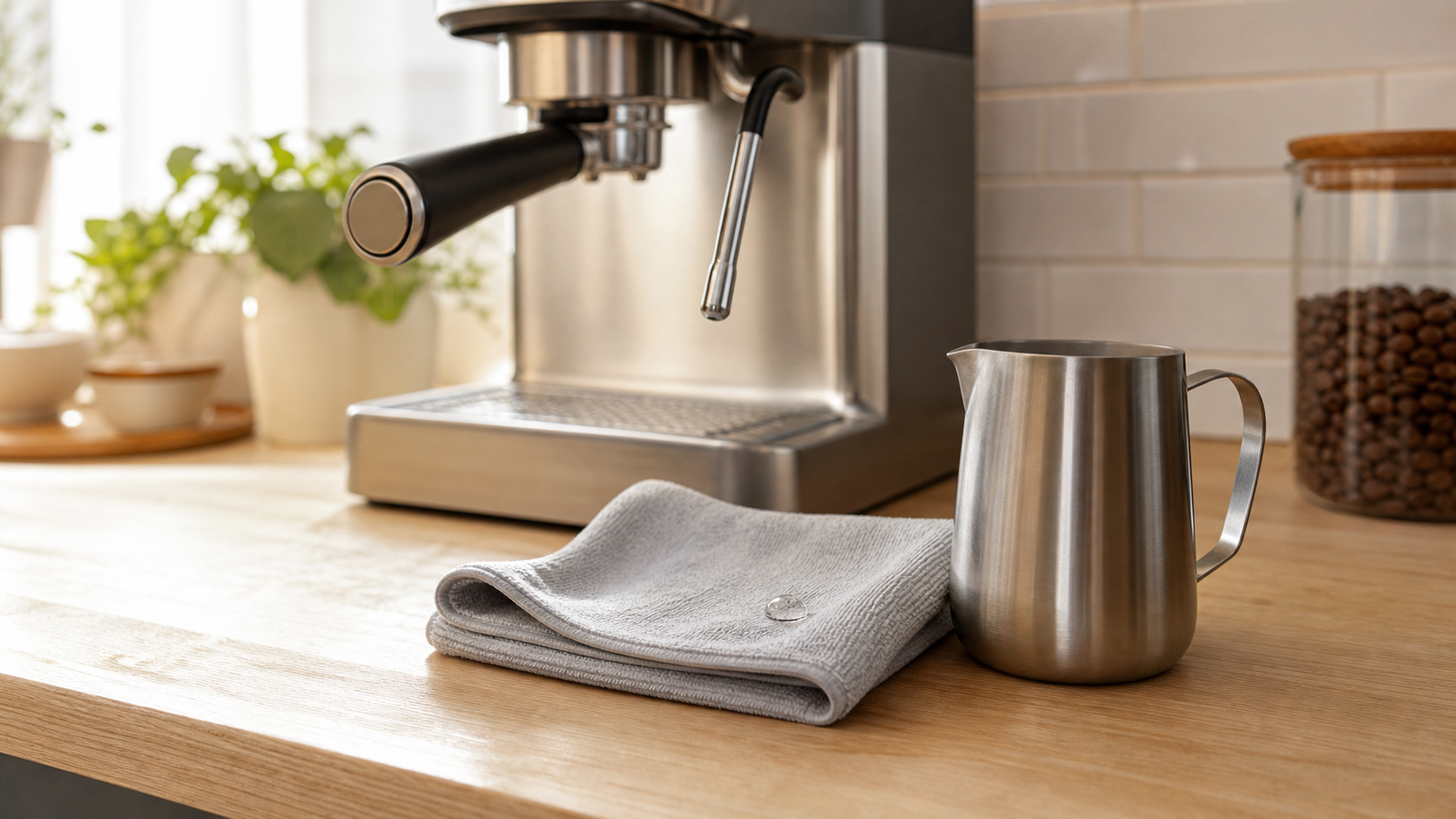
For most home steam wands, the easiest routine is to prepare a clean damp cloth before steaming, wipe the wand and tip immediately after the milk pitcher comes down, then purge according to your machine manual. Put the cloth in a defined laundry or drying spot instead of leaving a milk-wet towel on the counter.
The important word is immediately. Once milk has time to dry on a hot wand, the routine becomes a scraping project instead of a two-second wipe. A small apartment setup does not need a shelf full of cleaning products; it needs one cloth that is ready, one safe sequence you can repeat, and a place for the used cloth to go.
Breville's current Bambino instructions tell users to wipe the wand and tip with a clean damp cloth. Its cleaning instructions also say to purge the wand after cleaning. Your own machine's manual is the final authority: controls, automatic purge behavior, removable tips, and approved cleaners vary by model.
Apartment Barista uses Amazon affiliate links. As an Amazon Associate, this site earns from qualifying purchases. Prices, sellers, product details, return terms, and availability can change at any time, so check the current Amazon page and your machine manual before buying or using a cleaner.
Who This Routine Is For
This guide is for:
- new home baristas making one or two lattes at a time
- oat-milk drinkers whose residue seems to set quickly on the wand
- apartment renters with a narrow counter and little room for a wet dish towel
- manual steam-wand users who are unsure whether to wipe or purge first
- anyone who wants a low-mess habit before buying more espresso accessories
This guide is not for:
- repair of a blocked, damaged, leaking, or malfunctioning steam wand
- advice to disassemble a machine beyond its manual's instructions
- commercial café cleaning procedures
- using an unapproved chemical inside a machine
If the wand is not producing steam normally, the tip appears blocked, or a manual's cleaning instruction is unclear, pause rather than experimenting with a cleaner. Check the manufacturer guidance or contact its support team.
The One-Cloth Rule
Give your espresso area one dedicated cloth for milk work. It does not have to stay wet all day, and it should not become the kitchen's all-purpose food-prep towel. Before you steam, dampen a clean cloth with water and wring it out so it is moist rather than dripping.
This solves the most common beginner failure: reaching for a dry towel after the wand has already heated the milk residue onto its surface. A damp cloth is ready to lift fresh residue; a dry cloth often just smears it or makes you press harder near a hot metal wand.
Keep the cloth:
- within easy reach but away from the steam tip while the wand is running
- separate from dish towels used for food prep
- in a small washable caddy, drawer bin, or hook zone after use
- out of contact with clean cups, portafilters, and dry coffee beans
- on a regular wash-and-dry rotation instead of being reused indefinitely
For a complete small-counter reset, pair this routine with the best low-mess espresso setup for beginners. If rinsed pitchers, cloths, and trays have nowhere to dry, espresso setup near one small sink is the more useful next read.
A Simple After-Milk Sequence
Use this as a calm starting point, then match the exact purge controls and safety steps to your manual.
- Before steaming, wet and wring out a clean cloth. Put it on the counter edge or in a small saucer where you can reach it without crossing over the machine.
- Steam the milk as usual. Keep the pitcher stable and do not try to wrap the cloth around the wand while steam is running.
- Lower the pitcher and wipe the outside of the wand and tip right away. Keep fingers clear of the hottest metal and use a folded section of cloth so your hand has a buffer.
- Purge according to the machine manual. On a machine that asks for a post-cleaning purge, use a safe direction and keep the wand clear of the cloth, cup rim, counter edge, and your hand.
- Check the tip visually. If fresh residue remains, use another clean damp area of the cloth and wipe again after the wand is no longer actively steaming.
- Reset the counter. Rinse the pitcher, empty the drip tray if needed, and put the used cloth in its chosen laundry or drying place.
This is deliberately modest. The goal is not to turn every drink into a maintenance ceremony; it is to stop fresh milk from becoming a stuck-on problem.
Why the Cloth Needs to Be Damp
Public espresso discussions repeatedly separate the easy daily job from the hard cleanup job: fresh residue comes off far more easily when a damp cloth is ready, while dried residue often leads people to soak, scrub, or reach for a dedicated milk cleaner later.
The practical decision is simple:
- Use a clean damp cloth for the outside of the wand after every milk drink.
- Use the machine's prescribed purge to clear its steam path after the outside has been wiped, where that is what the manual directs.
- Treat a milk-system cleaner as a separate, manual-approved maintenance tool for residue that daily wiping did not prevent. It is not a reason to skip the daily cloth.
Do not assume that a cleaner suitable for an automatic milk system is appropriate for every manual steam wand, and do not send any cleaner through a machine unless its manual or the cleaner instructions explicitly allow that method.
Product Roles for a Small-Kitchen Routine
Amazon Basics Microfiber Cleaning Cloths
Best for: daily wipe-down cloth
Why it fits:
Amazon Basics Microfiber Cleaning Cloths are the everyday support pick because a washable pack makes it easier to reserve one cloth for espresso cleanup rather than borrowing the towel that is already handling dishes. A dedicated cloth can cover the wand exterior, pitcher drips, drip tray edge, and counter after the machine is off or cool enough to handle.
Good fit if:
- you make milk drinks often enough to need a clear cloth rotation
- your small counter gets cluttered when one wet towel is doing every job
- you can store clean and used cloths separately
- you are willing to wash and dry the cloths regularly
Skip it if:
- you already have a clean, washable, dedicated non-abrasive cloth system
- you expect a cloth to replace model-specific descaling or internal cleaning
- you have nowhere to dry or launder reusable cloths
Small-space note:
Keep only one clean cloth at the machine. Store the rest in a drawer or lidded bin so a large multipack does not become another counter object.
Amazon check:
Confirm the current seller, pack size, color, dimensions, care instructions, return policy, price, and availability before buying.
Urnex Rinza Milk Frother Cleaner
Best for: manual-approved deeper milk-residue cleaning
Why it fits:
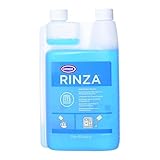
Urnex describes Rinza as a milk-system cleaner designed to break down milk protein and fat buildup on steam wands, frothing pitchers, and compatible automatic frothers. That makes it a relevant product-card example when a reader's manual permits this kind of cleaner and fresh residue has not been prevented by the ordinary damp-cloth routine.
Good fit if:
- your manufacturer instructions allow a milk-system cleaner for the relevant part
- dried residue has already built up despite a consistent daily wipe
- you can follow the product instructions exactly and rinse as directed
- you need a separate maintenance option for a pitcher or removable, manual-approved part
Skip it if:
- you are looking for an everyday replacement for wiping the wand promptly
- your manual specifies a different cleaner or does not approve this method
- you plan to pour it into a machine without verified instructions
- a mechanical fault or blocked tip needs manufacturer support instead
Small-space note:
Store any cleaner upright in a closed cabinet away from food, coffee beans, clean cloths, and children or pets. Keep the original label and instructions with it.
Amazon check:
Confirm the current seller, exact formula and bottle size, machine compatibility, product instructions, return policy, price, and availability before buying.
The Buy-Later Decision
Most beginners should not buy a dedicated milk cleaner on day one. First, make the damp-cloth-and-manual-purge habit automatic for a week or two. If the wand stays clean, that small habit solved the actual problem.
Consider a manual-approved cleaner later only if you are dealing with existing buildup or your machine's care schedule specifically calls for it. A cloth, a nearby sink path, and a clean storage place are earlier priorities than an elaborate cleaning kit.
For milk texture problems rather than residue problems, read why your oat milk latte is foamy, thin, or blobby. For the broader maintenance schedule, use how to clean an espresso machine.
Common Mistakes That Make Cleanup Harder
Waiting until the drink is poured
By then, the wand has stayed hot long enough for residue to set. Put the damp cloth in place before steaming so the wipe happens between lowering the pitcher and moving on.
Using the same cloth for everything
A milk-wet cloth, a coffee-oil cloth, and a food-prep towel do not need to be the same object. A simple separation makes the counter easier to manage and the routine easier to remember.
Purging toward the cloth or a crowded counter
Steam and hot water need a clear, safe direction. Follow the manual's process and keep the cloth, your hand, cups, cords, and counter edge out of the way.
Scrubbing hard with an abrasive pad
Do not improvise with abrasive cleaners, pads, or cloths. Follow the machine maker's cleaning guidance and use a soft non-abrasive cloth for the ordinary wipe-down.
Treating a cleaner as a daily shortcut
Milk cleaner has a narrower job than a cloth. It does not remove the need to wipe fresh residue promptly or to follow the machine's cleaning schedule.
Before You Buy or Change Your Routine
Check these items first:
- your machine's steam-wand cleaning and purge sequence
- whether the wand tip is removable and what the manual permits you to clean
- where your hand and cloth will be while the wand is hot
- the route from machine to sink or drying mat
- where a used cloth will dry or wait for laundry
- whether any milk-system cleaner is approved for your exact machine and use case
- current Amazon seller, instructions, return terms, price, and availability for any product
FAQ
Should I wipe or purge first?
Follow your machine manual. For the current Breville Bambino guidance, the stated routine is to wipe the wand and tip with a clean damp cloth, then purge after cleaning. Other machines can differ, especially if they have an automatic purge feature.
Can I use a dry paper towel?
A dry paper towel may be better than leaving residue untouched, but it is not the most reliable repeatable setup. A clean damp non-abrasive cloth is the more practical daily option because it is ready to lift fresh residue.
Is oat milk harder to clean off a steam wand?
Different milks can leave different-looking residue, but the useful habit is the same: do not wait for any milk residue to dry. Wipe promptly with the prepared damp cloth and use the machine's prescribed purge routine.
Do I need a dedicated milk cleaner?
Not necessarily. Start with the daily cloth routine. Consider a cleaner only for a manual-approved deeper-cleaning situation or a machine care schedule that specifically calls for one.
How many cloths should I keep at the coffee station?
One clean cloth at the machine and a simple backup-and-laundry rotation is usually enough for a small apartment counter. More cloths help only if they have a clean storage and washing plan.
Final Recommendation
Make the cloth part of the milk workflow, not a tool you search for afterward. Prepare one clean damp cloth, wipe immediately, purge as your manual instructs, and move the used cloth out of the drink-making area. That small sequence is more valuable to a beginner than a larger accessory collection.