


Quick Verdict
Most bad oat milk lattes at home are not one big failure. They are usually one of four smaller problems:
- the milk is getting too much air and turning into a dry blob
- the milk is getting too hot and losing smooth texture
- the milk choice is fighting the method
- the cleanup is annoying enough that the routine falls apart
If your oat milk latte looks foamy on top but pours thin underneath, start by changing only two things: use a barista-style oat milk and stop the milk a little cooler than you would for dairy. Current public barista discussions keep repeating those two fixes, and current Oatly product materials still position Barista Edition specifically for foaming and hot coffee use.
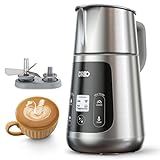
If you want the easiest compact steam-wand path, the Breville Bambino Plus is the most practical product example here because current Breville materials highlight adjustable milk temperature, adjustable texture, and automatic purge support. If you do not want a steam wand routine at all, the DREO BaristaMaker is the easier electric-frother example. If you only want the smallest possible tool for quick foam or iced drinks, a handheld wand is still the smallest path, but it is not the most reliable route to smooth latte milk.
Apartment Barista uses Amazon affiliate links. As an Amazon Associate, this site earns from qualifying purchases. Prices, sellers, return terms, and availability can change at any time, so check the current Amazon page before buying.
For the broader setup, read this with best milk frothers for oat milk lattes, how to make a latte at home without a big machine, and how to clean an espresso machine.
Who This Guide Is For
This guide is for:
- apartment renters making one or two milk drinks at a time
- small-kitchen users who cannot leave a large latte station out all day
- beginners whose oat milk lattes look too bubbly, too flat, or too messy
- latte drinkers deciding between a steam wand, electric frother, or handheld wand
- people who want smoother milk and less cleanup, not perfect cafe latte art
This guide is not for:
- commercial cafe use
- advanced latte artists chasing competition-level pouring
- buyers who want a large dual-boiler machine
- anyone expecting regular oat milk, any cup, and any frother to behave the same
- people who want zero cleanup after milk drinks
What Usually Goes Wrong
1. Too much air too early
Oat milk can go from smooth to dry foam fast. Current public barista discussions describe the same pattern: too little air gives you a puddle, but too much air gives you a blob. If your milk looks airy, stiff, or sits on top instead of integrating with the coffee, your first fix is usually less aeration, not more.
2. The milk gets hotter than it wants to
Current public home-barista advice repeatedly points to lower milk temperature for plant milks. Breville's own Bambino Plus tutorial also says different milks texture differently at different temperatures. If your oat milk tastes dull, separates, or loses its silky look before you pour, cooler is usually safer than hotter.
3. The milk choice does not match the goal
Current Oatly product materials still describe Barista Edition as foamable and aimed at hot coffee use. Current DREO guidance also tells plant-milk users to choose the barista version for better consistency. That does not mean every barista blend is perfect for every person, but it does mean regular oat milk is not the safest default if your goal is a smooth hot latte.
4. The cleanup is part of the problem
The outside of the steam wand still needs you, even on a machine with auto-purge support. Current espresso discussions keep reminding beginners that auto-purge helps the inside, not the outside. If milk dries on the wand, the setup starts feeling harder than it really is.
Quick Troubleshooting Table
| If this is happening | Most likely problem | What to try first |
|---|---|---|
| The milk looks like a dry blob | Too much air | Add less air at the start and stop earlier |
| The milk pours like a puddle | Too little air or weak texture | Add a little more air, then keep a steady whirlpool |
| The milk splits or feels dull | Too much heat or the wrong milk | Try a barista-style oat milk and steam or froth a little cooler |
| Latte art fails in a narrow mug | Cup shape is fighting you | Use a rounder cup with a wider opening |
| Milk burns onto the wand | Cleanup delay | Wipe immediately with a damp cloth, then purge |
| The routine feels too annoying | Wrong tool for your daily habit | Move to an easier frother path instead of forcing the steam wand |
Apartment Fit Checks
Before buying another milk tool, check these five practical limits:
- Do you have room to set down a pitcher, towel, and cup beside the machine?
- Can you rinse the milk tool within a minute, or is the sink too far away?
- Are you making hot lattes every day, or mostly iced drinks and casual foam?
- Is your current cup shape too tall or too narrow for easy pouring?
- Do you want to learn steaming, or do you mainly want reliable foam without practice?
In a small apartment kitchen, the best milk routine is usually the one you can reset quickly. If you have to move too many items or clean too many wet parts, the problem may be workflow, not skill.
Tools That Help When Technique Is Not the Only Problem
Breville Bambino Plus
Best for: compact steam-wand path
Why it fits:
The Bambino Plus is the compact machine example here because current Breville materials still emphasize automatic and manual milk texturing, three milk temperatures, three texture levels, and automatic purge support. That makes it the better example when your real problem is not only coffee strength, but also wanting more guided milk control in a small kitchen.
Good fit if:
- you want true espresso plus milk at home
- you make hot lattes often enough to justify a steam-wand routine
- you want some automatic help before learning full manual steaming
- you can leave a compact machine on the counter
Skip it if:
- you do not want a steam wand at all
- you mainly make iced drinks
- you want the cheapest possible milk tool
- you are not ready for any machine cleanup
Small-space notes:
Current Amazon-facing product information still shows a compact footprint, but you still need room for the cup, pitcher, towel, and drip-tray area. Measure the working zone, not only the machine body.
Tradeoff:
It gives you the most realistic home-latte path in this guide, but it still asks you to wipe the wand right away and keep the milk routine tidy.
Amazon check:
Check the current Amazon seller, exact Bambino Plus model, included accessories, dimensions, return policy, price, and availability before buying.
DREO BaristaMaker
Best for: guided electric frother path
Why it fits:
The DREO BaristaMaker is the electric-frother example because current DREO product materials still describe a microfoam-oriented path, separate tips for silky microfoam versus thicker froth, and prompt cleaning guidance for the jug and tips. Current DREO usage guidance also tells plant-milk users to choose the barista version for better texture consistency.
Good fit if:
- you want better milk control without a full espresso machine
- you prefer a guided device over learning steam-wand technique first
- you make oat milk drinks often enough to want repeatable settings
- you are willing to clean the jug and tips promptly
Skip it if:
- you expect it to replace espresso extraction
- you need the smallest possible drawer tool
- you dislike washing a dedicated milk appliance
- you mostly want fast cold foam instead of hot latte milk
Small-space notes:
This is easier than a steam wand for many beginners, but it still takes counter or cabinet space. Keep it near the sink if daily cleanup is part of the problem.
Tradeoff:
It lowers the skill barrier, but it adds a separate appliance. That is good for consistency and less good for minimal storage.
Amazon check:
Check the current Amazon seller, exact model, included tips, jug capacity, return policy, dimensions, price, and availability before buying.
Zulay Kitchen Executive Series Milk Frother Wand
Best for: smallest handheld fallback path
Why it fits:
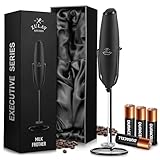
This handheld wand is included because current local product research and current public demand still support one recurring beginner truth: some readers do not need true steam-wand milk. They need the smallest tool for iced drinks, quick foam, or casual latte-style coffee in a drawer-friendly setup.
Good fit if:
- you mainly want iced drinks or quick foam
- you do not need the device to heat milk
- you want the smallest tool in this guide
- you need a low-commitment first step
Skip it if:
- you want smooth hot latte milk from one device
- you want the easiest route to consistent hot microfoam
- you dislike heating milk separately
- you want a true steam-wand result
Small-space notes:
This is the easiest tool to store, but it is also the least complete hot-latte solution. It works better as a small-space compromise than as a perfect latte answer.
Tradeoff:
You save space and money, but you give up heat control and most of the texture control that makes a hot latte feel integrated.
Amazon check:
Check the current Amazon seller, exact bundle, battery notes, stand details, return policy, price, and availability before buying.
Amrules 12oz Stainless Milk Frothing Pitcher
Best for: one-drink milk pitcher
Why it fits:
This pitcher matters because current public troubleshooting keeps pointing back to repeatability. A one-drink pitcher makes it easier to use the same milk amount, the same cup scale, and the same pouring height instead of guessing every morning.
Good fit if:
- you make one latte at a time
- you want a compact pitcher for a small steam-wand setup
- you need a simple tool that rinses quickly
- you want clearer milk-amount habits
Skip it if:
- you make several large drinks in a row
- you want a larger cafe-style pitcher
- you are not using a pitcher workflow at all
Small-space notes:
This size makes more sense in a tight apartment kitchen than a larger multi-drink pitcher. It is easier to rinse, store, and keep near the machine.
Tradeoff:
It improves consistency, but it does not fix overheating or over-aeration by itself. It just makes the workflow easier to repeat.
Amazon check:
Check the current Amazon seller, selected size, material notes, return policy, price, and availability before buying.
What I Would Change First
If your oat milk latte keeps failing, I would not buy four new tools at once.
I would change the routine in this order:
- Use a barista-style oat milk for hot drinks.
- Stop the milk a little cooler than your dairy instinct says.
- Use less air than you think, especially at the beginning.
- Pour into a rounder, wider cup before blaming the milk.
- Wipe the wand or frother parts immediately instead of "after breakfast."
Only after those steps would I decide whether the real fix is a different tool.
If your current setup already makes strong coffee and your only problem is milk texture, an electric frother may be enough. If the real problem is wanting a true espresso latte with better texture control, a compact steam-wand machine is the more honest path.
Common Mistakes
Buying a new frother before changing the milk. If the milk itself is fighting the drink, a new tool may not solve much.
Using dairy-milk temperature habits with oat milk. Hotter is not automatically better.
Trying to pour latte art in a cup that makes the surface hard to control.
Letting the wand sit dirty because the machine has auto purge. Auto purge helps, but it does not wipe the outside.
Calling every foamy coffee a failed latte. Sometimes the drink is fine, but the tool is simply better suited to latte-style coffee than traditional espresso milk.
FAQ
Should I always use barista-style oat milk for hot lattes?
Not always, but it is the safer first move when your hot oat milk drinks keep separating or foaming poorly. Current public discussions and current Oatly and DREO materials all point in the same direction: barista-style oat milk is usually more reliable for hot coffee use.
Why does my oat milk look smooth in the pitcher but pour like a puddle?
Usually because it did not get enough stable texture, or it sat too long before pouring. Current public barista advice keeps warning against waiting too long after texturing. Pour sooner and keep the milk moving with a gentle swirl.
Why does my wand still get milk on it if the machine has auto purge?
Because auto purge mainly helps the inside path. The outside still needs a quick wipe. Current espresso discussions keep repeating this point to beginners for a reason.
Is a handheld wand enough for hot oat milk lattes?
It can be enough for simple foam, iced drinks, or casual latte-style coffee. It is not the easiest route to smooth hot latte milk because you still need to heat the milk separately and you get less control over texture.
Do I need a big machine to make better oat milk lattes?
No. Many apartment readers are better served by a compact steam-wand machine, a capable electric frother, or even a smaller compromise tool that actually fits their counter and cleanup habits.
Disclosure
Apartment Barista uses Amazon affiliate links. As an Amazon Associate, this site earns from qualifying purchases. Prices and availability can change at any time and should be checked on Amazon before buying.