
Quick Verdict
You can make a good latte-style drink at home without buying a large espresso machine, but you should be honest about the route you are choosing.
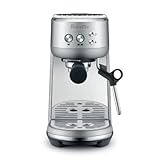
If you want a true espresso latte, choose a compact machine with a steam wand and keep the setup small. The Breville Bambino is the compact machine example here because it gives you a real portafilter workflow, manual steam wand, and small counter footprint.
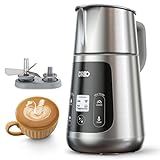
If you mainly want a warm oat milk coffee with foam and less mess, use a standalone frother with strong coffee or espresso-style coffee. The DREO BaristaMaker is the standalone frother example because it gives more milk-texture control than a basic wand, but it still does not turn brewed coffee into true espresso.
The Amrules 12oz milk pitcher and BAGAIL BASICS Coffee Scale with Timer are the supporting tools. The pitcher keeps one-drink milk prep manageable. The scale helps you repeat the coffee and milk amounts instead of guessing every morning.
Apartment Barista uses Amazon affiliate links. As an Amazon Associate, this site earns from qualifying purchases. Prices, sellers, return terms, model details, and availability can change, so check the current Amazon page before buying.
For the larger setup decision, read the espresso machine buying guide for beginners, best milk frothers for oat milk lattes, and how much should you spend on your first espresso machine.
Who This Guide Is For
This guide is for:
- apartment renters with limited counter space
- small-kitchen users who want lattes or oat milk lattes
- beginners deciding between a compact espresso machine and a standalone frother
- people who want a daily drink routine, not a large coffee bar
- buyers who need a practical buy-now versus buy-later path
This guide is not for:
- commercial cafe use
- plumbed-in espresso machines
- advanced latte art training
- people who want a large dual-boiler setup
- anyone expecting a handheld frother to fully replace a steam wand
The Honest Latte Decision
There are two realistic small-kitchen routes.
Route one is the compact espresso route:
- compact machine
- fresh or espresso-suitable coffee
- scale
- milk pitcher
- steam wand cleanup
This is the better route if you care about a traditional latte: espresso-style coffee plus steamed milk.
Route two is the frother route:
- strong coffee, moka pot coffee, AeroPress-style concentrate, or espresso-style coffee
- standalone milk frother
- cup or small pitcher
- quick rinse routine
This route is easier and smaller, but it is more accurate to call the drink latte-style coffee unless you are using real espresso.
The mistake beginners make is buying a frother and expecting it to fix weak coffee. Milk texture helps, but the coffee base still matters.
Quick Picks
| Pick | Best for | Why it fits |
|---|---|---|
| Breville Bambino | Compact espresso machine path | A small true-espresso route with steam wand milk, without moving to a large machine. |
| DREO BaristaMaker | Standalone milk frother path | More milk-texture options for oat milk drinks when you do not want a full espresso setup. |
| Amrules 12oz milk pitcher | One-drink milk pitcher | Small enough for apartment routines and useful with steam wands or handheld frothing. |
| BAGAIL BASICS Coffee Scale with Timer | Coffee scale for repeatability | Helps measure coffee, espresso yield, and milk amounts before buying more accessories. |
Do not treat this table as a fixed-price cart. Check current Amazon price, seller, exact model, selected size, dimensions, included accessories, return policy, and availability before buying.
What Matters Before Buying
Coffee strength
Latte milk hides some mistakes, but it cannot make weak coffee taste like espresso. If you are not using an espresso machine, make the coffee base stronger than normal drip coffee.
Good small-kitchen options include:
- compact espresso machine
- moka pot
- AeroPress-style concentrate
- strong cold brew concentrate for iced lattes
Each has tradeoffs. A compact espresso machine takes more setup and cleaning. Moka pot coffee is strong but not espresso. Concentrate is easy for iced drinks but less like a hot cafe latte.
Milk texture
Smooth latte milk is not just "foam." A steam wand creates a different texture from a spinning frother. Standalone frothers are useful, especially for oat milk and iced drinks, but many make thicker foam than classic latte microfoam.
If you use oat milk, choose a barista-style oat milk when foam matters. Oatly's Barista Edition is positioned specifically for foaming and hot coffee performance, which matches the real problem many oat milk beginners run into.
Cleaning
A latte routine creates wet parts:
- steam wand or frother whisk
- milk pitcher or frother jug
- cup
- towel
- drip tray or countertop splashes
If you cannot rinse everything quickly, the setup will feel bigger than it looked online.
Counter footprint
Avoid buying a machine, frother, scale, and pitcher before choosing the workflow. A small setup should have one daily lane:
- machine and pitcher lane
- frother and strong coffee lane
- iced latte concentrate lane
Trying to keep every tool out at once is how a small coffee corner turns messy.
Product Examples
Breville Bambino
Best for: Compact espresso machine path
Why it was selected:
The Breville Bambino is the compact true-latte path because current Breville materials describe a 54 mm portafilter, 18 g dose, manual steam wand, fast heat-up system, compact footprint, and included accessories such as baskets, milk jug, portafilter, tamper, steam-wand cleaning tool, and descaling powder.
Good fit if:
- you want real espresso-style lattes
- you can leave a compact machine on the counter
- you are willing to clean a steam wand
- you plan to use a grinder or grinder path
- you want a setup that can grow with your skills
Skip it if:
- you want one-button milk drinks
- you do not want any steam wand cleanup
- you cannot spare space for a grinder or coffee prep
- you only want occasional iced latte-style drinks
Small-space notes:
Measure for the machine, cup, scale, milk pitcher, towel, and drip tray access together. The machine is compact, but the latte workflow needs a little working room in front.
Tradeoff:
This is the best route if you want a traditional latte without a big machine, but it is still an espresso routine. It asks for grinding, dosing, steaming, wiping, and cleanup.
Amazon check:
Check current Amazon seller, exact model, color, dimensions, included baskets and accessories, return policy, current price, and availability. Also confirm whether you are looking at the regular Bambino or the Bambino Plus.
DREO BaristaMaker
Best for: Standalone milk frother path
Why it was selected:
The DREO BaristaMaker is the standalone frother path because current DREO materials position it around dairy and non-dairy milk compatibility, multiple foam types, hot and cold foam options, and more control than a basic one-button frother. It makes sense when the reader wants better milk texture without buying a large espresso machine.
Good fit if:
- you mostly want latte-style drinks with easier milk prep
- you use barista oat milk or other milk that froths well
- you make hot and iced milk drinks
- you want a dedicated milk tool instead of learning a steam wand
- you can spare counter or cabinet space for a small appliance
Skip it if:
- you expect it to make espresso
- you want true steam-wand microfoam
- you need the smallest possible drawer tool
- you dislike washing a separate jug or frother parts
Small-space notes:
This is not as tiny as a handheld wand, but it can replace separate heating and frothing steps. Store it near the sink if possible so oat milk residue gets rinsed before it dries.
Tradeoff:
It simplifies milk prep, but the coffee base still matters. Pair it with strong coffee or espresso-style coffee, and do not expect it to turn ordinary drip coffee into a true latte.
Amazon check:
Check current Amazon seller, exact model, jug capacity, included tips or accessories, return policy, dimensions, current price, and availability before buying.
Amrules 12oz Milk Frothing Pitcher
Best for: One-drink milk pitcher
Why it was selected:
The Amrules 12oz milk pitcher is the one-drink pitcher example because existing Amazon research for this site shows a compact stainless pitcher format with scale marks and multiple size options. A small pitcher is useful whether you are steaming milk on a compact machine or using a handheld frother in a separate cup.
Good fit if:
- you make one latte or cappuccino at a time
- you use a compact steam wand
- you want a pitcher that rinses quickly
- you need a small tool that can live in a drawer
- you are learning milk amounts and pouring control
Skip it if:
- you make several large drinks in a row
- you need a heavier premium latte-art pitcher
- you do not want any extra milk tool
- the current Amazon listing does not clearly show the 12oz size
Small-space notes:
A 12oz pitcher is easier to store than a large pitcher, but size still matters. If your mugs are large, confirm the pitcher capacity will hold enough milk with room for expansion while frothing.
Tradeoff:
It is simple and compact, but it will not improve bad milk texture by itself. Technique, milk type, and steam or frother quality still matter.
Amazon check:
Check current Amazon seller, selected 12oz size, material notes, scale markings, return policy, current price, and availability before buying.
BAGAIL BASICS Coffee Scale with Timer
Best for: Coffee scale for repeatability
Why it was selected:
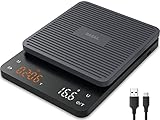
The BAGAIL BASICS Coffee Scale with Timer is the scale example because current BAGAIL product information highlights 0.1 g-style measurement, timer functions, tare, USB-C charging, a silicone pad, and a footprint that can support espresso or pour-over routines. For lattes, it helps beginners stop guessing the coffee and milk amounts.
Good fit if:
- you want to repeat a drink that tasted good
- you make espresso shots and want to track yield
- you make concentrate and want consistent coffee strength
- you are still learning milk-to-coffee balance
- you want one tool that also helps other coffee methods
Skip it if:
- it does not fit under your machine with your cup
- you want a premium waterproof espresso scale
- you dislike touch controls
- you only make casual drinks and do not want to measure anything
Small-space notes:
Measure scale footprint, cup height, and drip tray clearance together. A scale is useful only if it fits your actual workflow.
Tradeoff:
It is not as exciting as a machine or frother, but it is often the tool that makes the recipe repeatable.
Amazon check:
Check current Amazon seller, exact model, dimensions, charging cable, return policy, current price, and availability before buying.
A Simple Small-Kitchen Latte Workflow
For a compact espresso machine:
- Weigh the coffee dose.
- Pull the espresso into a cup on the scale if it fits.
- Add cold milk to a small pitcher.
- Steam until the milk is warm and glossy, then stop before it gets too foamy.
- Wipe and purge the steam wand immediately.
- Pour the milk, rinse the pitcher, and clear the drip tray.
For a standalone frother:
- Brew a stronger-than-normal coffee base.
- Measure the coffee so the drink is repeatable.
- Add barista-style oat milk or dairy milk to the frother.
- Choose a texture setting that matches the drink.
- Pour the milk into the coffee.
- Rinse the frother parts before residue dries.
For iced lattes:
- Use espresso, strong coffee, or cold brew concentrate.
- Weigh or measure the coffee base.
- Add ice.
- Froth cold milk separately if you want foam.
- Pour slowly so the drink does not overflow a small glass.
What I Would Do First
If you want true lattes several times a week, start with the compact espresso path. A Bambino-style machine, a small pitcher, and a scale make more sense than buying multiple standalone frothers and still wishing you had a steam wand.
If you mostly want oat milk coffee drinks and do not care whether they are traditional espresso lattes, start with the frother path. Put the money into a milk tool you will clean, a stronger coffee base, and a scale if you want repeatability.
If you are unsure, do not buy everything at once. Start with one route:
- compact machine plus pitcher and scale
- or strong coffee plus standalone frother
Once the routine is clear, decide whether you need a grinder, smaller scale, better pitcher, or cleaning tools.
Common Mistakes
Calling any foamy coffee a latte. That is fine casually, but it can lead to wrong purchases. A traditional latte needs espresso-style coffee and textured milk.
Buying a frother before deciding the coffee base. Weak coffee plus thick foam usually tastes like milky coffee, not a latte.
Ignoring oat milk type. Regular oat milk may taste good but foam poorly. Barista-style oat milk usually works better for foam and hot coffee.
Forgetting cleaning. Milk residue dries fast. A tool that cannot be rinsed quickly will feel annoying in a small kitchen.
Buying a pitcher that is too large. Large pitchers are harder to use for one small drink and take more cabinet space.
Skipping the scale. Guessing is fine for casual drinks, but a scale makes it easier to repeat the drink you liked yesterday.
FAQ
Can I make a latte without an espresso machine?
You can make a latte-style drink with strong coffee and frothed milk. For a traditional espresso latte, you need espresso or espresso-style coffee and properly textured milk.
What is the easiest way to make an oat milk latte at home?
Use a strong coffee base, barista-style oat milk, and a frother you will actually clean. If you want smoother milk and a more traditional drink, move toward a compact espresso machine with a steam wand.
Do I need a milk pitcher?
You need a pitcher if you are using a steam wand. It is also useful with handheld frothers because it gives the milk room to move. If you use an electric pitcher frother, the jug may already handle that job.
Do I need a scale for lattes?
You do not need one for casual drinks, but it helps a lot. A scale makes the coffee dose, espresso yield, concentrate strength, and milk amount repeatable.
Is a handheld frother enough?
It can be enough for quick foam, iced drinks, matcha, or casual latte-style coffee. It is not the same as steam-wand milk and does not heat milk by itself.
What should I check before buying on Amazon?
Check the current seller, exact model, selected size, dimensions, included accessories, return policy, current price, and availability. For milk tools, also check cleaning instructions and whether the current listing matches the size or version you expect.
Disclosure
Apartment Barista uses Amazon affiliate links. As an Amazon Associate, this site earns from qualifying purchases. Prices, sellers, return terms, product details, and availability can change at any time and should be checked on Amazon before buying.