
Quick Verdict
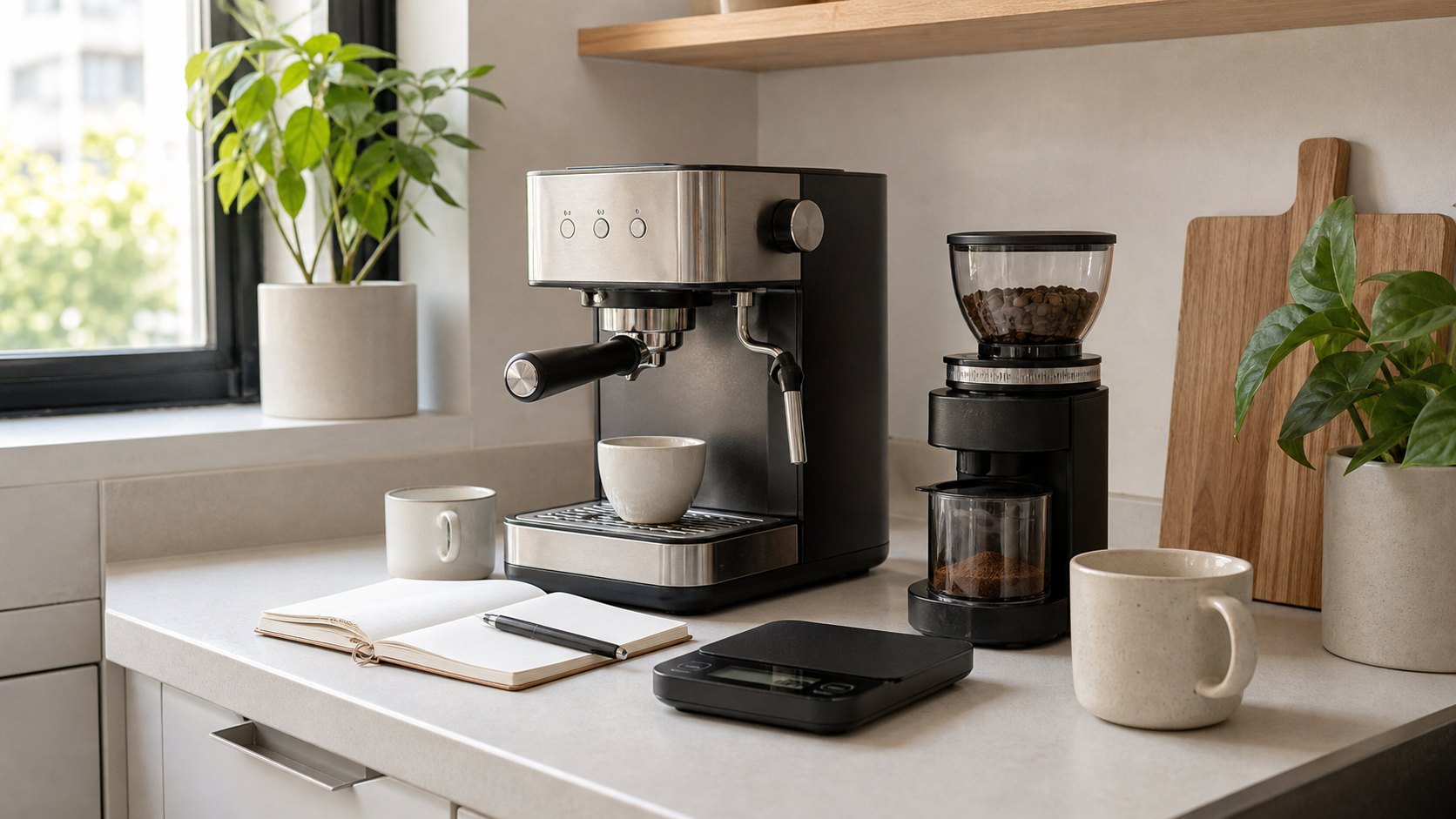
If you are buying your first espresso machine for a small kitchen, do not start by asking which machine is the "best" in general. Start by asking which machine you can keep on the counter, clean easily, pair with a real grinder plan, and use without making the kitchen feel crowded.
For many apartment beginners, a compact semi-automatic machine is the best first category. The Breville Bambino is the compact-machine example in this guide because current Breville materials show a 54 mm portafilter workflow, manual steam wand, included baskets, and a small countertop footprint. The De'Longhi Dedica is the slim-machine example because current De'Longhi materials emphasize its very narrow width and compact body.
The grinder question matters almost as much as the machine question. If you want traditional espresso with fresh beans, plan for an espresso-capable grinder. The Baratza Encore ESP is the grinder reminder here because current Baratza materials position it around espresso-focused grind adjustment while still covering other brew methods.
If your budget is tight, it is usually better to buy a sensible compact machine and leave room for a grinder and scale than to spend everything on the machine and hope pre-ground coffee solves every problem.
Read this with the beginner espresso setup under $500, best compact espresso machines for small kitchens, and best burr grinders for beginner espresso guides.
Who This Guide Is For
This guide is for:
- apartment renters buying a first espresso machine
- small-kitchen users with limited counter width and depth
- beginners who want lattes, cappuccinos, or oat milk drinks
- buyers comparing compact machines like Bambino and Dedica
- readers who need plain-English buying criteria before choosing a shortlist
This guide is not for:
- commercial cafe setups
- advanced hobbyists shopping for dual boilers and plumbed-in machines
- people who want a fully automatic one-button machine only
- buyers with a large dedicated espresso bar
- anyone looking for guaranteed perfect shots without learning the workflow
The Need Behind This Guide
Espresso machines are confusing because the product page is only part of the decision. A beginner also has to understand the grinder, the counter space, the basket size, the milk routine, the cleaning process, and whether the machine fits the way they actually drink coffee.
In a small apartment, the wrong machine usually fails in one of four ways:
- it takes over the counter
- it leaves no room for a grinder or scale
- it makes milk drinks feel messy
- it creates a cleaning routine the owner avoids
A good beginner machine is not just capable. It is repeatable. You should be able to pull it forward, fill the water tank, place a cup and scale, steam milk if needed, empty the drip tray, wipe the counter, and put the tools away without rebuilding the whole kitchen.
Quick Picks
| Pick | Best for | Why it fits |
|---|---|---|
| Breville Bambino | Compact machine example | Small footprint, 54 mm workflow, manual steam wand, and beginner-friendly controls |
| De'Longhi Dedica Deluxe | Slim machine example | Very narrow body for tight counters and a simple manual espresso path |
| Baratza Encore ESP | Entry grinder reminder | Espresso-focused adjustment range so the machine budget does not erase the grinder budget |
These are examples for the buying decision, not the only valid choices. Check current Amazon seller, exact model, color, dimensions, included accessories, return policy, price, and availability before buying.
Step 1: Choose The Machine Category
Most beginners are choosing between five categories:
- compact semi-automatic machines
- slim semi-automatic machines
- all-in-one machines with built-in grinders
- manual lever or portable espresso makers
- fully automatic machines
For Apartment Barista readers, compact or slim semi-automatic machines are usually the most practical starting point. They give you a real portafilter routine without requiring plumbing, a huge counter, or a cafe-style installation.
All-in-one machines can be convenient, but they are larger and lock the grinder into the machine. Manual espresso makers can be tiny and quiet, but they ask for more hands-on technique. Fully automatic machines are convenient, but they are a different buying path from learning traditional espresso.
Step 2: Measure Counter Space Before Falling In Love
Measure the real spot where the machine will live. Do not use only the empty counter measurement. Leave room for:
- water tank access
- drip tray removal
- portafilter handle movement
- cup and scale clearance
- milk pitcher movement
- grinder placement
- a small towel or cloth
Width is not the only problem. Depth matters if the machine sits below cabinets or near a wall. Height matters if you store mugs or a grinder beside it. Access matters if the water tank lifts from the back.
The Breville Bambino is a useful compact example because Breville lists a small footprint and included accessories such as baskets, milk jug, portafilter, tamper, steam wand cleaning tool, and descaling powder. That makes it a realistic first-machine reference point for a small kitchen.
The De'Longhi Dedica is the slim example because De'Longhi's current product information describes a very narrow body, removable tank, removable drip tray, descaling alarm, and adjustable manual milk frother. That is exactly the kind of width-saving tradeoff apartment buyers often compare.
Step 3: Keep A Separate Grinder Budget
This is the part beginners underestimate. Espresso needs fine, adjustable, repeatable grinding. If the grinder cannot adjust well enough, the machine can look like the problem even when the coffee is the problem.
You have three beginner paths:
- buy an espresso-capable grinder with the machine
- use pressurized baskets and pre-ground coffee while learning
- buy an all-in-one machine with a built-in grinder
The first path is the cleanest long-term route. The second path can be acceptable while learning, but it has limits. The third path saves shopping complexity, but it usually increases the appliance footprint and can make future grinder upgrades less flexible.
The Baratza Encore ESP is the reminder pick because Baratza describes an espresso-focused adjustment range and a simple hopper-twist workflow. It still adds counter height and grinder noise, so apartment readers should plan where it lives before buying.
Step 4: Decide Your Milk Workflow
If you drink straight espresso or Americanos, the milk system matters less. If you make lattes, cappuccinos, or oat milk drinks, the steam wand becomes part of the daily routine.
Ask yourself:
- Do I want to learn manual steaming?
- Do I have sink access for immediate rinsing?
- Will the machine fit beside a milk pitcher and towel?
- Do I drink milk drinks daily or only sometimes?
- Would a separate frother be simpler for now?
Manual steam wands are useful, but they need practice and cleanup. Automatic milk systems can help, but they add cost and still need cleaning. A small kitchen punishes lazy milk cleanup quickly, so buy for the routine you will actually maintain.
Step 5: Check Basket And Accessory Compatibility
Do not buy a pile of accessories before choosing the machine. Tamper size, dosing funnel size, bottomless portafilter fit, baskets, and puck screens depend on the machine.
Common beginner mistake:
- buy a 54 mm accessory because it looks popular
- later choose a 51 mm machine
- discover the accessory does not fit
Start with the machine, then confirm the basket size, then buy accessories one by one. A scale and cleaning cloth are safer early purchases because they are less machine-specific.
Step 6: Read The Cleaning Section Before Buying
Every espresso machine needs cleaning. Small machines still have drip trays, steam wands, water tanks, baskets, and descaling routines.
Before buying, check:
- whether the drip tray removes easily
- whether the water tank is easy to reach
- what descaling routine the manual requires
- whether cleaning tablets are needed
- whether the steam wand can be wiped and purged easily
- where wet tools will dry
Cleaning is not a boring side detail. It decides whether the machine stays pleasant after week two.
Product Examples
Breville Bambino
Best for: Compact machine example
Why it was selected:
The Breville Bambino is the compact-machine example because it gives beginners a real semi-automatic espresso workflow in a small body. Current Breville materials show a 54 mm portafilter, dual and single wall filter baskets, manual steam wand, volumetric shot control, and a compact countertop footprint.
Good fit if:
- you want a compact machine that can stay on the counter
- you want to learn a real portafilter workflow
- you plan to pair the machine with a grinder and scale
- you want a steam wand for milk drinks
- you value a short heat-up routine and simple controls
Skip it if:
- you want a built-in grinder
- you want fully automatic milk
- you cannot spare room for a separate grinder
- you want a very wide upgrade path without eventually changing machines
Small-space notes:
Measure for the machine, grinder, cup, and scale together. The Bambino is compact, but a complete espresso setup still needs prep space and cleaning space.
Amazon check:
Check current Amazon seller, exact model number, color, dimensions, included accessories, return policy, price, and availability before buying.
De'Longhi Dedica Deluxe
Best for: Slim machine example
Why it was selected:
The De'Longhi Dedica Deluxe is the slim-machine example because current De'Longhi materials emphasize a narrow body, manual frothing, removable tank, removable drip tray, descaling alarm, and compact design. It is the kind of machine readers consider when counter width is the hardest constraint.
Good fit if:
- your counter is very narrow
- you want a simple manual espresso path
- you are comfortable checking accessory compatibility carefully
- you want a machine that can fit where wider options cannot
- you use ground coffee or E.S.E. pods while learning
Skip it if:
- you want the easiest upgrade path for espresso accessories
- you want a more modern compact machine workflow
- you are not comfortable reviewing seller and return terms
- the current Amazon featured offer looks unclear or limited
Small-space notes:
The narrow body is the selling point, but depth, tank access, cup clearance, and grinder space still matter. A slim machine does not remove the need for a grinder plan.
Amazon check:
Check current Amazon seller, stock status, exact color, dimensions, return policy, included accessories, price, and availability before buying. If the featured seller is not Amazon or De'Longhi, review the condition and return terms carefully.
Baratza Encore ESP
Best for: Entry grinder reminder
Why it was selected:
The Baratza Encore ESP is not an espresso machine. It is included because a beginner espresso buying guide that ignores the grinder is incomplete. Current Baratza materials position the Encore ESP around espresso-focused grind resolution and simple adjustment, while current Amazon research shows it as a common pairing with compact beginner machines.
Good fit if:
- you want to use fresh beans for traditional espresso
- you are buying a separate compact machine
- you want one grinder that can also support other brew methods
- you prefer a simple electric grinder workflow
- you have a place for grinder noise and grounds cleanup
Skip it if:
- you only want pre-ground coffee for now
- grinder noise is not acceptable in your apartment
- you are buying an all-in-one machine with a built-in grinder
- you want a more advanced grinder from the start
Small-space notes:
A grinder needs its own footprint, outlet access, and cleaning routine. Do not measure the espresso machine alone and call the setup finished.
Amazon check:
Check current Amazon seller, exact model, selected color, dimensions, included dosing cup, return policy, price, and availability before buying.
Beginner Buying Rules
Do not spend the whole budget on the machine
Leave room for a grinder, scale, beans, milk pitcher if needed, cleaning supplies, and a place to store small tools.
Do not buy accessories before the machine
Accessory sizes are not universal. Wait until you know the machine and basket size.
Do not ignore the grinder
If you want fresh-bean espresso, the grinder is not a decorative extra. It controls whether the machine can produce repeatable shots.
Do not buy a machine you cannot clean
If the water tank, drip tray, steam wand, and descaling routine look annoying before purchase, they will feel worse after the novelty fades.
Do not choose only by Amazon rating
Ratings are useful, but they do not tell you whether the machine fits your counter, workflow, water routine, milk habits, or accessory path.
Small-Kitchen Setup Advice
A practical first setup usually looks like this:
- Machine near water access.
- Grinder beside it or in a nearby cabinet.
- Scale stored where it will stay dry.
- Beans in an airtight container away from heat.
- Towel close to the steam wand.
- Cleaning supplies labeled and separate from food.
- Puck disposal path near the sink or trash.
If you cannot leave everything on the counter, keep the machine out and store the grinder or accessories in a nearby drawer. Daily tools should be easy to reach. Occasional accessories should not crowd the counter.
Common Mistakes
Buying a machine before measuring the full setup. The grinder, scale, cup, towel, and milk pitcher need space too.
Treating pre-ground coffee as a permanent solution. It can help while learning with pressurized baskets, but fresh-bean espresso eventually needs a grinder plan.
Choosing a machine mainly for pressure numbers. Pump-pressure claims do not replace workflow, grinder quality, temperature control, and basket compatibility.
Forgetting cleaning. Descaling, wiping, drip tray emptying, and steam wand care are part of ownership.
Buying too many accessories. Start with the machine, grinder plan, scale, beans, and cleaning basics. Add tools only after you know the problem.
Ignoring milk cleanup. A latte routine is not just brewing. It includes pitcher rinsing, wand wiping, purging, and counter cleanup.
Overbuying for a tiny apartment. A larger machine can be wonderful, but only if you have a real counter zone and daily workflow for it.
FAQ
What type of espresso machine should a beginner buy?
Most small-kitchen beginners should start with a compact or slim semi-automatic machine. It gives you a real espresso workflow without requiring a large counter or plumbing.
Is the grinder more important than the espresso machine?
For traditional fresh-bean espresso, the grinder is extremely important. A good machine with a poor grinder can still be frustrating. Budget for both instead of treating the grinder as a later luxury.
Can I start with pre-ground coffee?
Yes, if your machine includes pressurized or dual-wall baskets and you understand the limits. It can be a learning path, but it will not give you the same control as fresh beans and an espresso-capable grinder.
Should I buy a machine with a built-in grinder?
Only if the larger footprint and reduced grinder-upgrade flexibility make sense for you. Many apartment beginners are better served by a compact machine plus a separate grinder.
How much counter space do I need?
Measure the machine, cup, scale, grinder, milk pitcher, towel, and water tank access together. The actual setup is always larger than the machine body.
Do I need a steam wand?
You need a steam wand if you want traditional lattes and cappuccinos from the machine. If you mostly drink espresso or iced milk drinks, a simpler milk frother may be enough at first.
What should I check on Amazon before buying?
Check the exact model, seller, condition, return policy, dimensions, included accessories, color, price, and availability. Product pages and featured sellers can change, so verify the current listing before buying.
Disclosure
Apartment Barista uses Amazon affiliate links. As an Amazon Associate, this site earns from qualifying purchases. Prices, sellers, return terms, product details, and availability can change at any time and should be checked on Amazon before buying.