Quick Verdict
For beginner espresso, do not buy just any burr grinder. Espresso needs a grinder that can make small, repeatable adjustments in the fine range. That matters more than a pretty coffee bar setup, extra accessories, or a machine upgrade you cannot dial in.
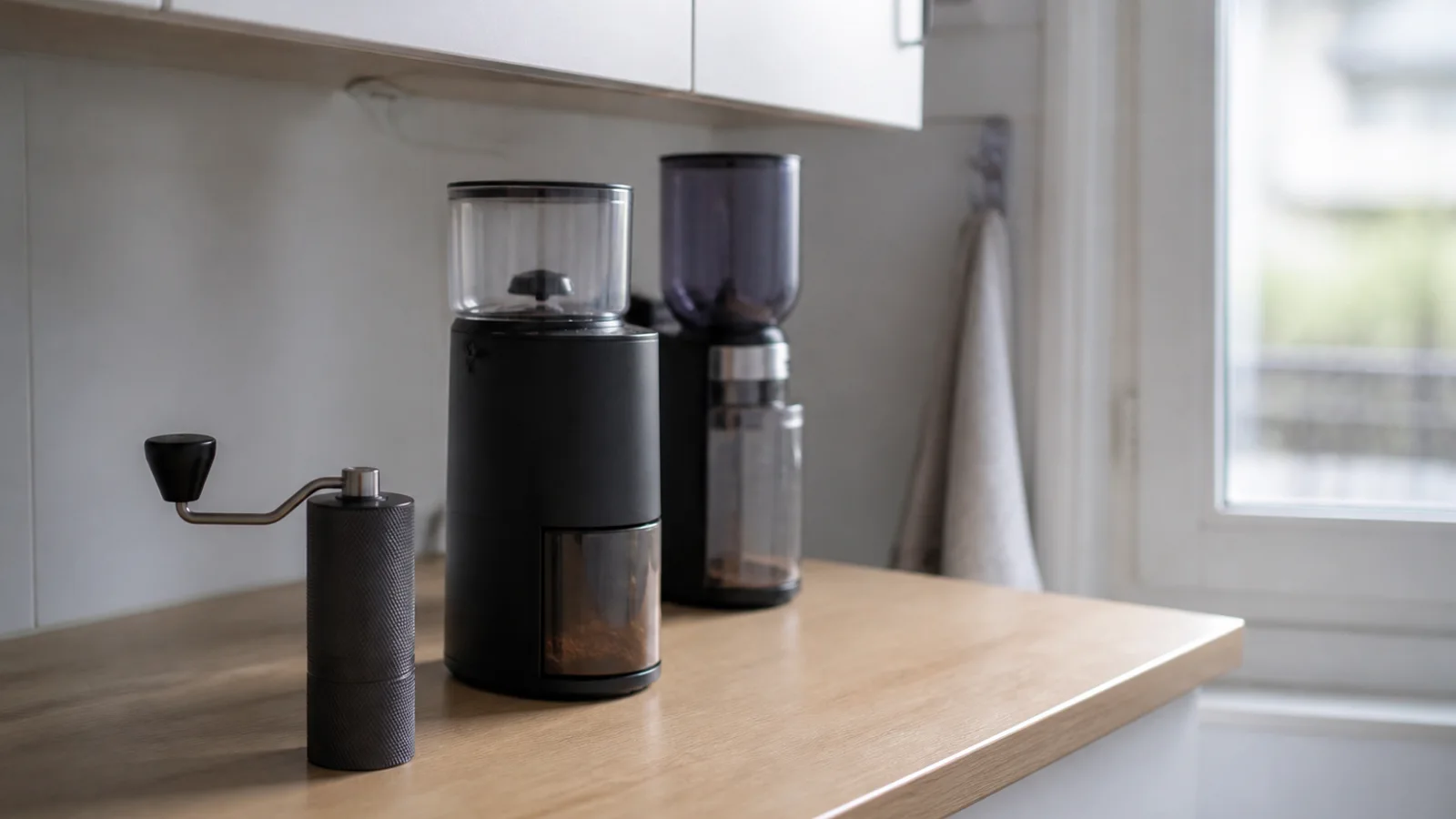
For most apartment beginners, the Baratza Encore ESP is the safest first electric grinder because it is compact, simple, and designed with a fine espresso adjustment range. The Fellow Opus is the better fit if you want one compact grinder for espresso and brewed coffee. The Breville Smart Grinder Pro is the easiest timed-dose workflow if you like a screen, portafilter cradles, and a more guided routine. The Baratza Sette 30 is the espresso-focused upgrade pick for speed and low retention, but it is not the quiet apartment pick. The KINGrinder K6 is the manual option when you want small storage, no electric grinder noise, and do not mind hand grinding.
If you are buying the whole setup, read this guide alongside the beginner espresso setup under $500 and compact espresso machines for small kitchens guides. The grinder and machine should fit together on the same counter, not fight for the same space.
Who This Guide Is For
This guide is for:
- beginner home baristas buying a first espresso grinder
- apartment renters with limited counter space
- small-kitchen users pairing a grinder with a Bambino, Dedica, or similar compact machine
- latte and oat milk latte drinkers who need repeatable espresso shots
- buyers who want Amazon options with clear tradeoffs
This guide is not for:
- commercial cafe use
- advanced hobbyists comparing high-end flat burr grinders
- buyers who want a built-in grinder espresso machine instead of a separate grinder
- people who only make drip coffee or French press and never plan to dial in espresso
The Need Behind This Guide
The real shopping problem is:
"I bought or plan to buy a beginner espresso machine, and now everyone says the grinder matters. Which grinder is actually worth making room for in a small kitchen?"
Current product research and user discussions point to a few repeated beginner problems:
- many normal burr grinders are good for drip coffee but frustrating for espresso
- the grinder often takes as much counter planning as the espresso machine
- small grind changes can make espresso run too fast or too slow
- apartments make grinder noise and morning timing more important
- beginners often spend the whole budget on the machine, then try to fix weak espresso with accessories
- manual grinders can save space and noise, but they add physical effort
The best first grinder is the one you will actually use, clean, and adjust. It should make espresso easier to learn, not turn every morning into a science project.
Quick Picks
| Pick | Best for | Why it fits |
|---|---|---|
| Baratza Encore ESP | Entry espresso grinder pick | Compact body, simple controls, and espresso-focused fine adjustment |
| Fellow Opus | Compact all-purpose grinder pick | Small footprint with settings for espresso, drip, cold brew, and AeroPress |
| Breville Smart Grinder Pro | Best timed-dose value pick | LCD workflow, 60 settings, portafilter cradles, and repeatable timed dosing |
| Baratza Sette 30 | Espresso-focused upgrade pick | Fast grinding and low-retention workflow for espresso-first users |
| KINGrinder K6 | Manual small-space pick | No electric motor noise, compact storage, and fine manual adjustment |
What Matters Before Buying an Espresso Grinder
Fine adjustment matters first. Espresso is sensitive. If one grinder step is too coarse and the next is too fine, a beginner has to adjust dose, beans, or technique just to make the shot behave.
Counter footprint matters second. A grinder usually sits beside the machine, scale, towel, and tamping area. A tall grinder under a cabinet or a wide grinder beside a dish rack may be annoying even if it looks compact online.
Noise matters in apartments. Electric grinders are normal kitchen tools, but they are not silent. If you grind early in the morning near roommates, thin walls, or sleeping kids, a manual grinder may be more realistic than a louder electric upgrade.
Dosing workflow matters. Some grinders are better for single dosing, where you weigh beans before grinding. Others are better with a hopper and timer. Beginners should pick the workflow they can repeat calmly.
Cleaning matters because old coffee grounds and oily beans can make the grinder messier over time. Look for easy burr access, a brushable catch area, and a routine you will actually follow.
Do not assume a grinder is espresso-ready just because it says "burr grinder." Many general coffee grinders are useful for drip coffee but do not give enough fine-range control for unpressurized espresso baskets.
Product Reviews
Baratza Encore ESP
Best for: Entry espresso grinder pick
Why it was selected:
The Baratza Encore ESP is the best default first grinder because it keeps the learning curve simple while still giving beginners an espresso-specific adjustment range. It is easier to recommend than the regular Baratza Encore for espresso because the ESP version is built around finer control in the espresso range.
Good fit if:
- you want a first electric grinder for a Bambino, Dedica, Gaggia, or similar starter machine
- you want simple controls instead of a screen-heavy workflow
- you need a compact upright grinder for a small counter
- you want one grinder that can still handle brewed coffee settings
Skip it if:
- you want the quietest possible apartment setup
- you want a heavier, more premium-feeling grinder body
- you want stepless adjustment or deeper espresso tinkering from day one
- you regularly grind many drinks back to back
Small-space notes:
The Encore ESP makes sense beside a compact espresso machine because it does not need a huge work zone. Leave space in front for the dosing cup, scale, and portafilter. If it sits under a cabinet, check that you can still remove the hopper lid and clean around the grinder.
Amazon check:
Check current Amazon seller, return terms, color, dimensions, included dosing cup, price, and availability before buying. Also confirm that the page is for the Encore ESP, not the older non-ESP Encore.
Fellow Opus
Best for: Compact all-purpose grinder pick
Why it was selected:
The Fellow Opus is the best pick for a small kitchen where one grinder needs to cover espresso and other brew methods. It has a compact shape, an all-purpose grind range, a catch cup workflow, and a design that fits naturally in apartment kitchens where the coffee setup may also be visible storage.
Good fit if:
- you make espresso but also brew drip, AeroPress, or cold brew
- you want a compact grinder with a clean counter presence
- you prefer single dosing over leaving a large hopper full of beans
- you want a grinder that feels approachable for mixed coffee routines
Skip it if:
- you only care about espresso and want the simplest direct espresso workflow
- you want to grind directly into a portafilter cradle every time
- you dislike switching between outer and inner adjustment ideas
- you want a grinder with a more repair-focused reputation than a design-focused one
Small-space notes:
The Opus is compact enough for many apartment counters and can work well beside a small kettle or compact espresso machine. It is especially useful if your setup changes during the week: espresso on weekdays, brewed coffee on slower mornings.
Amazon check:
Check current Amazon seller, color, return policy, dimensions, current model name, price, and availability before buying. Fellow has newer grinder variations, so confirm that the ASIN matches the exact Opus model you want.
Breville Smart Grinder Pro
Best for: Best timed-dose value pick
Why it was selected:
The Breville Smart Grinder Pro is the best fit for beginners who want a guided electric workflow. The screen, grind settings, timed dose control, and included portafilter cradles make it feel less mysterious than a bare-bones grinder. It pairs naturally with compact Breville machines but can also work with other starter setups.
Good fit if:
- you like seeing grind time and setting numbers on a screen
- you want to grind into a portafilter or included container
- you want a familiar beginner workflow with many grind settings
- you make espresso and other coffee styles from the same grinder
Skip it if:
- your cabinet clearance is tight
- you prefer single dosing with very low retention
- you want the most compact grinder in this guide
- you want a grinder designed only around espresso micro-adjustment
Small-space notes:
This grinder is taller and visually busier than the Encore ESP or Opus. Measure height carefully if it will live under upper cabinets. The portafilter cradle can make the workflow tidier, but you still need space for weighing, distributing, tamping, and wiping grounds.
Amazon check:
Check current Amazon seller, condition, return policy, included cradles, dimensions, price, and availability before buying. If the featured offer is not new from Amazon or Breville, review the condition and return terms carefully.
Baratza Sette 30
Best for: Espresso-focused upgrade pick
Why it was selected:
The Baratza Sette 30 earns the upgrade slot because it is more espresso-focused than most entry all-purpose grinders. It is fast, direct, and built around a low-retention grinding path, which can help beginners who are ready to take espresso more seriously.
Good fit if:
- espresso is the main reason you are buying a grinder
- you want faster grinding than the simplest entry picks
- you care about low retention and repeatable dosing
- you have a dedicated counter spot away from sleeping areas
Skip it if:
- you need a quiet early-morning grinder
- you want very fine micro-adjustment without future tinkering
- you mostly brew drip coffee or French press
- you want the smallest and least noticeable appliance
Small-space notes:
The Sette 30 can fit a home counter, but it is not the calmest apartment grinder. The speed is useful, yet speed often comes with more sound. It is best for a renter who has a real espresso corner and can grind without waking the apartment.
Amazon check:
Check current Amazon seller, return policy, exact model, dimensions, price, and availability before buying. If the current seller is a third-party specialty retailer, confirm the return window and warranty path before ordering.
KINGrinder K6
Best for: Manual small-space pick
Why it was selected:
The KINGrinder K6 is the manual pick for beginners who want fine adjustment, compact storage, and no electric grinder noise. It is the least appliance-like option here, which can be a real advantage in a small apartment kitchen.
Good fit if:
- you want a grinder you can store in a drawer
- you make one or two drinks at a time
- you care about quiet mornings
- you do not mind hand grinding for espresso
- you want a lower-clutter setup beside a compact machine
Skip it if:
- you make several milk drinks back to back
- you have wrist or hand comfort concerns
- you want the fastest morning routine
- you prefer pressing a button and walking away
Small-space notes:
This is the easiest grinder in the guide to put away after use. It works well for studios, shared apartments, and tiny counters. The tradeoff is effort: espresso grinding is finer than drip grinding, so hand grinding takes patience.
Amazon check:
Check current Amazon seller, color, capacity, return policy, included handle and brush, price, and availability before buying. Also confirm that the listing is the K6 model, not a different KINGrinder manual grinder.
Setup Advice for Small Kitchens
A good small-kitchen espresso setup needs three working zones:
- grind zone: grinder, beans, dosing cup, and scale
- brew zone: machine, portafilter, cup, towel, and tamping space
- cleanup zone: sink access, brush, knock box or trash, and cloth
If your counter is tiny, choose a grinder before buying extra accessories. A capable grinder improves espresso more than decorative tamping mats, large knock boxes, or a display shelf full of tools.
For a Breville Bambino or Bambino Plus setup, the Encore ESP is the easiest first recommendation. For a De'Longhi Dedica setup, a compact grinder matters even more because the whole point is saving width. For apartment buyers comparing machines, the espresso machines for apartments guide can help you decide whether you need a quiet manual route, compact electric route, or all-in-one machine.
If you drink lattes, remember that milk workflow does not fix weak espresso. Fresh beans, grind size, dose, and repeatability still matter under the milk.
Common Mistakes
The first mistake is buying the regular coffee grinder your friend uses for drip coffee and assuming it will work for espresso. Espresso requires finer control.
The second mistake is spending the whole budget on the machine. A less expensive machine plus a better grinder often makes more sense than an expensive machine with stale pre-ground coffee.
The third mistake is ignoring counter height. Tall grinders can become annoying under cabinets, especially when you need to remove a hopper lid or pour beans.
The fourth mistake is ignoring noise. A grinder may only run briefly, but in a studio or shared apartment that sound can still matter.
The fifth mistake is switching beans constantly before learning one setup. Beginners should dial in with one coffee first, then experiment after the routine feels repeatable.
The sixth mistake is buying accessories before solving the grind. A better tamper cannot rescue coffee that is ground too coarse or unevenly.
FAQ
Do I really need a burr grinder for beginner espresso?
Yes, if you want repeatable espresso from fresh beans. A burr grinder gives more control than a blade grinder because it can produce a more consistent particle size. You can start with pre-ground coffee if your machine has a pressurized basket, but a grinder is usually the upgrade that makes espresso easier to control.
Is the Baratza Encore ESP good enough for espresso?
For many beginners, yes. The Encore ESP is a practical first espresso grinder because it is simpler and more affordable than many enthusiast grinders while still giving espresso-focused adjustment. It is not the final grinder for every hobbyist, but it is a good starting point for small-kitchen setups.
Is a manual grinder annoying for espresso?
It depends on your routine. A manual grinder can be great for one or two drinks, quiet apartments, and tiny counters. It becomes annoying if you make several drinks every morning or want the fastest possible workflow.
Should I upgrade the machine or the grinder first?
If your current machine can pull espresso and your grinder is weak, upgrade the grinder first. Grind quality, freshness, and repeatability often change the cup more than another accessory or a slightly nicer machine.
Can I use a blade grinder for espresso?
Not for good repeatable espresso. A blade grinder chops coffee unevenly and does not give the fine, controlled adjustment espresso needs. If the budget is tight, start with pre-ground coffee in a pressurized basket and save for a real burr grinder.
How much counter space does an espresso grinder need?
Measure more than the grinder footprint. You also need space for a scale, dosing cup, portafilter, tamping area, and cleanup. A compact grinder still needs a usable work zone around it.
Disclosure
Apartment Barista uses Amazon affiliate links. As an Amazon Associate, this site earns from qualifying purchases. Prices and availability can change at any time and should be checked on Amazon before buying.


