
Quick Verdict
For most small-kitchen beginners, the right first espresso budget is not "spend as much as possible on the machine." It is "buy a machine you can live with, then leave enough money for the grinder, scale, cleaning supplies, and the counter space to use them."
If your budget is tight, do not spend all of it on the espresso machine. A compact machine with a real grinder plan usually beats a nicer machine paired with random pre-ground coffee forever.
If you can spend more, use the extra budget to make the whole routine easier: a better grinder, a scale that fits under the cup, a milk workflow you will actually clean, and simple maintenance supplies.
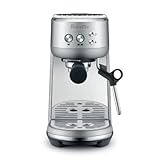
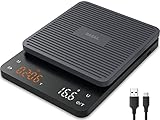
The Breville Bambino is the compact machine example in this guide. The Baratza Encore ESP is the grinder budget anchor. The BAGAIL BASICS Coffee Scale with Timer is the first accessory example. They are not a fixed-price cart; they are a way to think about where the money should go.
Apartment Barista uses Amazon affiliate links. As an Amazon Associate, this site earns from qualifying purchases. Prices, sellers, return terms, model details, and availability can change, so check the current Amazon page before buying.
This guide pairs well with the espresso machine buying guide for beginners, beginner espresso setup under $500, and best espresso setup under $1000.
Who This Guide Is For
This guide is for:
- apartment renters buying a first espresso machine
- small-kitchen users with limited counter space
- beginners comparing machine-only price with full setup cost
- latte and oat milk latte drinkers
- buyers who want a sensible first setup before upgrading
This guide is not for:
- commercial cafe equipment
- plumbed-in espresso machines
- advanced hobbyists building a large espresso bar
- buyers who already know they want a prosumer machine and grinder
- anyone looking for one fixed price that fits every kitchen
The Real Budget Question
The wrong question is:
"How much should I spend on the espresso machine?"
The better question is:
"How much should I spend on the whole espresso setup?"
A first espresso setup can include:
- espresso machine
- grinder or grinder plan
- scale
- milk pitcher or frother if you drink milk drinks
- cleaning tablets, descaler, or manual-specific cleaning supplies
- towel or microfiber cloth
- storage for small tools
- beans for learning
In a small apartment, the setup also spends counter space. A machine that uses the entire budget and the entire counter is not really affordable if you stop using it after two weeks.
Budget Bands That Make Sense
If your budget is very tight
Keep expectations modest. You may need to start with a compact machine, pressurized baskets, pre-ground coffee, or a manual grinder path while you learn.
Good fit if:
- you want to learn slowly
- you mostly drink milk drinks where perfect espresso is less critical at first
- you can wait before buying every accessory
- you understand that the grinder upgrade may come later
Skip this path if:
- you expect cafe-level control immediately
- you want to dial in fresh beans precisely on day one
- you dislike trial and error
The main rule: do not buy a very cheap machine and then assume it removes the need for a grinder, scale, and cleaning routine.
If your budget is around a balanced beginner setup
This is the best zone for many Apartment Barista readers. You are not buying a large hobbyist setup, but you are leaving room for the pieces that make espresso repeatable.
The setup usually looks like:
- compact machine
- espresso-capable grinder
- scale with timer
- simple cleaning supplies
- only one or two machine-specific accessories after you know the basket size
This is where a Bambino-style machine and Encore ESP-style grinder make sense as examples. The exact Amazon prices can change, so the point is the split: machine plus grinder plus scale, not machine alone.
If your budget is higher
A higher budget should buy comfort, not clutter.
Good uses of extra budget:
- easier milk workflow
- quieter or more precise grinder
- better scale fit
- better tamper after confirming machine size
- a compact knock box or cleaning caddy
- a machine with a workflow you will maintain
Bad uses of extra budget:
- buying every accessory before learning the routine
- buying a machine too large for the counter
- buying a built-in grinder machine only because it looks complete
- ignoring cleaning and water access
If the machine gets bigger, the setup must still fit the kitchen.
Quick Picks
| Pick | Budget role | Why it matters |
|---|---|---|
| Breville Bambino | Compact machine budget anchor | A realistic compact machine example that leaves room for a grinder and scale. |
| Baratza Encore ESP | Grinder budget anchor | A reminder that espresso needs fine, repeatable grinding, not only a nicer machine. |
| BAGAIL BASICS Coffee Scale with Timer | First accessory budget anchor | A low-clutter tool that helps beginners measure dose, yield, and time. |
Do not use this table as a fixed-price shopping cart. Check current Amazon price, seller, exact model, dimensions, included accessories, return policy, and availability before buying.
Product Examples
Breville Bambino
Best for: Compact machine budget anchor
Why it was selected:
The Breville Bambino is the machine example because current Breville materials show a compact footprint, 54 mm portafilter, fast heat-up system, manual steam wand, volumetric shot controls, and included accessories. It is a useful budget anchor because it can be a real espresso machine without forcing every beginner into a large appliance.
Good fit if:
- you want a compact machine that can stay on a small counter
- you are willing to learn a portafilter routine
- you plan to leave room for a grinder and scale
- you make espresso and some milk drinks
- you want a machine that can grow beyond the first week
Skip it if:
- you want a built-in grinder
- you want automatic milk texturing
- you cannot spare space for a separate grinder
- the current Amazon price would consume the whole setup budget
Small-space notes:
Measure for the machine and the workflow around it. You need room to lock in the portafilter, place a cup and scale, steam milk, wipe the wand, and remove the drip tray.
Budget tradeoff:
The Bambino can be a smart first machine, but only if it leaves enough budget for grinding and repeatability. If buying it means delaying a grinder forever, step back and rethink the total setup.
Amazon check:
Check the current Amazon seller, exact model, color, dimensions, included baskets and accessories, return policy, current price, and availability. Also confirm whether you are viewing the Bambino or the Bambino Plus.
Baratza Encore ESP
Best for: Grinder budget anchor
Why it was selected:
The Baratza Encore ESP is the grinder example because current Baratza documentation describes a split adjustment system with an espresso range for finer changes and a broader range for filter coffee. It is included here because beginners often under-budget the grinder, then blame the machine when shots are hard to repeat.
Good fit if:
- you want fresh-bean espresso from a compact machine
- you need a beginner-friendly electric grinder
- you want an espresso-focused grinder without jumping to a large advanced setup
- you have counter or cabinet space for a separate grinder
- you want one grinder that can also support other brew methods
Skip it if:
- you need the quietest possible setup
- you only plan to use pre-ground coffee
- you want stepless adjustment from day one
- you are buying a fully automatic machine with a built-in grinder
Small-space notes:
A grinder needs its own footprint, outlet access, grounds cleanup, and height clearance. If your counter sits under cabinets, measure the grinder and hopper area before assuming it fits.
Budget tradeoff:
The grinder is not a decorative upgrade. For traditional espresso, it is part of the core setup. If your budget feels tight, delay accessories before cutting the grinder.
Amazon check:
Check the current Amazon seller, exact Encore ESP model, color, included dosing cup, dimensions, return policy, current price, and availability. Make sure the listing is for the ESP model, not the older non-ESP Encore.
BAGAIL BASICS Coffee Scale with Timer
Best for: First accessory budget anchor
Why it was selected:
The BAGAIL BASICS Coffee Scale with Timer is the accessory example because current product documentation describes 0.1 g-style readout, timer functions, USB-C charging, a silicone pad, and a compact rectangular format. A scale is less exciting than a machine, but it helps beginners repeat what they did.
Good fit if:
- you want to measure coffee dose and espresso yield
- you need a simple timer while learning
- you want a small accessory before buying more specialized tools
- your machine has enough drip-tray clearance for the scale and cup
- you want one tool that can also help with pour-over or general coffee brewing
Skip it if:
- it does not fit under your machine with your cup
- you want a premium waterproof espresso scale
- you dislike touch controls
- you would rather buy a smaller dedicated espresso scale
Small-space notes:
Do not assume every scale fits under every compact machine. Measure cup height, drip-tray clearance, and scale footprint together.
Budget tradeoff:
A scale is a small part of the budget, but it protects the rest of the setup. Without it, beginners often change dose, yield, and timing without knowing what changed.
Amazon check:
Check the current Amazon seller, exact model, dimensions, charging cable, return policy, current price, and availability before buying.
How I Would Split the First Budget
Start with the machine category, not the machine name.
If you want traditional espresso, reserve meaningful budget for the grinder before choosing the machine. Then choose the machine that fits the remaining budget and counter space.
If you mostly want milk drinks and convenience, spend enough on a machine or frother path that makes milk cleanup realistic. A latte routine includes pitcher rinsing, wand wiping, towel storage, and sink access.
If you are unsure, buy fewer things first:
- machine
- grinder plan
- scale
- cleaning basics required by the manual
Then add accessories only after you know what problem you are solving.
Apartment Fit Checks
Before buying, check:
- machine width, depth, and height
- grinder footprint and lid clearance
- water tank access
- drip tray removal path
- outlet location and cord reach
- cup plus scale clearance
- milk pitcher and towel space
- where cleaning supplies will live
- whether morning grinder or pump noise will bother anyone nearby
Also check Amazon or the brand page for the current seller, model number, condition, return policy, included accessories, price, and availability.
Common Budget Mistakes
Spending the entire budget on the machine. The grinder, scale, cleaning supplies, beans, and counter space still matter.
Buying accessories before choosing the machine. Tamper size, dosing funnel size, and portafilter fit depend on the machine.
Ignoring the grinder because the machine looks more exciting. For fresh-bean espresso, the grinder is one of the main reasons shots become repeatable.
Forgetting milk cleanup. A latte setup needs more than a steam wand. It needs a pitcher, towel, sink access, and a habit.
Assuming a larger machine is always a better value. In a small apartment, a machine that blocks the counter can become the wrong purchase even if it has more features.
Choosing by current Amazon price alone. Seller, return policy, condition, model number, included accessories, dimensions, and availability all matter.
Buy Now vs Buy Later
Buy early:
- machine that fits the counter
- grinder or clear grinder plan
- scale
- cleaning supplies required by the manual
- milk pitcher if you drink steamed milk
Buy later:
- upgraded tamper
- bottomless portafilter
- puck screen
- dosing funnel
- knock box
- decorative organizer
The first setup should teach you what you actually use. Once the daily routine is stable, upgrades are easier to judge.
FAQ
Should I spend more on the espresso machine or the grinder?
For traditional fresh-bean espresso, do not starve the grinder budget. A better machine can still be frustrating if the grinder cannot adjust finely and repeatably enough.
Is a cheap espresso machine worth it for beginners?
It can be worth it if expectations are realistic and the setup still includes a grinder plan, scale, and cleaning routine. It is less useful if it becomes a machine-only purchase with no path to repeatable coffee.
Can I start without a grinder?
Yes, if your machine supports pressurized or dual-wall baskets and you understand the limit. That can be a learning path, but it should not be the long-term plan if you want fresh-bean espresso.
How much should I spend if I mostly drink lattes?
Spend for the milk workflow you will maintain. That may mean a steam wand you are willing to clean, a separate frother, or a machine with milk help. Do not ignore the grinder just because milk softens some espresso mistakes.
What is the first accessory I should buy?
A scale is usually the safest first accessory because it helps you measure dose, yield, and timing. Machine-specific accessories can wait until you know the basket and portafilter size.
Should I buy a machine with a built-in grinder?
Only if the larger footprint and built-in grinder tradeoff make sense for your kitchen. A separate compact machine plus grinder is often more flexible for apartment beginners.
Disclosure
Apartment Barista uses Amazon affiliate links. As an Amazon Associate, this site earns from qualifying purchases. Prices, sellers, return terms, product details, and availability can change at any time and should be checked on Amazon before buying.