Quick Verdict
If your main drink is an iced shaken espresso with oat milk, your first setup can be smaller and simpler than a hot-latte setup. You need a reliable coffee path, ice, a cup or shaker that closes safely, oat milk, and a clean place to rinse the parts you actually use. You do not need a steam wand, a large milk pitcher, a bottomless portafilter, or a counter full of tools just because the drink has oat milk in it.
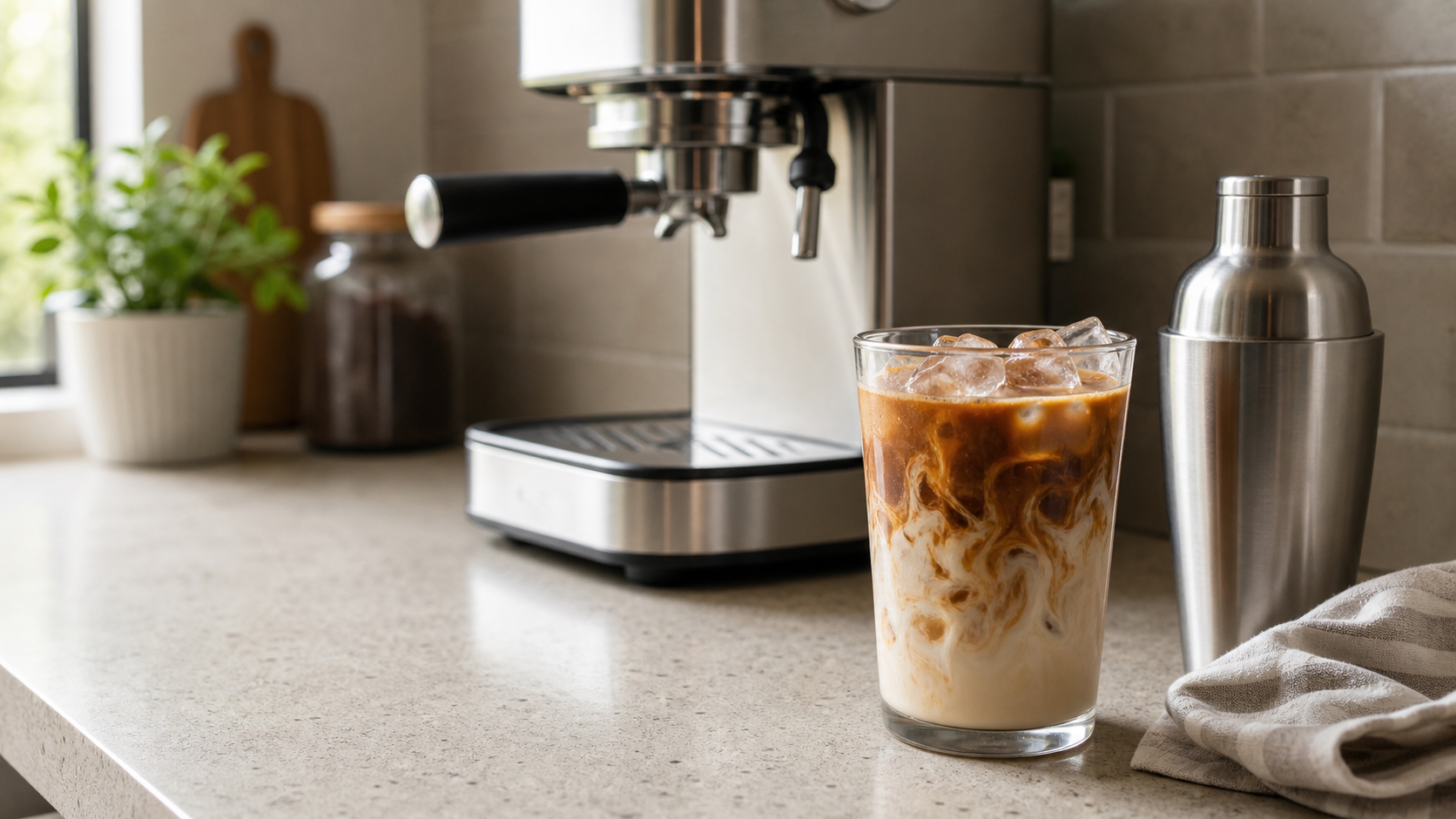
The sensible starting question is whether you want true espresso from a machine now, or simply a cold, coffee-forward drink while you learn what you enjoy. A beginner discussion about exactly this kind of morning drink included someone who did not want to grind coffee yet; that is a normal staged start, not a failure to take espresso seriously. A current Nescafe recipe also describes the drink's basic structure: coffee and ice are shaken until cold and lightly foamy, then finished with fresh ice and milk. Oatly currently publishes shaken-espresso recipes as well. Those are useful format references, not a promise that every oat drink or home method will taste the same.
This guide is based on public user discussions, manufacturer materials, recipe references, and buyer-fit research—not hands-on testing. It is for one cold drink at a time in a small apartment kitchen, not for a café-volume morning or a guarantee of a particular flavor.
The First-Setup Decision Rule
| If this sounds like you | Start here | Do not assume |
|---|---|---|
| I mainly want one cold oat-milk drink before work | Keep the cup, ice, coffee path, and cleanup route simple | You need a steam wand or milk-frothing appliance. |
| I do not want to buy a grinder yet | Choose a machine only if its manual and included basket options support your intended pre-ground start | Pre-ground coffee behaves the same as freshly ground coffee. |
| I enjoy the drink but want more control later | Add a suitable espresso-capable grinder after the basic routine is repeatable | Accessories solve a coffee, dose, or workflow problem by themselves. |
| I mostly want cold coffee, not espresso specifically | Compare a simple concentrate or brewed-coffee path before buying a machine | An espresso machine is automatically the lowest-mess answer. |
The most common early mistake is buying for a hot latte while actually making a cold shaken drink. A hot latte needs milk-texturing practice and a wand-cleaning routine. A shaken oat-milk drink can be built around cold milk, ice, and a short single-vessel workflow. Keep those two routines separate when choosing equipment.
A Low-Mess Apartment Workflow
For one morning drink, set up the route before turning anything on:
- Put out the drinking glass or a sturdy lidded shaker, ice, oat milk, and sweetener if you use it. A single vessel you can drink from after shaking can reduce a second dirty container, but use only a vessel designed to close securely.
- Make the coffee according to your machine or brewer instructions. If you are using a pressurized basket with pre-ground coffee, follow the exact manual and do not force dose, tamp, or basket changes from a different model.
- Add the coffee and any sweetener to ice, close the vessel, and shake only after checking the lid and leaving enough room for movement. Open it carefully and away from your face; hot coffee and pressure do not belong in an improvised sealed container.
- Add oat milk after shaking if you want the coffee flavor to stay clearer. Use the milk cold unless you are deliberately making a separate cold-foam topping.
- Rinse the vessel promptly, wipe the counter, and follow the machine's own instructions for the portafilter, drip tray, and any hot parts. In a small kitchen, that reset is part of the drink—not an optional chore for later.
This is deliberately a calm process, not a speed recipe. If it feels messy, identify the real bottleneck first: no landing place for ice, a leaky lid, an awkward sink route, or too many tools. An espresso setup near one small sink is a good layout check before adding more gear.
What to Buy Now, What to Delay
Buy now: a coffee path that matches the drink you actually make
For readers who want machine espresso, a compact semi-automatic machine can be a reasonable first major purchase when there is still room for ice, a cup, and cleanup. The Breville Bambino is an example of this category: current Breville material describes a compact 54 mm portafilter format and filter-basket options. It is not a one-button iced-drink appliance, and its exact included accessories can vary by listing and market.
Good fit if:
- you want to learn a short manual espresso routine for one or two drinks
- you can leave counter room for your cup, ice, and a safe path to the sink
- the exact listing and manual support the basket path you intend to use
- you accept that a pre-ground start is a compromise you may outgrow
Skip or delay it if:
- you only want cold coffee and have no interest in a manual espresso routine
- you have nowhere to cool, rinse, and safely handle its hot parts
- you expect the product alone to replace a coffee plan, ice, milk, and cleanup
Apartment tradeoff: A compact machine body can save counter width, but the working footprint includes the portafilter handle, cup, ice container, towel, and the space needed to refill and clean. Measure the workflow, not just the appliance. How much counter space you need for an espresso setup explains that check.
Amazon check: Confirm the current seller, exact model, included baskets and accessories, dimensions, return policy, price, and availability before buying.
Delay: a grinder until the staged start proves its value
A good espresso-capable grinder can improve control, but it is not a required day-one purchase for every beginner. If you start with suitable pre-ground coffee and a compatible pressurized-basket path, set a realistic expectation: it is a way to learn your drink and routine, not the same thing as a dialed-in grinder setup.
Move a grinder earlier on the list if your shots are repeatedly inconsistent, you want to explore fresh whole beans, or you are ready to change one variable at a time. Can you start espresso with pre-ground coffee? covers that boundary, and espresso machine vs. grinder budget helps with the next spending decision.
Usually skip at first: milk-frothing gear and decorative espresso accessories
Cold oat milk does not need to be steamed just to belong in this drink. A cold-foam tool can be a later preference if you specifically want a separate topping, but it is not a basic requirement. Likewise, a bottomless portafilter, oversized pitcher, WDT tool, puck screen, or display stand can add decisions and cleanup before you have a repeatable drink.
Start with the minimum, then use espresso accessories beginners can skip as a guardrail when a new tool seems urgent.
Practical Fit Checks Before You Buy
- Measure the open counter space for the machine and the portafilter handle, one ice container, your glass or shaker, and a cloth.
- Check water-tank, drip-tray, and steam-wand access. A compact machine that must be dragged out for every refill is not a low-effort apartment setup.
- Confirm the machine's manual for its included filter baskets, pre-ground guidance, dose and tamp instructions, hot-part handling, and cleaning sequence. Do not assume a basket type from a similar-looking model.
- Choose a shaker or drink vessel with a lid designed for the job. Never seal hot liquid in an improvised container, and open any shaken vessel carefully.
- Decide where oat milk, ice, and the rinsed vessel live during the routine. A clear sink route matters more than decorative coffee-station storage.
- On Amazon or the manufacturer page, confirm the current seller, exact model, dimensions, included accessories, return terms, price, and availability.
Common Mistakes
Buying a steaming setup for a drink made with cold milk
Oat milk can be part of either a hot latte or a cold shaken espresso, but the equipment needs are different. Start with the drink you make most mornings, then add a milk tool only if a separate foam or hot-milk routine becomes a real preference.
Treating pre-ground coffee as a permanent promise
Pre-ground coffee can make a beginner start less expensive and less intimidating when the machine's basket and manual support it. It can also limit control and freshness. Treat it as a legitimate stage, then reassess after you have learned the workflow.
Shaking in a container that is not safe to close
The low-mess idea works only with a secure, appropriate vessel. Leave headroom, check the lid, avoid improvised sealing methods, and handle hot coffee carefully. Saving one dish is not worth a burn or a counter spill.
Adding tools before fixing the counter route
If ice, a wet cloth, a glass, and a portafilter already compete for one small surface, a new accessory is unlikely to help. First make the everyday route usable; then upgrade the actual bottleneck.
FAQ
Do I need a steam wand for an iced shaken oat-milk espresso?
No. Cold oat milk can be added after you shake the coffee and ice. A steam wand or cold-foam tool is only relevant if you separately want hot milk texture or a foam topping.
Can I start with pre-ground coffee?
Sometimes. Check the exact machine manual and its included basket options first. A compatible pressurized-basket path can be a reasonable staged start, while an espresso-capable grinder is the clearer next step when you want more control.
Should I buy a cocktail shaker for coffee?
Only if it is a sturdy, food-safe vessel with a secure lid and you are comfortable using it safely. A lidded drinking vessel may reduce dishes, but it should never be an improvised sealed container for hot liquid.
Is an espresso machine required for this kind of drink?
No. If true espresso is not important to you, compare lower-complexity coffee methods before committing to a machine. Buy a manual espresso setup when the learning process and espresso flavor are both part of the appeal.
Disclosure
Apartment Barista uses Amazon affiliate links. As an Amazon Associate, this site earns from qualifying purchases. Prices and availability can change at any time and should be checked on Amazon before buying.