

Quick Verdict
Most beginner espresso problems are not solved by buying a bigger machine.
The usual mistakes are simpler: using a weak grinder, guessing the dose, changing too many variables at once, ignoring bean freshness, crowding the counter, and waiting too long to clean the machine.
If you already have a small espresso machine and the shots taste sour, bitter, thin, or random, start with the basics before replacing the machine:
- use coffee that is fresh enough for espresso
- grind with an espresso-capable burr grinder
- weigh the coffee dose and espresso yield
- change one variable at a time
- keep the puck prep area dry and repeatable
- clean the machine according to its manual
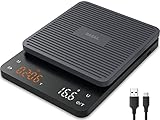
The Baratza Encore ESP is the grinder example here because current Baratza materials position it around a divided espresso range and broader filter range. The BAGAIL BASICS Coffee Scale with Timer is the scale example because it gives beginners a simple way to repeat coffee dose, shot yield, and brew time. Urnex Cafiza Cleaning Tablets are the cleaning-supply example because cleaning coffee oils is a real espresso routine, but they should only be used where your machine manual supports that type of cleaning.
Apartment Barista uses Amazon affiliate links. As an Amazon Associate, this site earns from qualifying purchases. Prices, sellers, return terms, product details, and availability can change, so check the current Amazon page before buying.
For setup context, read this with the what you need for a beginner espresso setup, best burr grinders for beginner espresso, and how to clean an espresso machine guides.
Who This Guide Is For
This guide is for:
- apartment renters learning espresso in a small kitchen
- beginners using compact semi-automatic machines
- latte drinkers who want better espresso before adding milk
- buyers wondering why a new machine still makes inconsistent shots
- people deciding what to fix before buying another accessory
This guide is not for:
- commercial cafe training
- advanced espresso profiling
- plumbed-in machine maintenance
- people who already have a full workflow dialed in
- anyone looking for a single magic setting that works for every bean
The Big Pattern
Espresso is frustrating when the setup has too many unknowns.
If the grinder is inconsistent, the dose changes every morning, the beans are old, and the machine is dirty, you cannot tell what caused the bad shot. Beginners often blame the machine because the machine is the most visible part of the setup.
The better beginner rule is:
- Make the coffee dose repeatable.
- Make the grind adjustable enough for espresso.
- Keep the workflow dry and clean.
- Change one thing at a time.
- Taste before buying more gear.
In a small kitchen, the workflow matters even more. You may not have room for a large tamping mat, grinder, knock box, towel, milk pitcher, and drying area all at once. If every shot requires moving five objects, you will rush the routine and create new mistakes.
Quick Picks
| Pick | Best for | Why it fits |
|---|---|---|
| Baratza Encore ESP | Entry espresso grinder | Gives beginners a grinder path that is actually meant to adjust in the espresso range. |
| BAGAIL BASICS Coffee Scale with Timer | Repeatable dose and yield | Helps stop guessing the dose, espresso output, and timing. |
| Urnex Cafiza Cleaning Tablets | Cleaning coffee oils | Useful for compatible espresso-machine cleaning routines, separate from descaling. |
Do not treat this table as a fixed-price cart. Check current Amazon price, seller, exact model, compatibility, return policy, and availability before buying.
Mistake 1: Spending Everything on the Machine
The machine is only one part of espresso.
A compact espresso machine can still make frustrating coffee if the grinder cannot adjust fine enough, the dose changes each time, or the beans are stale. Beginners often spend the whole budget on the shiny machine and then try to make espresso with pre-ground coffee or a basic blade grinder.
Better move:
- choose the machine and grinder together
- leave room for a scale
- plan a small cleaning kit
- buy fewer decorative accessories at first
Small-kitchen note:
Before buying anything else, decide where the grinder will sit. A machine without grinder space usually turns into a messy routine.
Mistake 2: Using the Wrong Grinder
Espresso needs fine, adjustable grinding. A grinder that works for drip coffee may not give enough useful espresso adjustment.
The Baratza Encore ESP is the grinder example in this article because current Baratza materials describe settings 1-20 as the higher-resolution espresso range and settings 21-40 for filter, French press, or cold brew. That matters because small changes in espresso grind can change the shot a lot.
Good fit if:
- you are pairing a compact machine with a first real grinder
- you want a simple electric grinder instead of hand grinding
- you need one grinder that can also handle non-espresso coffee
- you have enough vertical counter or shelf clearance
- you are willing to learn dialing in instead of guessing
Skip it if:
- you need the quietest possible grinder
- you want a premium stepless espresso grinder
- you will not measure dose and yield
- your counter has no stable grinder spot
- you mostly use pre-ground coffee and do not plan to change
Small-space tradeoff:
An electric grinder adds noise and another object on the counter. In many apartments, that is still better than buying a bigger espresso machine while leaving the grinder problem unsolved.
Amazon check:
Check current Amazon seller, exact Encore ESP model, voltage, dimensions, included bin or accessories, return policy, price, and availability.
Mistake 3: Guessing the Dose and Yield
"One scoop" is not an espresso recipe.
Beginner shots get confusing when the coffee dose changes, the cup output changes, and the grind changes all at once. A scale is not about being fussy. It gives you a baseline.
Use a scale to track:
- ground coffee dose
- espresso yield in the cup
- shot time
- milk amount for repeatable lattes
The BAGAIL BASICS Coffee Scale with Timer is the scale example because current product and manual references position it around 0.1 g increments, a timer, auto-tare, and a compact silicone-cover format for coffee use.
Good fit if:
- you are still guessing coffee amounts
- your espresso tastes different every morning
- you want repeatable lattes
- you need a budget-friendly coffee scale role
- you make pour-over or AeroPress coffee too
Skip it if:
- you already have a reliable espresso scale
- you need a very tiny scale for a cramped drip tray
- you want a premium flow-rate scale
- you dislike touch-button controls
- you never plan to measure your coffee
Small-space tradeoff:
A scale is one of the smallest upgrades, but it needs a dry home. Store it away from steam, splashes, and wet puck cleanup.
Amazon check:
Check current Amazon seller, exact model, dimensions, platform size, max capacity, timer behavior, included silicone cover, return policy, price, and availability.
Mistake 4: Changing Everything at Once
If a shot tastes bad, beginners often change the grind, dose, tamp, coffee amount, and machine setting all together. Then the next shot may be different, but you do not know why.
Better move:
- Keep the dose the same.
- Keep the yield target the same.
- Change grind size first.
- Taste the result.
- Change only one more thing if needed.
This is slower for a few mornings, but it teaches you faster than random tweaking.
Small-kitchen note:
Write a short note on your phone instead of leaving paper near the machine. Small counters already collect enough clutter.
Mistake 5: Ignoring Bean Freshness
Espresso can punish old coffee.
Old beans may run fast, taste flat, or make beginners chase settings that never feel right. Very fresh beans can also behave differently because they are still degassing. The point is not to memorize a perfect roast-date rule. The point is to stop treating beans as an invisible variable.
Better move:
- buy whole beans in sensible amounts
- store them away from heat, light, air, and moisture
- avoid mixing old and new beans in one container
- write down the coffee and roast date if available
- expect to adjust grind when changing beans
For storage, see how to store coffee beans in a small kitchen.
Mistake 6: Tamping Harder Instead of Fixing the Recipe
Tamping matters, but it is not a rescue tool for the wrong grind or dose.
If the shot runs too fast, the answer is usually not "press harder forever." Once the puck is reasonably compressed, grind size, dose, distribution, and freshness matter more.
Better move:
- distribute grounds evenly before tamping
- tamp level and firm enough to remove loose pockets
- keep the basket dry before dosing
- check grind and dose before blaming tamp pressure
Small-kitchen note:
You do not need a large tamping station right away. A stable, dry, repeatable spot matters more than a decorative setup.
Mistake 7: Letting Milk Hide Bad Espresso
Milk can make a rough shot easier to drink, but it can also hide the problem.
If every latte needs extra syrup or a lot of milk to taste okay, pull a small taste of the espresso before adding milk. You do not need to love straight espresso, but you should know whether the base tastes sour, bitter, burnt, weak, or muddy.
Better move:
- taste the espresso before milk sometimes
- improve the shot before buying more milk tools
- use a small pitcher that matches one drink
- clean milk tools right away
For milk-specific setup choices, see how to make a latte at home without a big machine.
Mistake 8: Skipping Cleaning Until the Coffee Tastes Bad
Espresso machines collect coffee oils, wet grounds, milk residue, and mineral buildup. Cleaning is not optional if you want a daily routine to stay pleasant.
The important beginner distinction:
- cleaning coffee oils is not the same as descaling mineral buildup
- cleaning tablets are not automatically safe for every water path
- descaler is not the same thing as detergent
- your machine manual decides the correct routine
Urnex Cafiza Cleaning Tablets are the cleaning-tablet example here because current Urnex materials position Cafiza around espresso-machine cleaning tablets for coffee residue. For a home machine, use them only if your manual supports that cleaning method. Do not assume a cleaning tablet belongs in the water tank.
Good fit if:
- your machine manual calls for espresso cleaning tablets
- your machine supports the relevant cleaning cycle or backflush routine
- you want a compact cleaning supply
- you are separating cleaning coffee oils from descaling
- you are ready to follow the manual exactly
Skip it if:
- your machine manual does not support cleaning tablets
- you are trying to descale mineral buildup
- you want something for milk-system cleaning
- you are unsure where the tablet goes
- you have not checked the machine's instructions
Small-space tradeoff:
Cleaning supplies should be close enough that you use them, but not mixed with food, coffee beans, or daily drink tools. A labeled drawer section works better than loose packets on the counter.
Amazon check:
Check current Amazon seller, exact Cafiza tablet format, tablet count, machine compatibility, use instructions, return policy, price, and availability.
Mistake 9: Crowding the Counter
A small espresso setup needs working space, not just storage space.
Leave room for:
- grinding and dosing
- tamping
- cup placement
- a scale
- a towel
- milk pitcher movement
- wet parts after cleaning
If every item is visible all the time, the setup may look complete but feel hard to use. Put backup supplies in a drawer or cabinet. Keep only the daily tools in the main lane.
Mistake 10: Expecting the First Week to Feel Easy
Espresso is a small learning curve stacked on top of small equipment decisions.
The first week may include sour shots, fast shots, messy pucks, spilled milk, and confusing grind changes. That does not mean you failed. It usually means you need fewer variables and a more repeatable routine.
Better move:
- pick one coffee
- use one basket
- use one dose
- use one cup
- write down what changed
- stop after a few practice shots instead of burning through the whole bag
What I Would Fix First
If you do not own an espresso-capable grinder, fix the grinder path first. It affects every shot.
If you already have a workable grinder but you are guessing amounts, buy or use a scale before buying more accessories.
If the machine has been used for a while and tastes worse than before, check the cleaning routine and manual before assuming the machine is broken.
If the counter is stressful, remove items before adding more. A small espresso setup should have a clear daily lane and a separate backup storage spot.
A Simple Beginner Routine
Try this routine before changing equipment:
- Use one coffee for a week.
- Weigh the coffee dose.
- Grind in the likely espresso range.
- Distribute and tamp the same way each time.
- Weigh the espresso output.
- Taste before adding milk sometimes.
- Adjust grind size one step at a time.
- Wipe, rinse, and clean according to the manual.
- Write down what worked.
This does not make espresso effortless, but it makes the learning process less random.
FAQ
What is the biggest beginner espresso mistake?
The biggest mistake is usually treating the machine as the whole setup. Grinder quality, coffee dose, bean freshness, puck prep, and cleaning all affect the shot.
Do I really need a grinder for espresso?
If you want repeatable espresso, yes. Freshly ground coffee from an espresso-capable burr grinder gives you much more control than pre-ground coffee.
Do I need a scale?
You can make casual coffee without one, but espresso gets much easier to troubleshoot when you weigh the dose and output. A scale helps you repeat what worked.
Why does my espresso taste sour?
Sour espresso can come from under-extraction, too coarse a grind, too short a shot, stale or unsuitable coffee, or a recipe that needs adjustment. Change one variable at a time.
Why does my espresso taste bitter?
Bitter espresso can come from over-extraction, too fine a grind, too long a shot, very dark coffee, dirty equipment, or too much time sitting before drinking.
Are cleaning tablets the same as descaler?
No. Cleaning tablets usually target coffee oils and residue. Descaler targets mineral buildup from water. Use the product and method your machine manual recommends.
Should I buy more accessories first?
Usually no. Start with grinder, scale, fresh coffee, and cleaning basics. Add tampers, distributors, pitchers, mats, and organizers only after you understand your daily routine.
Disclosure
Apartment Barista uses Amazon affiliate links. As an Amazon Associate, this site earns from qualifying purchases. Prices, sellers, return terms, product details, and availability can change at any time and should be checked on Amazon before buying.