
Quick Answer
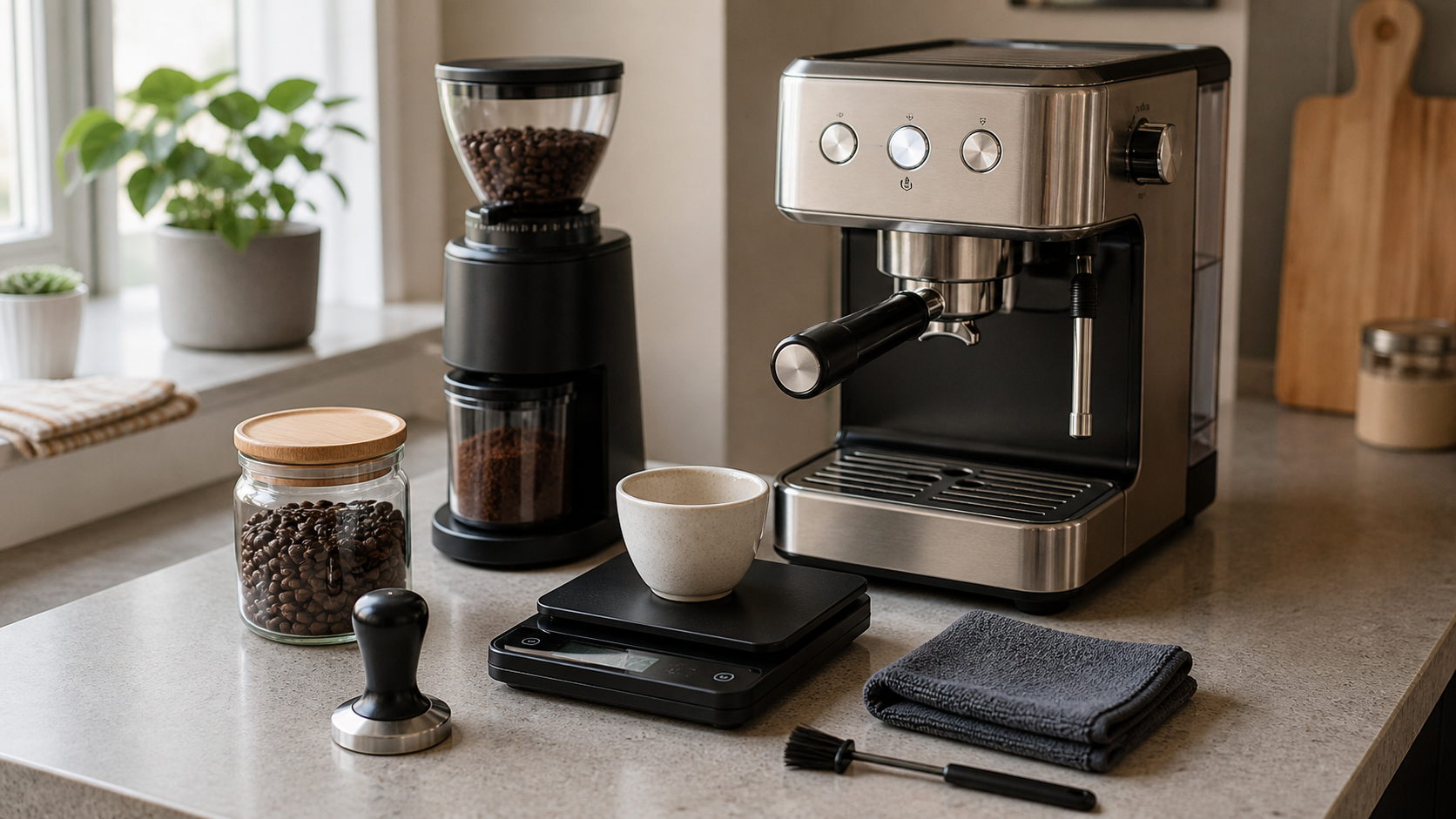
A beginner espresso setup needs fewer things than most shopping lists suggest. Start with a machine, a grinder plan, a coffee scale, fresh beans, water, cups, and the cleaning supplies your machine manual requires.
The three pieces that matter most are:
- a compact espresso machine or espresso maker
- a grinder that can work for espresso
- a scale that helps you measure dose, output, and time
For small apartments, the goal is not to build a cafe counter. The goal is to create a setup you can keep clean, repeat every morning, and store without taking over the kitchen.
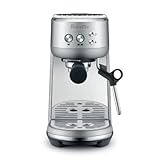
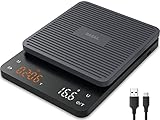
The Breville Bambino is the compact machine example in this guide. The Baratza Encore ESP is the entry grinder example. The BAGAIL BASICS Coffee Scale with Timer is the first scale example. These are not the only possible choices, but they show the three roles a beginner should understand before buying accessories.
If you are choosing actual products next, read this with the beginner espresso setup under $500, best compact espresso machines for small kitchens, and best burr grinders for beginner espresso.
Who This Guide Is For
This guide is for:
- apartment renters buying their first espresso setup
- small-kitchen users trying to avoid counter clutter
- beginners who are confused by accessory lists
- latte and oat milk latte drinkers planning a simple home routine
- buyers who want to know what is essential before spending more
This guide is not for:
- commercial cafe setups
- advanced espresso hobbyists
- people building a large multi-machine coffee bar
- buyers who already know their basket size, grinder preference, and puck-prep routine
- anyone looking for a guaranteed perfect-shot recipe
The Beginner Setup Checklist
At the simplest level, a beginner espresso setup includes:
- espresso machine or manual espresso maker
- espresso-capable grinder
- coffee scale
- fresh coffee beans
- tamper that fits your basket
- cups or small glasses
- towel or microfiber cloth
- cleaning supplies required by the machine manual
- storage spot for small tools
If you make milk drinks, add:
- milk pitcher
- steam wand or frother
- milk or barista-style oat milk
- space near the sink for immediate rinsing
If you are in a small apartment, also add:
- one clear counter zone
- one drawer or caddy for tools
- one place for beans
- one place for cleaning supplies
What to Buy First
1. Start with the machine
The machine is the anchor of the setup. It decides how much counter space you need, what basket size your accessories must fit, how you steam milk, and what cleaning routine you follow.
For apartment beginners, look for:
- compact width
- no plumbing requirement
- easy water tank access
- simple drip tray removal
- clear cleaning instructions
- enough cup clearance for your usual cup and scale
The Breville Bambino is useful as a compact-machine reference because current Breville materials describe a fast ThermoJet heat-up system, a 54mm portafilter workflow, and a small countertop format. That makes it a good example of the kind of machine many small-kitchen beginners consider.
Do not buy accessories before you know the machine. A tamper, dosing funnel, bottomless portafilter, and puck screen all depend on basket size and machine compatibility.
Amazon check:
Check current Amazon seller, exact model, color, dimensions, included accessories, return policy, price, and availability before buying.
2. Decide your grinder plan
Espresso is sensitive to grind size. If the coffee is too coarse, the shot can run too fast. If it is too fine, the machine can struggle. That is why the grinder is not just an optional extra for traditional espresso.
You have three realistic beginner paths:
- buy a separate espresso-capable grinder
- choose a machine with a built-in grinder
- use pressurized baskets and pre-ground coffee while learning, then upgrade later
For most beginners who want to improve, a separate grinder is the cleaner long-term path. The Baratza Encore ESP is the entry grinder example here because current Baratza and Amazon materials position it around an espresso-focused adjustment range while still supporting other brew methods.
A separate grinder does add counter space, sound, and cleaning. In an apartment, that tradeoff matters. If grinder noise is a major problem, read the best burr grinders for beginner espresso guide before buying.
Amazon check:
Check current Amazon seller, exact model, selected color, dimensions, included dosing cup, return policy, price, and availability before buying.
3. Buy a coffee scale early
A scale is less exciting than a new portafilter, but it helps more on day one. Espresso beginners need numbers. Without a scale, it is hard to know whether a bad shot came from too much coffee, too little liquid, the wrong grind, or inconsistent prep.
Use the scale for:
- coffee dose going into the basket
- espresso yield coming out
- shot time
- comparing one change at a time
The BAGAIL BASICS Coffee Scale with Timer is the scale example because current Amazon research shows a compact coffee scale with timer-oriented workflow and 0.1g-style measurement. It is not a premium espresso-only scale, so the key check is whether it fits under your machine with your cup.
Amazon check:
Check current Amazon seller, exact dimensions, charging cable, weight capacity, return policy, price, and availability before buying. Measure your drip-tray clearance before assuming any scale will fit.
What Can Wait
Beginners do not need every espresso accessory on day one.
These can usually wait:
- bottomless portafilter
- puck screen
- precision basket
- distribution tool
- WDT tool
- dosing funnel
- spring-loaded tamper
- tamping station
- large knock box
- decorative coffee bar shelves
Some of these tools are useful later. The issue is timing. If you buy them before knowing your machine, basket size, grinder behavior, and daily routine, you may buy the wrong size or solve the wrong problem.
Start with repeatability first: machine, grinder, scale, beans, water, cleaning.
What You Need for Milk Drinks
If you want lattes or cappuccinos, your setup needs a milk plan.
For a steam-wand machine, you need:
- milk pitcher
- towel for the steam wand
- sink access for rinsing
- space to move the pitcher
- patience to learn texture
For oat milk, barista-style oat milk usually behaves better than thin everyday oat milk. Even then, do not expect perfect latte art right away. A pleasant, warm milk drink is a better first goal.
If you do not want a steam wand yet, a handheld or electric frother can make simple milk drinks, but it will not behave the same as true steam-wand milk. The best milk frothers for oat milk lattes guide covers that path.
What You Need for Cleaning
Cleaning is part of the setup, not a later upgrade.
Before buying cleaners, read your exact machine manual. Some tasks use cleaning tablets. Some use descaler. Some beginner machines have specific cleaning cycles. Do not assume one product works for every machine and every cleaning job.
At minimum, plan for:
- microfiber towel
- brush or small cleaning tool
- machine-specific cleaning supply
- clear place to dry removable parts
- habit of wiping grounds from the counter
If your setup makes milk drinks, rinse milk tools immediately. Dried milk residue makes a small coffee station feel messy very quickly.
A Small-Apartment Setup Order
Here is the simplest order for most beginners:
- Choose the machine.
- Measure where it will live.
- Decide whether the grinder stays on the counter.
- Buy or reuse a scale that fits the machine.
- Add beans and cups.
- Add the correct cleaning supplies.
- Use the setup for one week.
- Only then add accessories that solve real problems.
This order prevents the common mistake of buying a basket of accessories before the main workflow is clear.
Example Starter Setups
The compact espresso setup
Best for small-kitchen beginners who want real espresso practice.
- compact machine
- separate grinder
- scale with timer
- tamper that fits the machine
- towel and machine-specific cleaner
- one drawer for small tools
This is the best long-term learning path, but it asks for more patience.
The milk-drink setup
Best for latte and oat milk latte drinkers.
- compact machine with steam wand or automatic milk help
- grinder or pre-ground learning path
- scale
- small milk pitcher
- towel near the machine
- sink access for rinsing
This setup should prioritize cleanup. Milk tools get annoying if the sink is too far away.
The minimal learning setup
Best for people who are not sure they will enjoy espresso.
- compact machine
- pressurized basket or beginner-friendly workflow
- pre-ground coffee at first
- scale
- cleaning supplies
This path is less flexible, but it can help a beginner learn the routine before buying a grinder.
Common Mistakes
Buying accessories before the machine. Basket size matters. Wait until you know what machine you own.
Skipping the grinder budget. A machine alone does not make the whole setup. If traditional espresso is the goal, grinder planning matters.
Skipping the scale. A scale makes espresso less mysterious because it gives you repeatable numbers.
Buying too many tools for a small kitchen. Every accessory needs a storage place and cleaning routine.
Ignoring milk cleanup. Milk drinks are pleasant, but they add rinsing, wiping, and more sink time.
Chasing perfect shots too early. First learn the routine. Then improve grind, dose, yield, and puck prep one step at a time.
FAQ
Do I need a grinder for beginner espresso?
If you want traditional espresso with fresh beans, yes, a grinder matters a lot. You can start with pressurized baskets and pre-ground coffee, but that is a learning path with limits. A grinder gives you more control.
Do I need a scale?
Yes, a scale is one of the most useful beginner tools. It helps you measure dose, yield, and timing so you can repeat a better shot instead of guessing.
What should I buy before accessories?
Buy or choose the machine first, then the grinder and scale plan. Accessories such as tampers, funnels, baskets, and puck screens depend on the machine and basket size.
Can I make espresso in a small apartment kitchen?
Yes, if the setup is compact and easy to clean. Avoid plumbed-in machines, oversized gear, and accessories that need more space than your counter can handle.
What is optional at the beginning?
Bottomless portafilters, puck screens, premium tampers, WDT tools, dosing funnels, large knock boxes, and decorative storage can usually wait.
What do I need for lattes?
You need espresso, a milk plan, and cleanup space. That usually means a steam wand or frother, a small milk pitcher, a towel, and quick sink access.
Should I buy an all-in-one machine?
Maybe, if you have the counter space and want one appliance. A separate machine and grinder can be more flexible, but it takes more space and more decisions.
What should I check on Amazon before buying?
Check seller, return policy, exact model, dimensions, included accessories, selected color or size, price, and availability. Prices and seller details can change.
Disclosure
Apartment Barista uses Amazon affiliate links. As an Amazon Associate, this site earns from qualifying purchases. Prices and availability can change at any time and should be checked on Amazon before buying.