Quick Verdict
The best place to store coffee beans in a small kitchen is usually a cool, dry, dark cabinet or drawer near your coffee setup, not next to the oven, dishwasher, sink, or sunny window.
If your coffee bag has a good resealable closure and one-way valve, you can often keep the beans in the original bag and place that bag inside a cabinet. If the bag does not close well, or if half-open bags are making your coffee corner messy, move the beans into a dedicated airtight container.
For a tidy daily setup, the OXO Steel POP Coffee Container with Scoop is the bean-storage example here. It gives beginners a simple airtight container with a tinted body and an attached scoop, which helps reduce counter clutter.
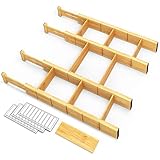
For apartments with very little counter space, SpaceAid Bamboo Drawer Dividers are the drawer-storage example. They are useful when you want backup bean bags, filters, scoops, towels, and small coffee tools off the counter but still close to the machine.
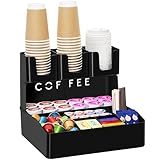
The Lifewit 2-tier Coffee Station Organizer is the visible-storage example. It can help if your coffee corner is cluttered with light supplies, but it is not the first thing I would buy if your main problem is bean freshness.
Apartment Barista uses Amazon affiliate links. As an Amazon Associate, this site earns from qualifying purchases. Prices, sellers, return terms, product details, and availability can change, so check the current Amazon page before buying.
For related small-space planning, read the best coffee station organizers for small apartments, small coffee bar ideas for apartments, and what you need for a beginner espresso setup.
Who This Guide Is For
This guide is for:
- apartment renters with limited cabinet and counter space
- beginner home baristas buying whole beans for espresso or drip coffee
- small-kitchen users who keep coffee near a machine, grinder, or kettle
- people with several half-used bags on the counter
- buyers deciding between a coffee canister, drawer storage, or counter caddy
This guide is not for:
- commercial cafe storage
- green coffee storage
- long-term warehouse storage
- people who already portion and freeze coffee carefully
- anyone looking for a decorative coffee bar first and bean freshness second
The Freshness Rule
Coffee storage is not magic. A container cannot make stale beans taste fresh again.
The useful rule is simple:
- buy an amount you can use in a reasonable time
- keep beans whole until brewing
- limit air exposure
- keep beans away from light
- keep beans away from heat and moisture
- clean the container before old coffee oils build up
In a small kitchen, the location matters as much as the container. The wrong spot can undo the benefit of a good canister.
Avoid storing beans:
- above or beside the oven
- on top of the espresso machine
- beside a dishwasher vent
- beside the sink
- in a clear jar on a sunny counter
- in the refrigerator for daily use
Better spots are:
- a cool cabinet near the grinder
- a drawer beside the coffee station
- a shaded pantry shelf
- a small counter zone away from steam and sunlight
Quick Picks
| Pick | Best for | Why it fits |
|---|---|---|
| OXO Steel POP Coffee Container with Scoop | Airtight daily bean container | Tinted, space-efficient container with an attached scoop for a simple whole-bean routine. |
| SpaceAid Bamboo Drawer Dividers | Drawer storage | Helps turn one drawer into coffee zones for bean bags, filters, towels, scoops, and small tools. |
| Lifewit 2-tier Coffee Station Organizer | Visible light-supply storage | Useful when coffee packets, cups, stirrers, or pods are spreading across the counter. |
Do not treat this table as a fixed-price shopping list. Check current Amazon price, seller, exact size, dimensions, materials, return policy, and availability before buying.
What Matters Before Buying Coffee Storage
Airtight matters, but so does light
An airtight container helps reduce air exposure. That is useful.
But if the container is clear and it sits in direct sun, the setup is still not ideal. In an apartment kitchen, a dark cabinet can be better than a pretty clear jar on the counter.
If you want the container visible, look for tinted, opaque, stainless, ceramic, or cabinet-friendly storage. If you already have a good resealable coffee bag, you may not need a new canister immediately.
Heat and moisture are small-kitchen problems
Small kitchens often put everything close together. That is the trap.
Coffee stored beside a stove, toaster oven, dishwasher, or sink may deal with heat, steam, or humidity. If the only open counter space is next to the stove, use a cabinet or drawer instead.
Do not buy too much coffee at once
Bulk buying feels efficient, but it is often the wrong move for beginners in small kitchens. Large bags create storage problems and can sit open too long.
For most small-kitchen readers, the better habit is buying smaller amounts more often, then storing the current bag well.
Keep one daily lane
Do not let coffee storage spread into three places:
- one canister on the counter
- two backup bags in a cabinet
- filters in another drawer
- scoops and clips near the sink
That is how a small coffee station becomes annoying.
Pick one daily lane:
- container beside the grinder
- original bag in a drawer
- backup bags in a cabinet
- light supplies in one caddy
Product Examples
OXO Steel POP Coffee Container with Scoop
Best for: Airtight daily bean container
Why it was selected:
The OXO Steel POP Coffee Container is the simple daily-bean container example because current OXO materials describe a 1.7-quart, space-efficient, stackable coffee container with an airtight POP-style lid, tinted body, and included 2 tablespoon scoop that attaches to the lid. The listed size is aimed at a standard 1 lb coffee bag.
Good fit if:
- you want one tidy home for your current coffee bag
- you buy whole beans and brew regularly
- you want the scoop stored with the container
- you need a container that can sit in a cabinet or on a shaded counter
- you want a simpler option than a vacuum canister
Skip it if:
- your coffee bag already reseals well and fits neatly in a cabinet
- you buy very large bulk bags
- you want a true vacuum coffee canister
- you want a container that can go fully through the dishwasher
- you will place it in direct sunlight anyway
Small-space notes:
Measure cabinet height and shelf depth before buying. A container can be space-efficient but still awkward if it blocks cabinet doors, crowds the grinder, or forces you to move several items every morning.
Tradeoff:
This is good practical storage, not a freshness miracle. It helps with air exposure and organization, but you still need fresh beans, a cool location, and a clean container.
Amazon check:
Check current Amazon seller, exact OXO model, capacity, selected color or finish, dimensions, care instructions, return policy, price, and availability.
SpaceAid Bamboo Drawer Dividers
Best for: Drawer storage
Why it was selected:
The SpaceAid dividers are the drawer-storage example because current SpaceAid materials describe adjustable bamboo dividers with inserts and labels. That format fits the real small-kitchen problem: coffee supplies are often light, awkward, and scattered.
Good fit if:
- you have one drawer near the coffee setup
- you want bean bags off the counter
- you need zones for filters, scoops, towels, clips, or small tools
- you make espresso and have several small accessories
- you prefer hidden storage over visible coffee-bar decor
Skip it if:
- your kitchen drawers are too shallow or too short
- you need a sealed container for beans, not just organization
- you rent a place with sticky or warped drawers
- you keep mostly heavy appliances on the counter
- you dislike measuring before buying organizers
Small-space notes:
Measure the inside drawer length, width, and height. Also check whether the drawer can still close when bags, scoops, and filters are inside. Drawer storage is only useful if it opens smoothly in the morning.
Tradeoff:
Drawer dividers do not preserve coffee by themselves. They solve the clutter problem. Pair them with a resealed coffee bag or airtight container if freshness is the main issue.
Amazon check:
Check current Amazon seller, exact divider count, drawer-size range, selected color, included inserts, labels, return policy, price, and availability.
Lifewit 2-tier Coffee Station Organizer
Best for: Visible light-supply storage
Why it was selected:
The Lifewit 2-tier Coffee Station Organizer is the visible-storage example because current marketplace research shows a two-tier, multi-compartment caddy format for cups, pods, packets, stirrers, lids, and other light coffee supplies. It is more about tidying a counter than protecting beans.
Good fit if:
- your counter clutter is mostly packets, pods, cups, and small supplies
- you share a coffee station with other people
- you want one visible place for daily light items
- you have enough vertical clearance under cabinets
- you will not overfill it
Skip it if:
- your real problem is stale beans
- you do not use pods, packets, or loose drink supplies
- your counter is already too narrow
- you want hidden storage
- you want storage for heavy equipment
Small-space notes:
Visible storage works only when it is edited. If every compartment is stuffed, the coffee corner may look busier than before. Use it for daily supplies, not backup inventory.
Tradeoff:
This can make a shared coffee area easier to use, but it also keeps more items visible. For a tiny apartment kitchen, a drawer or cabinet may feel calmer.
Amazon check:
Check current Amazon seller, exact dimensions, assembly notes, selected color, materials, return policy, price, and availability.
A Simple Small-Kitchen Bean Storage Setup
For a one-person coffee routine:
- Keep the current whole-bean bag in an airtight container or a tightly resealed original bag.
- Store it in a cool cabinet or drawer near the grinder.
- Keep the scoop, bag clip, or scale nearby.
- Keep backup bags in one separate cabinet spot.
- Clean the container before adding a different coffee.
For a shared apartment routine:
- Label the daily coffee.
- Keep decaf, flavored coffee, or backup bags separate.
- Put filters, packets, and pods in one visible caddy only if people actually need them daily.
- Keep beans away from wet sink areas.
- Do not store coffee on top of warm appliances.
For espresso beginners:
- Store beans close to the grinder, not close to the machine's steam wand.
- Keep only the current coffee in the daily zone.
- Use a drawer for towels, cleaning brush, puck screen, WDT tool, or clips.
- Avoid buying a large canister before you know how fast you use beans.
- If you switch beans often, label or separate bags so you do not mix roast dates and grind settings.
What I Would Do First
If you already have a good resealable coffee bag, start by moving it to the right location: cool, dark, dry, and away from heat. That costs nothing and solves the biggest mistake.
If the bag does not seal well, or the counter looks messy, buy one airtight container for the current beans. One container is enough for most beginners.
If the counter is still cluttered, organize the drawer next. A drawer can hide backup bags, filters, clips, towels, and small espresso tools without adding another visible object.
Buy a counter caddy only when the items truly need to stay visible. It is useful for shared coffee stations, pod users, and packet-heavy setups. It is not required for a simple whole-bean espresso routine.
Common Mistakes
Using a clear jar in a sunny spot. It may look nice, but light exposure is not your friend.
Storing coffee beside the oven. Heat makes a convenient spot a poor storage spot.
Keeping daily beans in the refrigerator. A fridge can add moisture and odor problems, especially when the container is opened often.
Buying a huge bag before you know your usage rate. Bulk coffee can turn into clutter and stale coffee.
Mixing old and new beans in the same container. Old oils and leftovers can affect the next bag.
Buying storage before choosing the workflow. A pod user, espresso beginner, and pour-over drinker do not need the same storage layout.
Filling every organizer compartment. Empty space is part of good small-kitchen storage.
FAQ
Should coffee beans stay in the original bag?
They can stay in the original bag if the bag reseals well and has a good one-way valve. Put the bag in a cool, dark, dry cabinet or drawer. If the bag does not close tightly, use an airtight container.
Is an airtight container enough?
It helps, but it is not the whole answer. You also need to protect beans from light, heat, moisture, and old coffee oils inside the container.
Should I store coffee beans in the refrigerator?
For daily coffee, no. The refrigerator can expose beans to moisture and food odors when the container is opened repeatedly. A cool, dark cabinet is usually simpler.
Can I freeze coffee beans?
Freezing can work for longer storage only when coffee is packed carefully in airtight, single-use portions. It is not the easiest daily habit for a beginner in a small kitchen.
Should I buy a vacuum canister?
Not first. Start with fresh beans, a good location, and an airtight container or resealable bag. A vacuum canister can make sense later if you buy enough coffee to justify it and understand the care routine.
Where should coffee beans go if I have no pantry?
Use the coolest, driest drawer or cabinet near the coffee setup. If the only available counter space is near heat, steam, or sun, choose hidden storage instead.
Disclosure
Apartment Barista uses Amazon affiliate links. As an Amazon Associate, this site earns from qualifying purchases. Prices, sellers, return terms, product details, and availability can change at any time and should be checked on Amazon before buying.