
Quick Verdict
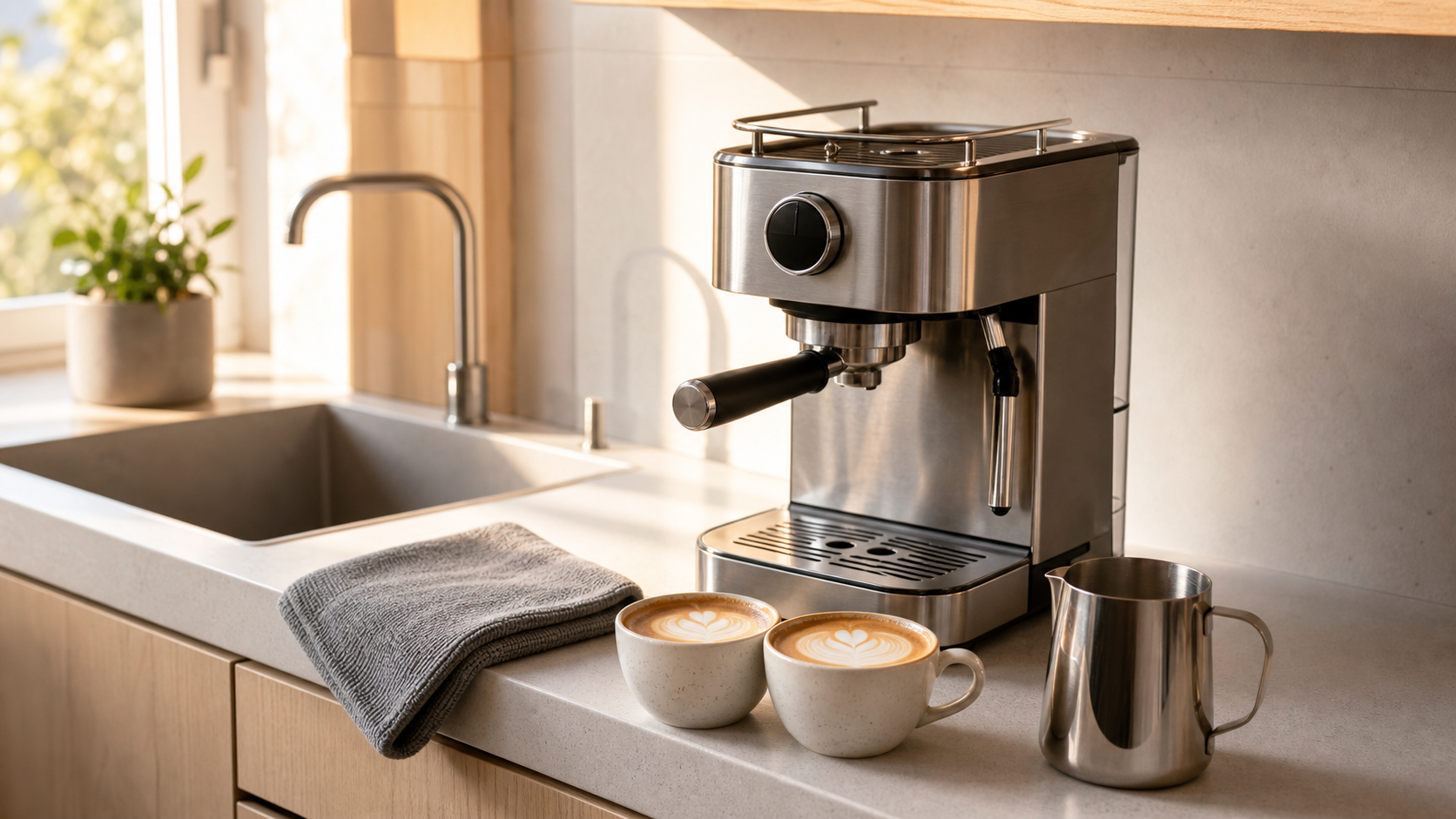
Yes—if “two lattes” means a normal one-or-two-drink morning, not a line of guests. A compact espresso machine can be a sensible apartment choice when you set up the counter for a small sequence: prepare both cups, pull the shots, steam milk in a pitcher sized for the amount you can control, then wipe and reset before the kitchen gets busy.
The mistake is paying for simultaneous brewing and steaming before checking your real volume. Current beginner discussions repeatedly separate one or two daily milk drinks from frequent groups: the first case can work with a compact machine and a calm workflow; the second may justify a machine designed for more back-to-back capacity. That is a household-volume decision, not a badge of espresso seriousness.
This guide is based on public user discussions, manufacturer materials, and buyer-fit research—not hands-on testing. It is for a couple or two roommates making one or two hot milk drinks at a time in a small kitchen. It is not a recommendation for serving several drinks every morning, commercial use, or a promise that any compact machine will make both cups finish at exactly the same second.
The Two-Drink Decision Rule
Start with the number of milk drinks you actually make in one session.
| Your usual morning | Sensible starting path | Do not assume |
|---|---|---|
| One latte, occasionally two | Compact machine and a simple repeatable workflow | You need a large dual-boiler machine immediately. |
| Two lattes most days | Compact machine can still fit if counter reset and milk workflow feel manageable | The lowest price matters more than an espresso-capable grinder and clean routine. |
| Three or more milk drinks often | Compare higher-capacity machine types before buying | A compact one-to-two-drink routine will stay enjoyable at group volume. |
| Several guests, frequent entertaining | Plan for capacity, warm-up, milk workflow, and cleanup as a system | One appliance feature alone solves the whole workflow. |
For a couple, the best first upgrade is usually a clearer sequence, not more gear. Put the cups, pitcher, cloth, and scale in one reachable zone. Keep the sink route open. Leave the portafilter in place until the machine and your own manual say it is appropriate to remove it; do not rush it just to chase a faster second drink.
If the counter is already tight, measure the working area as well as the machine. You need a place for two cups, the portafilter handle, a milk pitcher, a damp cloth, and the small rinse-and-dry step. How much counter space you need for an espresso setup is the useful check before deciding that a compact body automatically means a compact workflow.
A Practical Two-Latte Sequence
This is a conservative workflow, not a speed contest.
- Set out both cups and check the water, beans, and clean cloth first. Starting one drink before discovering an empty tank or wet basket is what makes a two-drink routine feel chaotic.
- Prepare the first shot, then make the second only when your machine's workflow allows it. Keep dose, grind setting, and cup position simple. If a second shot repeatedly changes, investigate one variable at a time rather than buying another accessory.
- Steam milk only in an amount you can control. For two smaller drinks, one appropriately sized pitcher can reduce duplicated cleanup; for two larger drinks, two smaller rounds may give you more control. Do not overfill a pitcher just to save a step.
- Wipe and purge the steam wand according to the machine manual, then clear the work zone. A damp cloth near the machine is a practical apartment tool, not decoration. See the steam-wand cleaning cloth routine for the daily reset.
- Reset before the rest of breakfast starts. Empty or rinse only as your machine manual directs, put the pitcher in its drying place, and keep used cloths out of the clean prep area.
The goal is drinks that are close enough together for your household—not a café production time. A small pause between cups is often easier to live with than a bigger machine that takes over cooking space all day.
Apartment Fit Checks Before You Buy
- Measure enough counter width for the machine, grinder plan, two cups, and the portafilter handle—not just the machine body.
- Check where the water tank, drip tray, and steam wand can be accessed. A compact machine becomes frustrating if it must be dragged forward for every refill.
- Leave a clear path to a sink or a defined drying mat. An espresso setup near one small sink can help you plan that route.
- Decide where the second person stands while you work. In a galley kitchen, two people reaching across a steam wand and hot cups is a worse bottleneck than a short machine recovery pause.
- Confirm your machine's current manual for its brew-to-steam sequence, milk-pitcher fill guidance, cleaning, and any wait or safety steps.
- On Amazon or the manufacturer page, check the current seller, exact model or pitcher size, dimensions, included accessories, return terms, price, and availability.
Two Product Roles That Support the Workflow
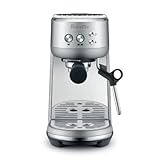
Breville Bambino: compact two-drink machine path
Best for: A beginner household that usually makes one or two milk drinks and wants a compact semi-automatic machine rather than a permanently large coffee station.
Why it fits:
Current Breville materials position the Bambino around a 54 mm portafilter and a manual steam-wand workflow in a small footprint. That makes it a useful example of the compact path: enough for a normal two-drink routine when you accept a sequence, rather than a claim that it brews and steams like a commercial machine.
Good fit if:
- your household normally makes one or two drinks, not a batch for guests
- you can keep room for a grinder or a staged pre-ground path, a cloth, and a small cleanup zone
- you are willing to learn a short shot-and-steam routine instead of expecting one-button convenience
- a smaller machine body leaves meaningful cooking space on the counter
Skip it if:
- you regularly make three or more hot milk drinks in the same rush
- you want brewing and steaming at the same time as a must-have feature
- you have no workable plan for a grinder, water access, or steam-wand cleanup
Apartment tradeoff:
The compact body can preserve counter space, but it does not erase the system around it: grinder, cups, towel, milk, and cleanup still need a home. For a more fundamental routine choice, read one-button coffee vs hands-on espresso.
Amazon check: Confirm the current seller, exact model, included accessories, dimensions, return policy, price, and availability before buying.
NewGF 20 oz stainless milk frothing pitcher: larger two-drink milk pitcher
Best for: A beginner who has outgrown a one-drink pitcher and needs more room for two smaller milk drinks without jumping straight to a bulky café jug.
Why it fits:
A larger pitcher can make a two-drink routine less fussy when the total milk volume and your machine's steam power are a genuine fit. Its role is workflow room, not guaranteed latte art or a substitute for practicing texture with a sensible amount of milk.
Good fit if:
- you regularly prepare two smaller milk drinks and can keep the pitcher comfortably below its usable fill line
- you want a separate, easy-to-rinse tool rather than a larger appliance
- you have enough steam power and counter room to handle the pitcher safely
Skip it if:
- you make only one small drink at a time; a smaller pitcher may be easier to control
- your steam wand struggles with larger milk amounts
- the pitcher size would crowd your sink, drying area, or storage drawer
Apartment tradeoff:
One larger pitcher can reduce duplicated rinsing, but it can also make the milk harder for a beginner to manage. Start with the amount you can steam consistently; bigger is not automatically faster. The beginner milk-pitcher size guide explains the one-drink versus larger-pitcher tradeoff.
Amazon check: Confirm the current seller, selected size, material notes, dimensions, return policy, price, and availability before buying.
What I Would Do First
For two apartment lattes, I would first protect the workflow rather than overbuy the machine. Reserve a small cup-and-pitcher landing zone, use one repeatable recipe, keep a cloth within reach, and make the second drink only as fast as your machine and manual support.
If the routine still feels slow after several calm mornings, identify the real bottleneck: grinder, counter layout, milk amount, cleanup, or how many people are waiting. Do not assume a new tamper, bottomless portafilter, or decorative station solves a production problem. Espresso accessories beginners can skip is a good reality check before adding more tools.
If you frequently make three or more milk drinks, or the household routinely needs them at the same moment, treat that as evidence to research higher-capacity equipment. A compact machine is still a valid choice for a smaller routine; it just should not be sold as a universal answer.
Common Mistakes
Buying for occasional guests instead of ordinary mornings
Choose for the routine you repeat most often. A machine that suits two daily drinks can be more practical in an apartment than an oversized machine bought for a few gatherings each year.
Treating simultaneous brewing and steaming as the only speed measure
For one or two drinks, setup, grinding, milk handling, cleanup, and counter traffic can matter more. Work through the whole sequence before deciding you need a different machine type.
Overfilling the milk pitcher
More milk is not a shortcut when it leaves no room to texture safely. Use the pitcher and machine instructions, and change volume gradually.
Forgetting that the second drink needs a clean path too
A damp basket, a full drip tray, used cloths, and a blocked sink turn a manageable compact setup into a messy one. Make the reset part of the workflow.
FAQ
Do I need a machine that brews and steams at the same time for two lattes?
Not necessarily. For a typical one-to-two-drink home routine, many beginners can use a compact sequential workflow. It becomes more important to compare higher-capacity machine types when several milk drinks are a frequent, time-sensitive job.
Should I pull both shots before steaming milk?
It can be a practical sequence for some machines and drink sizes, but follow your own machine manual and test the workflow without rushing. Do not leave a shot, hot steam wand, or pressurized portafilter unattended just to synchronize cups.
Can I steam milk for two lattes in one pitcher?
Possibly, if the pitcher size, milk amount, steam power, and your control make sense together. A larger pitcher is not automatically better. Begin with a manageable quantity and check your manual's milk-texturing guidance.
Is a compact espresso machine a good choice for roommates?
It can be if the users agree on a simple cleanup and storage routine. Keep the grinder, hot-water parts, steam wand, and shared beans clearly understood; shared equipment still needs a clear owner-approved cleaning method.
Disclosure
Apartment Barista uses Amazon affiliate links. As an Amazon Associate, this site earns from qualifying purchases. Prices and availability can change at any time and should be checked on Amazon before buying.