
Quick Verdict
Choose a moka pot first if you want a compact, stovetop coffee routine for occasional milk drinks and you are comfortable treating it as moka coffee, not espresso. Choose a compact espresso machine if true espresso, a steam-wand workflow, and more adjustment are part of the hobby you want. A separate electric frother can make the moka route more practical for milk drinks, but it adds another appliance to wash and store.
Who This Guide Is For
- Apartment renters with limited counter space who mainly drink lattes, cappuccinos, or milk-forward coffee.
- Beginners deciding whether a moka pot is a sensible first step before a compact espresso machine.
- Readers who want a smaller routine without pretending that concentrated moka coffee and espresso are identical.
Skip this guide if you only drink filter coffee, need several drinks in a short morning window, or cannot safely use and supervise a stovetop appliance under your home's rules.
What Usually Goes Wrong
The common mistake is comparing only the machine footprint. A moka pot can live in a cupboard, but it needs a compatible stovetop, attention while heating, a dry storage spot, and a safe cooling and cleanup route. A compact espresso machine takes dedicated counter space and a cleaning routine, yet it combines coffee extraction and milk texturing in one place.
A second mistake is buying a moka pot expecting the same drink as pump espresso. Moka coffee can be concentrated and work well with milk, but it is a different brew method. Treat it as its own route; do not buy it as a promise of a café-style espresso workflow.
How to Choose
| Decision factor | Moka pot route | Compact espresso route | What to verify |
|---|---|---|---|
| Daily footprint | Stores in a cabinet when cool and dry | Needs a stable counter location | Stove, outlet, cabinet clearance, and dry storage |
| Milk workflow | Add a separate frother or heat milk another approved way | Steam wand is part of the machine workflow | How much milk you make and how you will clean it |
| Learning style | Fewer adjustments, but heat and grind still matter | More variables and a grinder may become important | Whether you enjoy practicing and changing one variable at a time |
| Cleanup | Pot parts, gasket, and safety valve need manual-appropriate care | Drip tray, portafilter, and steam wand need daily attention | The current manual for the exact model |
Shortlist and Tradeoffs
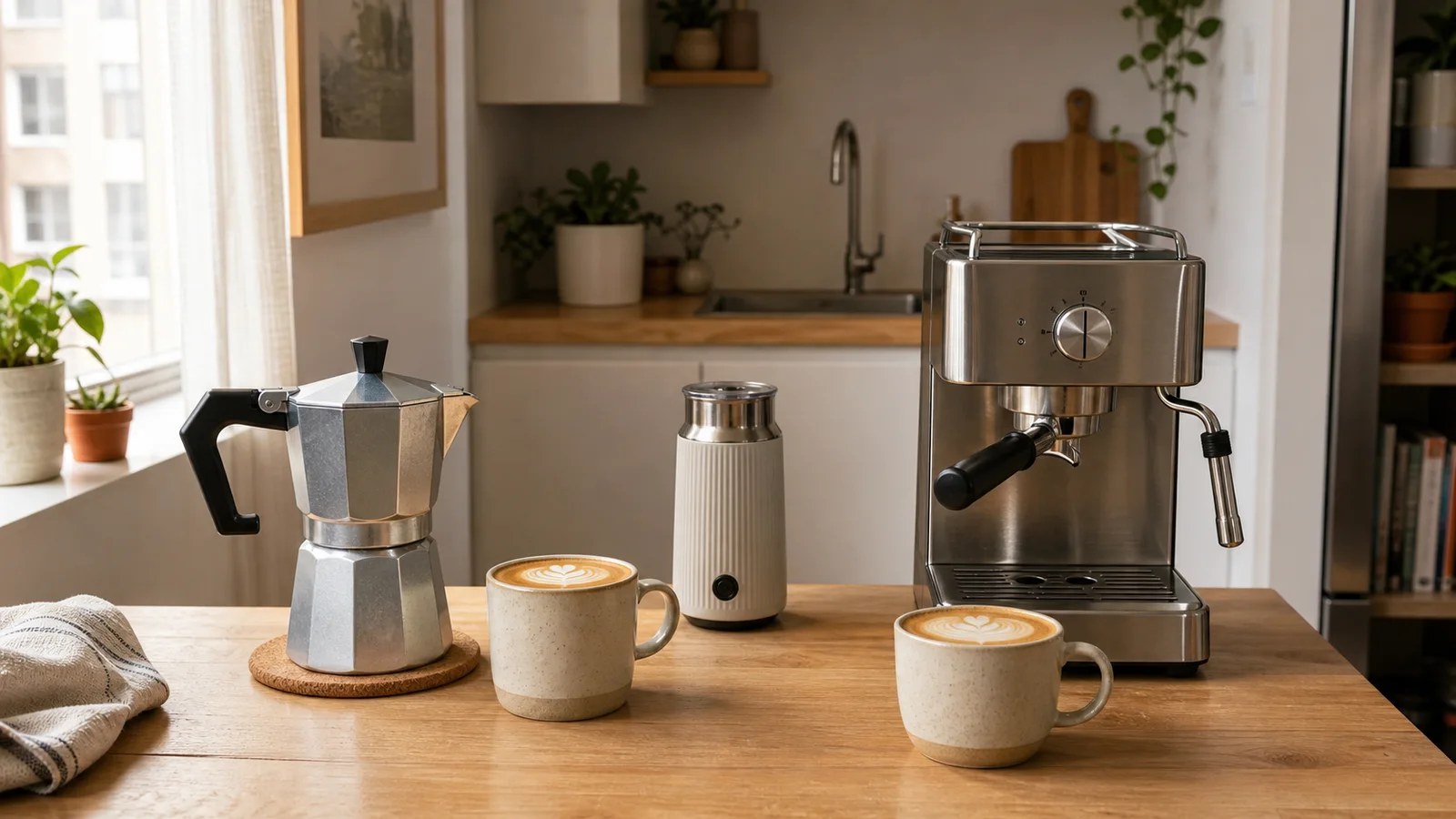
Bialetti Moka Express: cupboard-first concentrated coffee
The Bialetti Moka Express is the genuinely compact route for a reader who wants a stovetop brewer that can be put away after it is cool and dry. Its role here is not to replace espresso; it is a smaller commitment for someone who likes stronger coffee with milk and wants to postpone a larger counter setup.
Skip it if you cannot use a compatible stovetop safely, want one-button convenience, or want the pressure, steam-wand, and repeatable adjustment options of an espresso machine. Check the exact size, heat-source compatibility, seller, included parts, and current care instructions before buying. Bialetti's FAQ says the safety valve is part of the product; keep it clear and follow the manufacturer instructions rather than improvising a repair.
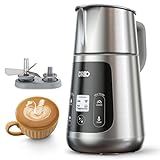
DREO BaristaMaker: milk support for the moka route
The DREO BaristaMaker is a separate electric milk-frothing option for someone who wants a more contained milk routine without buying an espresso machine immediately. It fits this guide because it supports the moka-pot choice rather than pretending the pot itself can steam milk.
Skip it if another appliance will crowd your counter or if you want to learn steam-wand texturing as part of espresso. Review the exact model, capacity, cleaning instructions, seller, and return terms; DREO's current product page lists a user manual, which should be the authority for care and use.
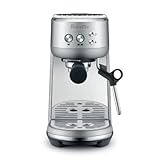
Breville Bambino: compact true-espresso path
The Breville Bambino is the compact-machine reference for a reader ready to reserve counter space for espresso and manual milk texturing. Breville lists its compact footprint, a 54 mm portafilter, dual- and single-wall baskets, and a manual steam-wand workflow on the current US product page. Those features make it a clearer next step when the goal is actual espresso practice rather than a smaller stovetop coffee routine.
Skip it if you need an appliance that disappears into a cabinet daily, want no grinder-related learning curve, or do not have a realistic cleanup routine after milk drinks. Confirm dimensions with the handle and water access in mind, plus exact included accessories, voltage, seller, return terms, price, and availability.
Small-Kitchen Workflow
- Pick one coffee zone: either a clear stove section for the moka pot or a stable counter section for the espresso machine. Do not balance either setup on a tray, cart, or surface that the manufacturer has not approved.
- For moka coffee, prepare the pot according to its manual, stay nearby while it heats, then let it cool before disassembly, washing, and cupboard storage. Keep the safety valve unobstructed.
- For espresso, keep a cloth and small waste route close by; purge and wipe the steam wand according to the machine manual immediately after milk use.
- For either route, wash milk-contact parts promptly, dry them fully, and keep cords away from wet cleanup areas.
For a smaller counter plan, see how much counter space an espresso setup needs and how to make latte at home without a big machine.
What Not to Buy Yet
Do not add a bottomless portafilter, extra tampers, multiple milk pitchers, or a large coffee-station organizer just because you are choosing an espresso route. Start with the workflow you will actually repeat. Add a grinder only when you are ready for the maintenance, noise, storage, and dialing-in work it brings; this beginner guide explains that decision.
Before You Buy
- Confirm the exact model, seller, price, availability, return terms, and included accessories on Amazon.
- Measure the full working area: stovetop or counter, cabinet clearance, outlet, sink route, and dry storage.
- Read the current manufacturer manual, especially heat-source, cleaning, cooling, gasket, valve, and milk-contact-part instructions.
- Choose a route based on your normal weekday drink, not the most ambitious drink you might make once.
Final Recommendation
For a small apartment, start with a moka pot when you want a put-away concentrated-coffee routine and accept its limits. Choose a compact espresso machine when true espresso and manual milk texturing are worth permanent counter space and a more involved routine. A separate frother is a sensible bridge only when it improves the milk drink you already plan to make, not as a substitute for deciding which coffee workflow fits you.