
Quick Verdict
The best shared espresso setup is not the one with the most gear. It is the one where both people can answer three questions without guessing: what is safe to rinse, what must stay dry, and where does each item go when the drink is finished? Put those answers in a short note near the station and give the tools a simple return path.
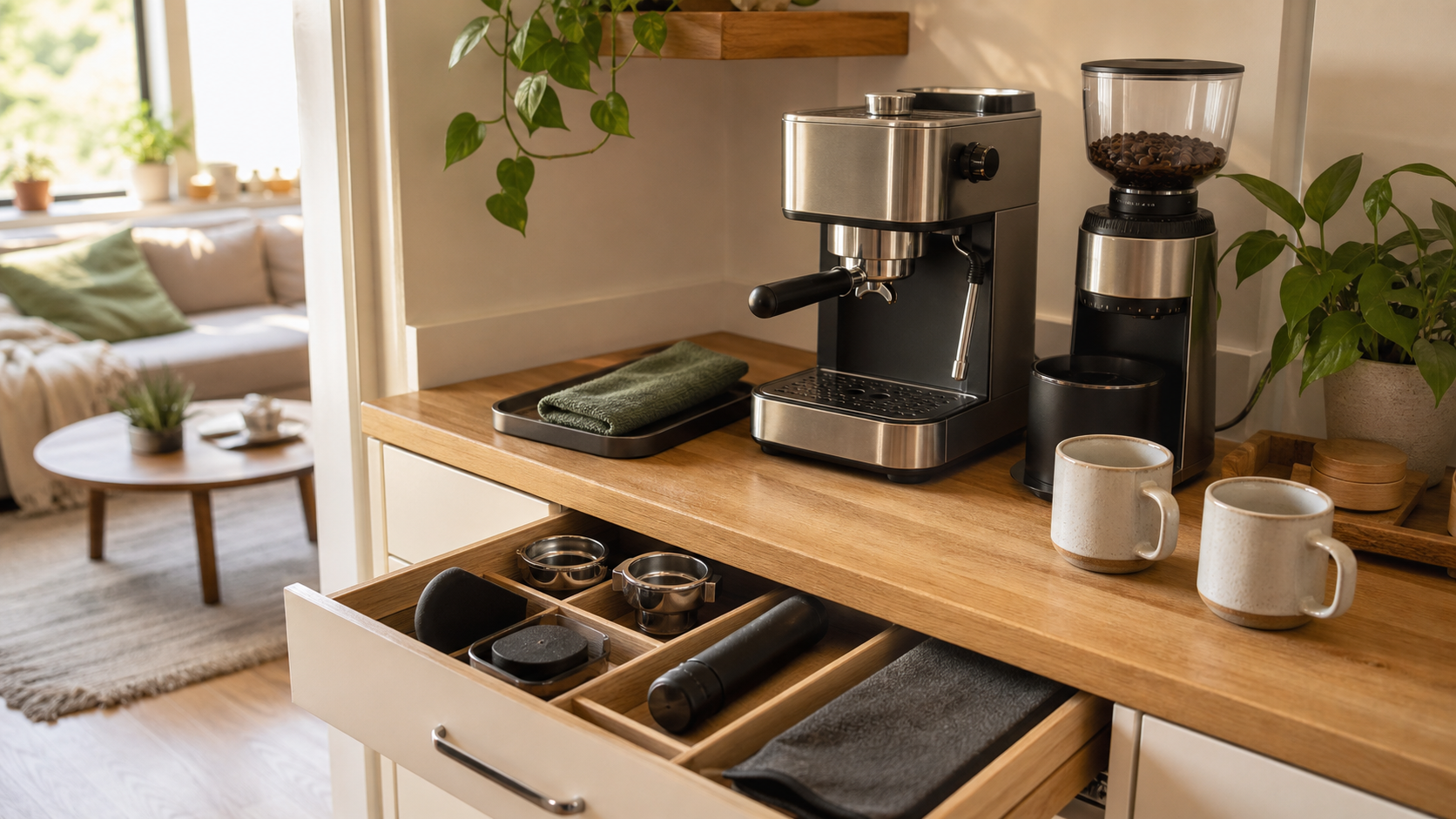
For a compact apartment setup, make the grinder and dry puck-prep tools owner-approved only; keep wet parts on a sink or drying route; and leave one clearly marked cleanup cloth nearby. This is not about treating a roommate like a hazard. It is about preventing reasonable kitchen habits from becoming the wrong habit for a particular appliance.
Apartment Barista uses Amazon affiliate links. As an Amazon Associate, this site earns from qualifying purchases. Prices, sellers, product details, return terms, and availability can change, so check the current Amazon page and the exact machine or grinder manual before buying, cleaning, or changing a shared routine.
Who This Guide Is For
This guide is for:
- two roommates or partners sharing a compact espresso machine and a small counter
- an owner introducing a beginner to a grinder, portafilter, or milk workflow
- renters who need equipment to disappear into one drawer after use
- people who want a calm written handoff instead of a long list of rules
This guide is not for:
- repairing a wet, damaged, sparking, or malfunctioning grinder or machine
- taking apart an appliance beyond its manual's instructions
- overriding a dorm, lease, building, or appliance safety rule
- leaving a hot portafilter, wet electrical item, or sharp WDT tool loose in a drawer
If water has reached a grinder, its plug, or its internal burr area, stop using it and follow the manufacturer support guidance for that model. Do not try to solve an electrical or rust-risk problem with an improvised drying, cleaning, or disassembly method.
The Shared-Kitchen Rule: Three Zones, Three Decisions
The simplest shared setup has three physical zones and one short rule for each.
| Zone | What belongs there | The rule |
|---|---|---|
| Dry prep zone | grinder, beans, scale, tamper, capped WDT tool | Keep water, wet cloths, and sink parts out. |
| Machine zone | machine, portafilter during use, cup, pitcher while steaming | Use the model's normal workflow; do not change settings or take parts apart without checking. |
| Wet reset zone | rinsed basket or pitcher, drip-tray parts, used cloth | Rinse or dry only as the exact manual permits, then return items only when dry. |
This setup is useful because the most common mistakes happen at the handoff between zones. A roommate sees a grinder next to a sink and assumes it can be washed with the dishes; another person returns a wet puck screen or cloth to the same drawer as a scale. A visual boundary is easier to follow than a memory test.
For a broader counter layout, see best coffee station layouts for small apartments. If the issue is storage for small or sharp accessories rather than shared ownership, use how to store sharp espresso accessories in a small drawer.
What Both People Should Agree On Before the First Shared Drink
Write these answers on a small card, phone note, or drawer label. The goal is to make the safe action obvious when someone is tired or in a hurry.
- Which manual is the source of truth? Save the exact model's manual or support link. A similar-looking machine can have a different removable part, purge sequence, or approved cleaner.
- What stays dry? For example, an electric grinder body, plug, cord, and burr area should not be assumed water-safe. The current Baratza Encore ESP guidance specifies dry or slightly damp exterior cleaning and says not to immerse the grinder, plug, or cord; its parts should be handled according to the model instructions.
- What can be rinsed? The answer can include a portafilter, filter basket, pitcher, or drip tray only when the exact manual allows it. Do not transfer a rule from another brand or machine.
- Who changes grind settings or beans? Changing a grinder setting, switching beans, or emptying a hopper can affect the next person's drink. Agree whether either person can change it, and leave a note when they do.
- Where do used cloths go? A used cloth should not return to the dry prep drawer. Choose a laundry, drying, or sink-side location that does not touch clean cups or beans.
- What needs a quick check first? Include water level, drip tray, power cord route, and any visibly blocked or damaged part. A shared station works better when neither person discovers these halfway through a drink.
The Minimum Safe Handoff After Each Drink
You do not need a café closing checklist for two people making coffee at home. A short reset keeps the next drink from starting with someone else's wet tool or surprise mess.
- Finish the machine's normal post-drink step. Follow the exact manual for purging, rinsing, or turning off. For a steam wand, Breville's Bambino materials call for a clean damp-cloth wipe and model-specific purge process; other machines can differ.
- Move wet items out of the dry zone. Put the pitcher, rinsed basket, and drip-tray parts on the planned drying path. Do not close them into a drawer while wet.
- Brush or wipe only as the grinder manual allows. Never treat a grinder as a sink item. If a deeper clean is due, the owner should follow the model guide rather than asking a roommate to experiment.
- Return dry tools to their marked home. The tamper, scale, funnel, and protected WDT tool should land in the same place every time.
- Wipe the counter with the dedicated cloth, then separate the cloth. A cloth can clear loose grounds and drips, but it is not a substitute for machine maintenance or a reason to put water near the grinder.
- Say or message one exception. If you changed beans, found a blocked tip, removed a part for cleaning, or left something drying, tell the other user before their next drink.
This routine deliberately favors small, repeatable actions over technical cleaning advice. The exact model manual controls the actual cleaning method.
Product Roles: Helpful Only After You Have a Clear Routine
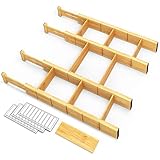
SpaceAid Bamboo Drawer Dividers With Inserts and Labels
Best for: setting physical boundaries in one shared coffee drawer
Why it fits:
Adjustable dividers can make a dry-tool section more obvious: one compartment for a tamper and scale, one protected compartment for small accessories, and no space reserved for wet cloths or cleaning liquid. That can help roommates return things consistently without adding permanent rental-kitchen hardware.
Good fit if:
- you have measured the drawer interior and know it closes without crushing tools
- your current drawer is a mixed pile of dry accessories and cleaning items
- each person will use the same simple zone labels or arrangement
- you need removable organization rather than installed storage
Skip it if:
- a small tray, cup, or existing divider already keeps the tools separated
- your drawer is too shallow for a divider and the tools to lie flat
- you expect an organizer to make a wet grinder or hot tool safe to store
Apartment note:
The divider is not a drying rack. Keep wet cloths, pitchers, and rinsed parts on a separate sink or drying route so the drawer stays a dry prep zone.
Amazon check:
Confirm current drawer measurements, seller, selected size and color, inserts, care instructions, return policy, price, and availability before buying.
Amazon Basics Microfiber Cleaning Cloths
Best for: an assigned counter-cleanup and cloth-rotation system
Why it fits:
A washable cloth pack can make it easier to assign one cloth to espresso cleanup rather than borrowing a food-prep towel or leaving a wet rag on the counter. The useful product role is organizational: one clean cloth ready for the outside of approved surfaces and one clear place for used cloths to go.
Good fit if:
- your shared counter gets covered in grounds, pitcher drips, or water spots
- you can keep clean and used cloths separate
- both users will follow a simple wash-and-dry rotation
- you need a low-profile item that fits in a drawer or small caddy
Skip it if:
- you already have clean, washable, non-abrasive cloths with a clear rotation
- you need a chemical cleaner or a repair solution
- you plan to use a wet cloth on a grinder, cord, or any area the manual says to keep dry
Apartment note:
Keep one clean cloth at the station and move the used one to its drying or laundry place after the reset. A pile of damp cloths is not a storage system.
Amazon check:
Confirm the current seller, pack size, cloth dimensions, washing guidance, return policy, price, and availability before buying.
What I Would Do First
Do not buy an organizer as the first fix. First, put a three-line note near the station:
GRINDER: dry only; owner-approved cleaning.
WET PARTS: sink/drying area, then return dry.
AFTER USE: reset machine by its manual, wipe counter, tell the next person about changes.
Then use the station together once. Notice where the process actually breaks down: a missing cloth, a drawer with no dry space, a forgotten grinder setting, or a sink with no place for a pitcher. Buy a divider or extra cloths only if that observed problem needs one.
For shared beans and grinder adjustments, single-dose espresso workflow for small apartments can reduce surprises. For the full machine-maintenance boundary, read how to clean an espresso machine.
Common Mistakes in a Shared Apartment Setup
Assuming every metal coffee part can go in the sink
Some parts may be rinseable; others may not. Electrical grinder components, burrs, coatings, and model-specific accessories need their own instructions. Check the exact manual before water, detergent, dishwasher use, or soaking.
Hiding a wet accessory in the drawer
A wet puck screen, cloth, or drip-tray part can create a messy drawer and put moisture next to dry coffee tools. Dry it on the planned route first, then return it.
Changing the grinder without telling the next person
The next user may assume a familiar setting still matches their beans and recipe. A quick note is kinder than a confusing shot and wasted coffee.
Leaving a WDT tool loose because it is small
Needle tools can roll into a towel or toward the drawer front. Use its cap or stand, a protected compartment, or leave it out until it has a safe home.
Treating a cleaning product as universal
Cleaner compatibility varies. Do not run a product through a machine or put it on a part unless the appliance manual and product instructions support that exact use.
Before You Change the Shared Setup
Check these items first:
- the exact make and model manual for the machine and grinder
- which components are removable, rinseable, dry-only, or owner-only
- current apartment, dorm, or building rules for countertop appliances
- counter width, sink route, outlet location, and where wet parts can dry
- the drawer's interior dimensions and closing clearance
- where beans, changing grinder settings, and cleaning supplies are recorded
- current Amazon seller, dimensions, care guidance, return terms, price, and availability for any organizer or cloth
FAQ
Can my roommate rinse the grinder if grounds are stuck inside?
Do not assume so. A grinder is not a generic kitchen container. Follow the exact model manual; if you are unsure, leave the deeper clean to the owner or manufacturer-supported process rather than putting water near electrical or burr components.
Should we each have separate tools?
Not necessarily. Shared tools are fine when their storage, cleaning boundary, and return location are clear. Separate tools make more sense only when two users need different basket sizes, recipes, or schedules often enough that sharing creates repeated friction.
How do we keep a shared sink usable?
Give wet parts a short drying destination instead of leaving them across the sink. The espresso setup near one small sink guide helps plan the route without treating the counter as extra sink space.
Is a drawer organizer required?
No. A tray, cup, or simple section can work. An organizer is worth considering only when it creates a measured dry-tool boundary that your current drawer cannot hold.
Final Recommendation
Share the workflow before you share the tools. Keep the grinder and dry prep tools protected, keep wet parts on their own route, follow each model's manual instead of kitchen intuition, and make the return location obvious. That small agreement is the most apartment-friendly upgrade you can make.