
Quick Verdict
The best coffee station layout for a small apartment is the one that protects prep space first and decor second. If the kitchen can still spare a real landing zone for a cup, scale, and towel, stay on the counter. If the counter is already full, move overflow to a drawer or cart before buying a full cabinet. If the kitchen has no real coffee footprint at all, a narrow cabinet or living-room station can work better than forcing espresso gear into a bad corner.
For most Apartment Barista readers, the smartest order is:
- Keep the brewing surface stable.
- Keep daily tools within one reach.
- Hide backup supplies.
- Move the station out of the kitchen only when the kitchen truly cannot support the routine.
The fastest layout wins in real life. Current apartment and espresso discussions keep repeating the same problem: people can find room for the machine, but not enough room to actually make the drink, clean the milk wand, or put tools away. This guide is built around that gap.
If you are still choosing the gear itself, pair this with best compact espresso machines for small kitchens, best coffee station organizers for small apartments, and best compact coffee bar cabinets for small apartments.
Who This Guide Is For
This guide is for:
- apartment renters with a narrow kitchen or awkward floor plan
- beginners who want espresso or milk drinks without turning the counter into a storage pile
- readers choosing between a counter setup, rolling cart, sideboard, or living-room station
- people who want a calmer-looking setup without making the routine slower
- small-space households sharing the kitchen with cooking, roommates, or family
This guide is not for:
- large dedicated home coffee bars
- built-in renovation projects
- commercial coffee service
- readers who want to hide every tool so completely that daily cleanup becomes annoying
- buyers placing very heavy appliances on furniture without checking fit and load guidance
Quick Picks
| Pick | Best for | Why it fits |
|---|---|---|
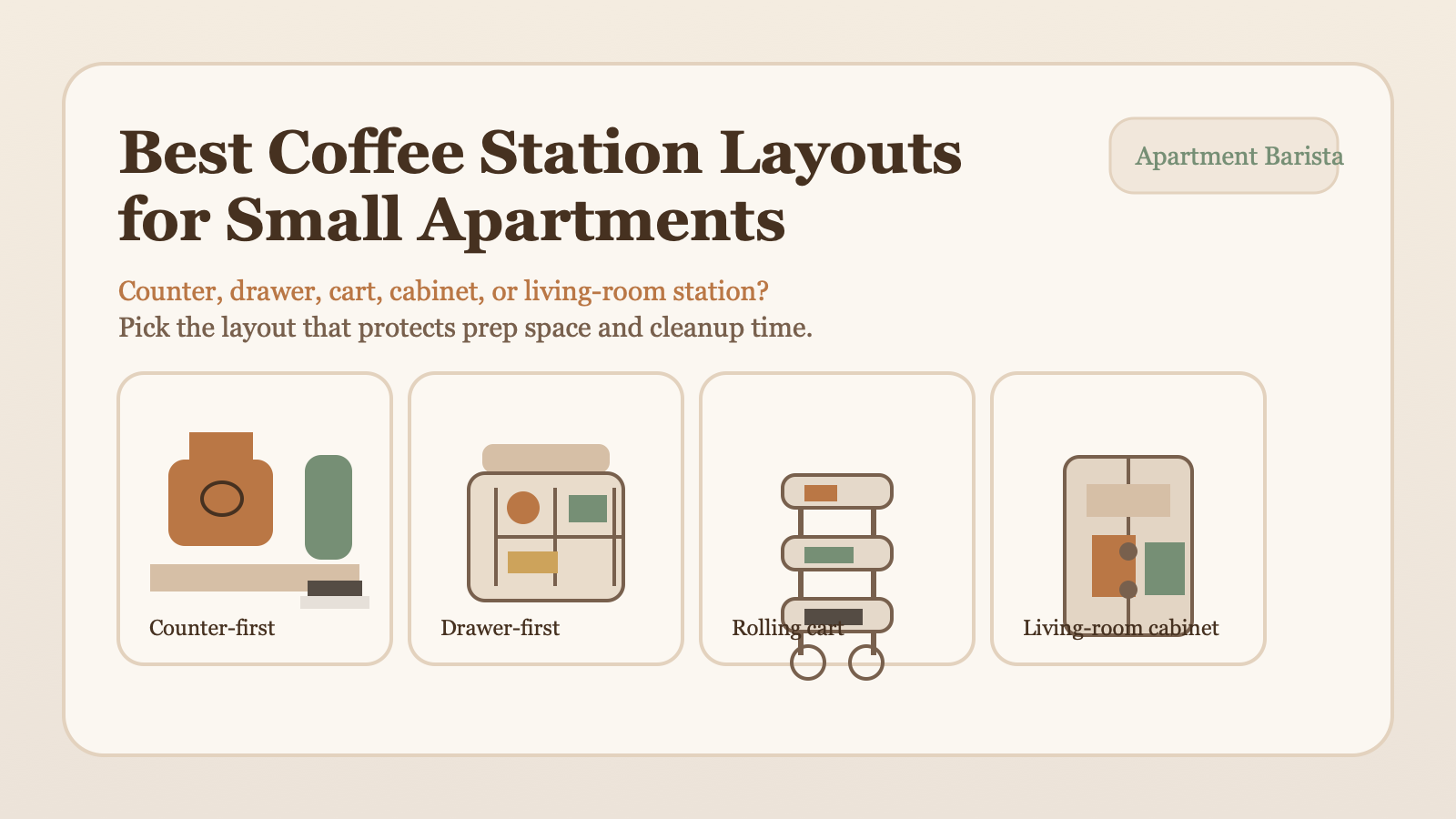
| Lifewit 2-tier Coffee Station Organizer | Counter layout pick | Helps a small counter stay usable when the clutter is pods, packets, lids, cups, or light daily supplies |
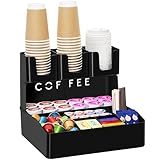
| SpaceAid Bamboo Drawer Dividers | Drawer-first layout pick | Turns one nearby drawer into a real espresso-tool zone instead of adding more visible counter clutter |
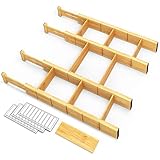
| Amazon Basics 3-Tier Rolling Utility Cart | Rolling cart layout pick | Adds movable overflow storage when the counter is full but a wall or corner is still available |
| VASAGLE Daxton Sideboard Cabinet | Narrow cabinet layout pick | Gives a dining nook or wall a shallow coffee-storage station without a deep buffet footprint |
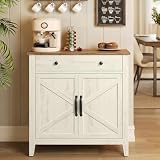
| VASAGLE LIRY Coffee Bar Cabinet | Living-room station pick | Works when the kitchen cannot host the setup and you want a more furniture-like station with closed storage |
The Layout Decision Tree
1. Choose the counter if you still have a real prep zone
Stay on the kitchen counter when you can fit:
- the machine
- one cup or milk pitcher
- one towel
- a scale or spoon landing spot
- a safe path to the sink and outlet
This is the best layout when you make one or two drinks and want the shortest cleanup path. A counter setup fails when every item stays visible. Keep only the true daily tools out. Everything else should move to a drawer, cart, or cabinet.
2. Choose a drawer-first layout when the counter is fine but the tools are the problem
Many small apartments do not actually need a bigger coffee station. They need one organized drawer. If the machine already fits and the mess is tampers, filters, towels, pods, scoop, WDT tool, and tablets, fix that first.
This layout works best when:
- the machine and grinder already have a stable home
- you have one drawer near the station
- the room feels cluttered because accessories keep multiplying
- you want the lowest-cost fix before buying furniture
3. Choose a rolling cart when the counter is full but floor space exists
A cart works well when the kitchen can handle brewing but not storage. Put the machine on the stable surface and move beans, mugs, filters, towels, extra pods, and cleaning supplies onto the cart.
This layout is strongest when:
- the cart can park beside the kitchen or dining edge
- you rent and want flexible storage
- you need overflow, not a whole new worktop
- you may move apartments and want furniture that can change jobs later
4. Choose a narrow cabinet when you need a fixed coffee wall
If the counter is too crowded and you have a small wall, breakfast nook, or dining edge, a shallow cabinet can calm the whole setup. This is often better than stacking trays and organizers on every spare inch of kitchen counter.
This layout works best when:
- you want the station to live outside the main prep area
- you need closed storage for backup beans, cleaners, towels, and mugs
- you still want a furniture footprint that is smaller than a full sideboard
- the machine may stay on the kitchen counter while the cabinet handles support gear
5. Choose a living-room station only when it makes the routine easier
Moving coffee gear into the living room or dining room is not a failure. In many apartment discussions, it is the only way to free the kitchen. The key is to keep the station close enough that water refills and cleanup do not become a chore.
Use this route when:
- the kitchen has almost no usable coffee footprint
- you want a calmer-looking furniture piece instead of a utility cart
- you can keep the station near a reliable outlet
- the walk to the sink is short enough that daily cleanup still happens
Skip this route if the station will end up so far from the sink that milk cleanup, refilling, or wiping spills starts getting delayed.
Apartment Fit Checks Before You Buy
Measure the workflow, not just the furniture. A coffee station is more than the machine width. You also need room to set down a cup, lift a water tank, empty the drip tray, wipe the wand, and put a grinder catch cup or bag somewhere.
Check the path to the sink. Current espresso discussions keep showing the same tradeoff: a beautiful station that is too far from water often turns into a slower, messier routine.
Check the walking path. A cart or cabinet should not block the oven, refrigerator, dishwasher, or the main apartment route.
Check outlet access and cord path. Do not assume a living-room station or sideboard automatically has a safe outlet location for your machine and grinder.
Check drawer interiors, not drawer fronts. Divider systems only work if the inside measurements fit the organizer range.
Check how much visual clutter you can tolerate. Open storage is flexible, but a small apartment can start feeling crowded fast if every mug, bag, pod, and towel stays visible all day.
As always, confirm the current Amazon seller, dimensions, return policy, assembly requirements, selected color or size, and availability before buying.
Product Reviews
Lifewit 2-tier Coffee Station Organizer
Best for: Counter layout pick
Why it fits:
The Lifewit organizer is the best counter-layout anchor when the counter itself still works but the visible clutter does not. Existing Apartment Barista research already uses it as a way to contain pods, packets, cups, lids, filters, and other light daily items in one compact zone instead of scattering them around the machine.
Good fit if:
- your setup is mostly drip, pod, or light coffee-bar supplies
- the machine fits already, but loose supplies keep eating the prep area
- you want one visible organizer instead of multiple trays
Skip it if:
- your real clutter is espresso tools, not packets and cups
- your upper cabinets leave very little vertical room
- you dislike open countertop storage
Small-space notes:
This is best when it solves one clear clutter problem. If you start piling every coffee item into it, the counter can feel more crowded, not less.
Amazon check:
Check the latest seller, exact size, color, return policy, price, and availability before buying. Confirm the height works under your cabinets if it will live on the counter.
SpaceAid Bamboo Drawer Dividers
Best for: Drawer-first layout pick
Why it fits:
The SpaceAid dividers are the best drawer-first layout pick because current product materials still show an expandable 17-inch to 22-inch range with inserts and labels. That makes them a good match for the apartment reader who does not need more furniture yet, only a better way to store accessories near the machine.
Good fit if:
- you already have one drawer near the coffee station
- the mess is tampers, scales, towels, pods, scoops, or cleaners
- you want the cleanest-looking fix with the smallest footprint
Skip it if:
- you do not have a nearby drawer
- you want fixed compartments without measuring
- your drawer interior is shorter than the supported range
Small-space notes:
For beginners, this can be a bigger quality-of-life upgrade than another visible shelf. It keeps the counter open while still keeping tools close enough to use every day.
Amazon check:
Check the selected size, color, seller, return terms, price, and availability before buying. Measure the interior of your drawer before checkout.
Amazon Basics 3-Tier Rolling Utility Cart
Best for: Rolling cart layout pick
Why it fits:
Current Amazon materials still position this cart as a three-tier rolling utility cart with recessed bins and caster wheels. That makes it a practical apartment overflow station for beans, filters, mugs, towels, syrups, and backup supplies when the counter cannot hold everything.
Good fit if:
- the counter is full but a nearby wall or corner is free
- you want renter-friendly storage that can move with you
- you need flexible overflow, not a permanent built-in look
Skip it if:
- you want hidden storage more than flexible storage
- you need a guaranteed heavy-appliance surface
- there is nowhere obvious to park the cart
Small-space notes:
Use it as overflow storage first. A cart becomes much more useful when the top basket holds only the items you touch often and the lower shelves hold the rest.
Amazon check:
Check the latest seller, exact dimensions, wheel details, return policy, price, and availability before buying. Make sure the parked cart will not block drawers or walkways.
VASAGLE Daxton Sideboard Cabinet
Best for: Narrow cabinet layout pick
Why it fits:
Current Amazon materials describe the Daxton as a shallow sideboard with a sliding barn-style door, adjustable shelves, and a footprint around 11.8 x 27.6 x 31.5 inches. That makes it one of the better anchors for a narrow wall, dining nook, or small apartment edge where a full-depth buffet would feel too bulky.
Good fit if:
- you want a compact fixed station outside the main kitchen prep area
- you need some closed storage without buying a wide cabinet
- your apartment has a narrow wall that could hold a coffee-support station
Skip it if:
- you need a deep surface for a full espresso machine and grinder together
- you want wheels or frequent movement
- you need more drawer organization than shelf storage
Small-space notes:
This works best when it takes pressure off the kitchen counter. Use it for backup supplies, mugs, beans, or a simple brew station, then leave the main prep work where it is easiest.
Amazon check:
Check the latest seller, exact dimensions, selected color, return policy, assembly requirements, price, and availability before buying.
VASAGLE LIRY Coffee Bar Cabinet
Best for: Living-room station pick
Why it fits:
Current Amazon materials describe the LIRY cabinet as a floor-mount unit with one drawer, two doors, three shelves, and a stated 165-pound maximum capacity. That furniture-style layout is a better fit than an open cart when the station will live in a dining nook or living area and needs to look calmer between uses.
Good fit if:
- your kitchen cannot host the full setup
- you want a more finished, furniture-like coffee station
- you need a drawer plus closed storage for a living-room or dining-area setup
Skip it if:
- you need the lowest-cost option
- you prefer a lightweight movable cart
- your apartment only has room for a very shallow unit
Small-space notes:
This is the best route when the non-kitchen station should still feel intentional. Keep daily tools easy to grab, and hide backup beans, cleaners, or extra mugs behind the doors.
Amazon check:
Check the latest seller, exact dimensions, assembly requirements, color, return policy, price, and availability before buying. Confirm the station still leaves a comfortable walking path in the room.
What I Would Do First
If I had a normal small apartment kitchen, I would try the cheapest effective fix before buying furniture:
- Remove non-daily items from the counter.
- Give accessories a drawer.
- Use a cart only if overflow still has nowhere to live.
- Buy a cabinet only when the apartment truly needs a separate station.
That order avoids a common mistake: buying a beautiful coffee cabinet before understanding what part of the routine is actually broken.
Common Mistakes
Copying a pretty setup that has no prep room
If there is no safe spot for a cup, scale, or towel, the layout is not finished.
Moving the station too far from the sink
A living-room station can work, but it becomes annoying fast if milk cleanup or water refills feel like a chore.
Treating every item as display decor
Small apartments usually feel calmer when backup supplies are hidden and only daily-use items stay visible.
Buying a cart or cabinet before measuring the path around it
The station should not make the kitchen harder to walk through or harder to clean.
Using open storage for items that should stay separated
Keep cleaners away from beans, syrups, mugs, and other drink items.
FAQ
Is a rolling cart better than a coffee cabinet for an apartment?
A rolling cart is usually better when the kitchen still works for brewing and only needs overflow storage. A cabinet is better when you need a fixed station that hides clutter and may live outside the kitchen.
Should I move my coffee station into the living room?
Only if that makes the routine easier, not harder. The best living-room station still needs an easy path to water, cleanup, and power.
What should stay on the counter in a small coffee setup?
Only the true daily tools: the machine, one cup or pitcher landing zone, and maybe one small organizer. Backup beans, cleaners, extra pods, extra mugs, and occasional tools should move elsewhere.
Is a drawer really enough for espresso accessories?
Often, yes. For many beginners, one good drawer fixes the clutter problem faster than a new shelf or cabinet.
Disclosure
Apartment Barista uses Amazon affiliate links. As an Amazon Associate, this site earns from qualifying purchases. Prices and availability can change at any time and should be checked on Amazon before buying.