Quick Verdict
For a first home-espresso bag, choose one whole-bean coffee you expect to enjoy in your usual drink, buy only an amount you can reasonably finish, and keep the setup simple long enough to learn from it. You do not need a bean labelled only for espresso, but a roaster's espresso blend or a familiar medium-to-medium-dark whole-bean option can be a less confusing place to begin than changing coffee, grinder setting, and accessories all at once.
If you do not have a grinder that can make small, repeatable espresso adjustments, this guide is not the next purchase decision. Start with whether a burr grinder is necessary for espresso or use the basket path your machine manual supports.
Who This Guide Is For
- Apartment renters and small-kitchen beginners buying their first whole beans for an espresso machine.
- People who mostly drink straight espresso, milk drinks, or iced milk drinks and want a useful way to read a bag rather than a promise of a perfect shot.
- Readers with limited counter and cabinet space who do not want several open bags at once.
Skip this guide if your machine manual requires a different coffee format, if you are buying coffee for a specific dietary or decaf need that is not clearly shown on the bag, or if a local roaster can let you taste its espresso first. A local roaster's current advice can be more relevant than a general product card.
What Usually Goes Wrong
A new espresso setup often changes too many variables at once: a new bean, a new grinder setting, a new basket, a new dose, and a new tool. That makes it hard to learn what changed the cup. Recent beginner discussions also show that readers worry about wasting a special bag while they are still learning. The lower-stress start is to pick one bag, record a simple starting recipe, and adjust only one variable after a taste check.
Do not treat the words espresso roast, medium, or dark as a guarantee. They are useful clues about what the roaster intended, but your grinder, basket, water, dose, and preferred drink still matter.
How to Choose a First Bag
| Decision factor | Why it matters in a small apartment | What to verify |
|---|---|---|
| Whole bean format | Lets an espresso-capable grinder make the small adjustments espresso needs | Your grinder, machine manual, and the exact bag format |
| Drink style | A milk drink and a straight espresso can make the same coffee feel very different | Roaster tasting notes and whether you usually add milk |
| Roast direction | A familiar, balanced profile can be easier to learn from than chasing an unfamiliar flavor immediately | The roaster's current description, not a color name alone |
| Bag size | A single open bag limits counter clutter and lets you learn before buying more | How many drinks you make and where you will store it |
| Repeatability | Staying with one bag briefly gives your notes and grinder changes a clearer meaning | A scale, a simple log, and a plan to change one thing at a time |
Counter Culture's current grind guide notes that espresso needs an espresso-specific grinder and that roast level changes bean behavior. That is why this guide treats coffee choice and grinder adjustment as a pair rather than a product shortcut.
Two Whole-Bean Starting Points
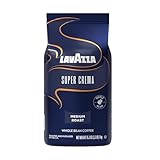
Lavazza Super Crema Whole Bean Coffee — ASIN B000SDKDM4
This is a whole-bean, medium espresso-roast blend candidate for a reader who wants a familiar starting point for espresso or milk drinks and prefers to work with one consistent bag before experimenting. Lavazza currently describes Super Crema as a whole-bean blend for espresso with roasted-hazelnut and brown-sugar notes.
The tradeoff is that a broad, familiar profile is not automatically your favorite profile, and a larger bag can be a poor fit if you make only occasional drinks. Check the exact Amazon listing, bag size, seller, roast-date information if shown, price, return terms, and availability before buying. Skip it for now if you specifically want a lighter or more origin-led cup, or if you cannot store the amount you buy away from heat, light, and moisture.
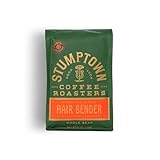
Stumptown Hair Bender Whole Bean Coffee — ASIN B008J4WEBM
This is a whole-bean, medium-roast espresso-blend candidate for a reader who wants a smaller-bag route and is curious about a blend with more explicit citrus and dark-chocolate tasting notes. Stumptown currently presents Hair Bender as its signature espresso blend and says it works across brewing methods.
The tradeoff is that tasting notes are a direction, not a promise of the same cup in every compact machine. It is a better buy-later choice if you do not enjoy citrus-forward notes or if you have not yet learned whether you prefer a milk drink or straight espresso. Confirm the exact Amazon variant, seller, bag size, roast-date information if shown, price, return terms, and availability before buying.
A Small-Kitchen First-Bag Workflow
- Pick one bag rather than opening several coffees at the same time.
- Store it in a cool, dry, shaded place; use the original bag or a clean container only if it fits your normal routine. Our small-kitchen bean-storage guide covers the counter-versus-drawer decision.
- Weigh the same starting dose for a few sessions and note the grinder setting, output, and what you taste.
- Change one thing at a time. If the cup is not where you want it, begin with a modest grind adjustment rather than buying another accessory immediately.
- When you know what you like, compare a second bag with a different roast direction or tasting-note profile.
For a compact setup, the helpful goal is a repeatable morning drink, not a universally correct recipe. The one-variable troubleshooting guide can keep the learning process legible.
What Not to Buy Yet
You do not need a subscription, a row of open coffee bags, a bottomless portafilter, or specialty storage solely because you bought your first beans. Add an accessory only after it solves a specific problem: a scale if you cannot repeat a dose and output, a storage container if the original bag does not fit your dry storage route, or a different coffee only after you can describe what you want to change.
Before You Buy
- Confirm the exact whole-bean product, bag size, seller, price, return terms, and availability on Amazon.
- Check the roaster's current product description and any roast-date information available to you.
- Confirm your grinder can make the fine, repeatable adjustments your machine and basket require.
- Measure the cabinet or drawer space for one bag and keep it away from heat, steam, and wet cleanup zones.
- If you drink mostly milk drinks, choose a profile you expect to enjoy with milk instead of selecting solely by a product label.
Final Recommendation
Choose one current whole-bean bag that fits the drink you actually make, your storage space, and your willingness to learn a simple grinder routine. Start with a modest quantity when possible, keep notes for a few drinks, and let your own taste decide the next bag. That is a more useful first step than trying to buy every espresso variable at once.