

Quick Verdict
When an espresso shot suddenly runs too fast, tastes wrong, sprays from a bottomless portafilter, or becomes messy, do not change the grinder, dose, WDT technique, tamper, basket, puck screen, and yield together. Choose one symptom, keep a short baseline, and change one thing for the next shot.
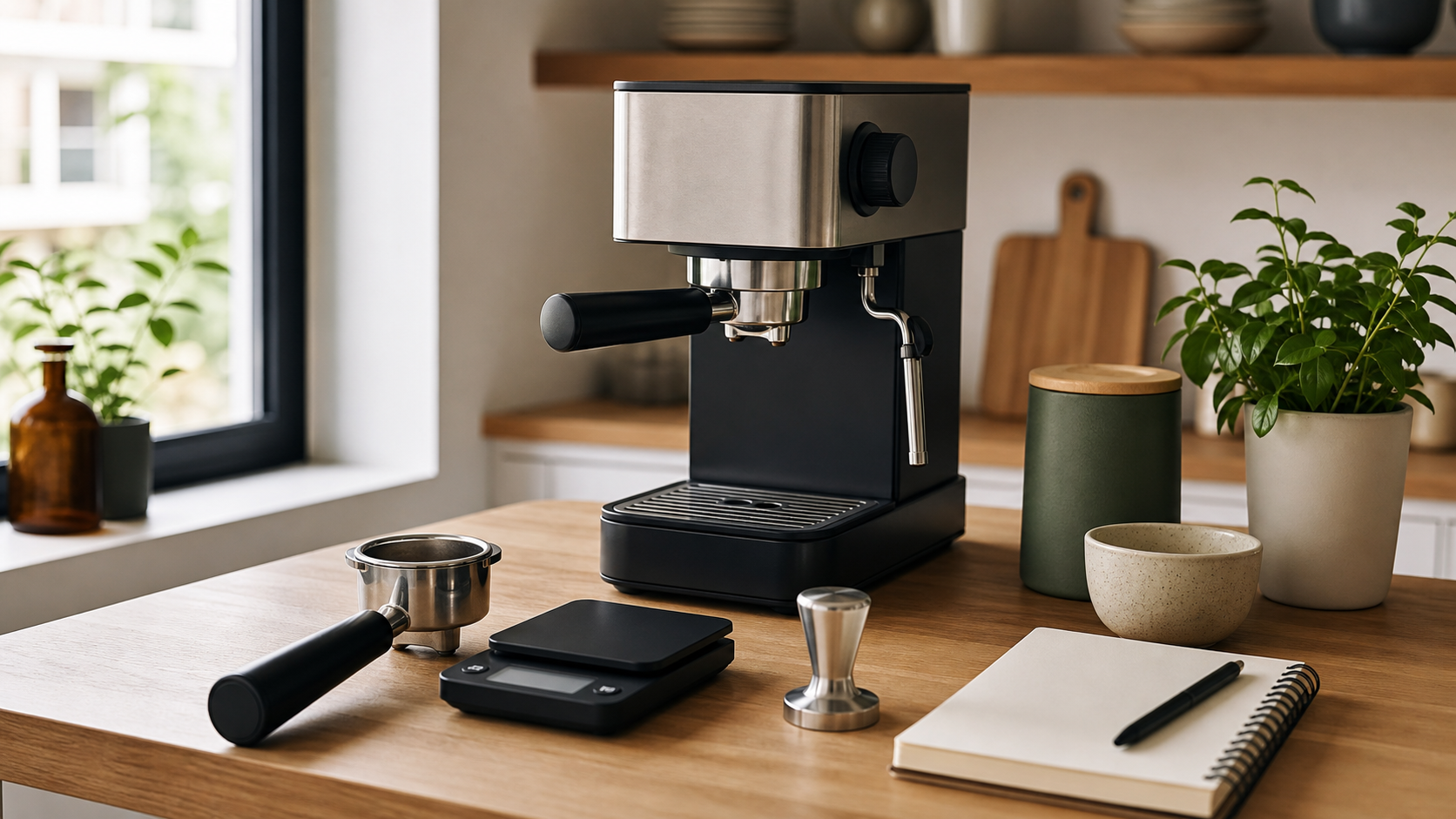
For most beginner taste and flow problems, the first useful variable is a small grinder adjustment while the coffee, basket, dose, yield target, and puck-prep routine stay the same. If you cannot name what changed, the next cup is not a clear test. That is especially expensive and annoying on a small apartment counter where every added tool also creates cleanup and storage work.
Apartment Barista uses Amazon affiliate links. As an Amazon Associate, this site earns from qualifying purchases. Prices and availability can change at any time and should be checked on Amazon before buying.
Who This Guide Is For
This guide is for:
- beginners who bought several espresso accessories at once
- Bambino, Dedica, and other compact-machine owners learning a repeatable recipe
- anyone who cannot tell whether a new tool or a new grind setting changed the shot
- apartment users who want less coffee mess and fewer loose items on the counter
This guide is not for:
- diagnosing an electrical, pressure, leak, or safety problem; use the machine manual and manufacturer support
- copying another machine's basket dose without checking your own basket
- treating a bottomless portafilter's appearance as more important than taste and a safe workflow
Build a Baseline Before You Troubleshoot
Use one coffee, one basket, one cup, and one simple routine for a few shots. Write down only the details that can help you repeat the attempt:
| Keep stable | Record | Do not add yet |
|---|---|---|
| Coffee and basket | dry dose, beverage yield, grinder setting, taste | new basket, puck screen, paper filter, or bottomless portafilter |
| Puck-prep order | whether you used WDT and a normal consistent tamp | a new tamper and a new distribution method together |
| Machine routine | unusual temperature, cleaning, or warning-light context | a large recipe change because one shot looked odd |
Do not chase a universal time or a social-media recipe. A sensible starting ratio and shot time can give you a place to begin, but the useful question is whether one controlled change moves the taste and flow in a helpful direction.
The One-Variable Routine
- Check the ordinary things first. Confirm the machine is ready, the basket is the one you expect, the coffee is not obviously stale, and you are following the manual's cleaning and fill guidance.
- Pull one baseline shot. Weigh the dry dose and the drink if you can. Note the grinder setting, output, time as a reference, and a plain taste note such as sharp, bitter, thin, or acceptable.
- Choose one question. For example: “Will one small grind adjustment slow this fast, sour-tasting shot?” Do not also change dose or add a puck screen.
- Make one small change. De'Longhi's current grinder guidance similarly advises moving one click at a time. The exact direction and step size depend on your grinder, coffee, and machine.
- Repeat the same preparation. Keep basket, dose, yield target, tamp, and coffee stable for the next shot.
- Compare, then decide. If the change helped, repeat once before changing anything else. If it did not, return to the recorded baseline or make the next single adjustment.
- Add an accessory only after a stable shot exists. Test it separately and re-check dose and headspace when it takes space in the basket.
This is deliberately slower than changing five things. It is also the shortest path to knowing what your setup actually needs.
Start With the Symptom, Not a Shopping List
The shot is fast, thin, or sharply sour
Keep the same dose and yield target first. Make one small grinder adjustment, then compare the result. If you change dose, grind, and yield together, you cannot tell which one altered the extraction.
If your grinder cannot make a useful adjustment, that is a separate equipment limitation. Read whether a burr grinder is necessary for espresso before buying a basket, puck screen, or bottomless portafilter to solve a grinder problem.
The shot is slow, harsh, or bitter
Do not immediately lower the dose, use more water, switch baskets, and grind coarser together. Pick one adjustment and preserve the notes. If the coffee or recipe has changed since the last good shot, restore the familiar coffee and dose before blaming a tool.
A bottomless portafilter sprays or looks uneven
Spray can be useful information, but it is not a command to buy more accessories. Return to one known basket and basic prep. Confirm the dose fits, use a consistent tamp, and address grind or distribution one variable at a time. The bottomless portafilter guide explains why it is optional for beginners.
You added a puck screen, paper filter, or new basket
Remove the new item and confirm the baseline first. A puck screen and paper filter change the basket stack; a new basket can change dose capacity and headspace. Reintroduce one item only after the earlier recipe is repeatable. For compact baskets, see why 18g does not always fit.
Three Useful Tools, Used Separately
A compact scale: the first troubleshooting tool
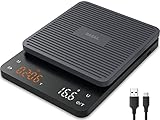
The BAGAIL BASICS Coffee Scale with Timer is the support example because it lets you record the dry dose and beverage yield instead of relying entirely on a grinder timer. A scale gives a beginner a baseline; it does not choose the right recipe for every coffee.
Good fit if:
- you do not know how much coffee reaches the basket
- you want to compare one small change with the same dose and output
- it fits your drip tray with enough cup clearance
Skip it if:
- your existing scale already measures reliably
- it cannot sit safely on your machine
- you are using it as an excuse to change recipe variables all at once
Amazon check: confirm current dimensions, seller, return terms, price, and availability before buying.
A WDT tool: only for a repeatable distribution issue
The Aieve WDT tool is an example for a setup where grounds repeatedly clump or distribute unevenly. Use the same light, simple movement each time. Do not add WDT, a new tamper, a puck screen, and a bottomless portafilter in one troubleshooting session.
Good fit if:
- your current grinder repeatedly produces visible clumps
- you can keep the rest of the prep routine stable
- you have a dry, protected storage spot for the needles
Skip it if:
- your main problem is an unknown dose, unsuitable grind, or basket mismatch
- you are adding it only because a video says every beginner must have one
For spill control and fit checks, see the dosing funnel and WDT workflow.
Amazon check: confirm the current tool variant, seller, return terms, price, and availability before buying.
A fitted tamper: a later consistency upgrade
The Normcore V4 53.3mm tamper is a Breville-style compatibility example, not a universal recommendation. A fitted tamper can make a stable routine easier to repeat, but it cannot repair an overfilled basket, unsuitable grind, or several variables changing at once.
Good fit if:
- your exact basket and portafilter are confirmed compatible
- you already have a measured baseline and want a more repeatable tamping feel
- you have not changed basket size or type at the same time
Skip it if:
- you have a 51mm, 58mm, or unverified replacement basket
- the dose does not fit before tamping
- you expect a tamper upgrade to solve a grinder issue
Amazon check: confirm exact diameter, basket fit, seller, return terms, price, and availability before buying.
What I Would Do First in a Small Apartment Kitchen
Keep only the machine, grinder, scale, basket, and a clean cloth in the daily work zone. Put optional tools in one dry drawer or caddy. When a shot goes wrong, take out only the tool you are deliberately testing, then put it away again.
This prevents the common small-counter pattern: loose WDT needles, a puck screen, a funnel, a bottomless portafilter, and a second tamper all appear at once, grounds spread everywhere, and the original problem becomes impossible to see. A simple repeatable recipe is more valuable than a crowded espresso station.
Common Mistakes
- Changing grind, dose, and beverage yield in the same shot.
- Adding a puck screen or paper filter without re-checking basket headspace.
- Treating a bottomless portafilter as mandatory before the taste is stable.
- Using a funnel to hide an overfilled basket.
- Buying a tamper by a broad portafilter diameter instead of exact basket fit.
- Recording shot time but not dose, yield, coffee, or the change made.
- Ignoring a machine warning, leak, or electrical issue and trying to fix it with recipe changes.
FAQ
What should I change first when espresso runs too fast?
If the machine, coffee, basket, dose, and yield target are known, make one small grinder adjustment first. Keep the remaining baseline stable long enough to compare the next shot.
Should I use WDT, a puck screen, and a bottomless portafilter as a beginner?
They can each suit a particular workflow, but none is required to build a baseline. Add and test them one at a time after you can make a repeatable shot with the equipment you already have.
Can a scale fix a bad espresso shot?
No. It gives you reliable dose and yield information, which makes a controlled change easier to evaluate. The coffee, grinder, basket, and machine still matter.
When should I stop troubleshooting and contact the manufacturer?
Stop recipe testing if you have a leak, electrical concern, repeated warning, unusual mechanical behavior, or a problem the manual treats as service-related. Follow the manual and contact the manufacturer or a qualified service provider.
Disclosure
Apartment Barista uses Amazon affiliate links. As an Amazon Associate, this site earns from qualifying purchases. Prices and availability can change at any time and should be checked on Amazon before buying.