Quick Verdict
For most couples making one or two milk drinks in an ordinary morning, simultaneous brewing and steaming is not automatically necessary. A compact machine with a clear sequence can be the better apartment fit when it leaves enough room for cups, a grinder plan, a milk pitcher, a cloth, and a simple route to the sink.
It becomes worth comparing higher-capacity machine types when the household repeatedly has three or more milk drinks to make, both people need their drinks at the same moment, or a calm sequential routine is already the proven bottleneck. Do not use an occasional guest breakfast as the reason to make an everyday apartment kitchen larger and harder to clean.
This guide is based on public user discussions, manufacturer materials, and buyer-fit research, not hands-on testing. It does not promise that a compact machine will make two drinks at the same speed as a machine built for concurrent work.
The Short Decision Rule
Start with the repeated routine, not the feature list.
| Your normal situation | Start here | What to investigate before upgrading |
|---|---|---|
| One drink, with a second only sometimes | A compact sequential workflow | Whether your counter stays usable after cups and cleanup are added |
| Two milk drinks most mornings, with a few minutes of flexibility | A compact sequential workflow can still make sense | Your machine manual, milk volume, sink path, and the real source of delay |
| Two drinks must be ready together every day | Compare higher-capacity workflow options | Whether the time pressure is real enough to justify more space and cost |
| Three or more milk drinks often, or frequent guests | Research capacity as a system | Brewing, steaming, grinder speed, pitcher handling, cleanup, and counter width |
The important question is not “Can this machine technically make two lattes?” It is “Can our household make its usual drinks without one person blocking the sink, rushing hot milk, or abandoning cleanup before work?”
What Real Couples Are Trying to Solve
Public beginner discussions repeatedly separate normal two-drink mornings from serving several people. The stress is often not one missing feature. It is a chain: beans need grinding, cups need a landing spot, milk needs a controlled amount, the wand needs an immediate wipe, and somebody still needs the kitchen.
That is why a compact machine can be a good two-person choice even when it works in sequence. The tradeoff is a short wait between brewing and steaming or between drinks. The benefit is that the machine can leave room for cooking and a usable sink for the rest of the day.
For the baseline two-drink routine, start with Can a Compact Espresso Machine Make Two Lattes Every Morning?. This guide focuses on the next question: when the sequence itself is no longer a reasonable fit.
Capacity Is More Than Simultaneous Brewing and Steaming
A faster machine does not fix a crowded counter
Simultaneous capacity cannot create a safe place for two cups, a pitcher, a damp cloth, and a portafilter handle. Before treating machine architecture as the upgrade, measure the active work zone. How much counter space you need for an espresso setup is a useful reality check.
Milk workflow can still be the slow part
Even if one part of a machine can work while another part is running, milk texture, pouring, wand cleaning, and pitcher rinsing still take attention. A larger pitcher is not an automatic shortcut either. Use a quantity you can control and follow the machine manual for its steam guidance.
A short pause is different from a chronic bottleneck
A short brew-to-steam changeover can be reasonable when two people have a little flexibility. It is a real capacity problem when it regularly causes one person to leave without a drink, forces unsafe rushing, or turns every morning into an argument over the shared kitchen.
Apartment Fit Checks Before You Upgrade
- Write down the number of hot milk drinks you make on a typical weekday, not a holiday or a party.
- Time one calm two-drink routine from setup through wipe-down. Notice whether the delay is brewing, steaming, grinding, counter access, or cleanup.
- Measure the full working footprint, including the portafilter handle, water-tank access, grinder, two cups, pitcher, and a clear sink path.
- Check your current machine manual before changing the brew-to-steam sequence or leaving a pressurized part unattended.
- Decide whether both people truly need drinks at the same moment or simply want fewer loose tools on the counter.
- If considering a machine on Amazon, confirm its current seller, exact model, dimensions, included accessories, return terms, price, and availability.
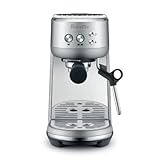
A Compact Sequential Example: Breville Bambino
Best for: A beginner couple that normally makes one or two milk drinks and prefers a smaller semi-automatic station over a permanently larger machine.
Why it fits:
Current Breville materials describe the Bambino as a compact machine with a 54 mm portafilter path and manual milk texturing. That makes it a reasonable example of a sequential apartment workflow: make the drinks in a calm order instead of assuming the machine will replace every shared-kitchen bottleneck.
Good fit if:
- two drinks are the ordinary limit, not the start of a larger round
- you can keep a small clear area for cups, milk, and a cloth
- both people can tolerate a brief, repeatable sequence
- you want to reserve more counter space for normal kitchen use
Skip it if:
- simultaneous brewing and steaming is a non-negotiable daily requirement
- three or more hot milk drinks are a frequent, time-sensitive job
- the counter or sink is already so constrained that the cleanup sequence fails
- you want a one-button routine rather than a hands-on espresso workflow
Apartment tradeoff:
The small body helps only when the surrounding workflow is also small. A grinder, water access, hot cups, and steam-wand cleanup still need room. If convenience is the larger issue, see One-Button Coffee vs Hands-On Espresso for Beginners.
Amazon check: Confirm the current seller, exact model, included accessories, dimensions, return policy, price, and availability before buying.
What I Would Do First
For a couple making two ordinary morning lattes, I would first simplify the sequence:
- Set out both cups, the pitcher, and a clean damp cloth before turning on the machine.
- Keep one recipe stable for a week instead of changing dose, tools, and milk amount all at once.
- Give the second person a clear non-crossing path to the sink or breakfast area.
- Wipe and purge the steam wand exactly as the machine manual directs, then move the used cloth out of the clean prep zone.
- Track what actually feels slow for several mornings before treating capacity as the answer.
This avoids paying for a larger machine when the practical fix is a better layout or one less optional accessory. Espresso accessories beginners can skip can help keep the station focused.
When a Capacity Upgrade Is Worth Researching
Research higher-capacity options when all of these are true:
- the household regularly makes more than two milk drinks in one tight window, or both drinks consistently must finish together
- the current setup is already organized, measured, and manual-compliant
- the delay remains a repeatable problem rather than an occasional busy morning
- you have verified that the larger machine's full footprint, water access, power requirements, cleaning routine, and noise fit the apartment
Do not upgrade just because a feature sounds more professional. A larger machine can add warm-up, cleaning, storage, and counter costs that matter more than a short wait for a small household.
Common Mistakes
Buying for occasional guests
Choose for the weekday routine you repeat. A compact sequential setup can be more useful than a larger machine bought for a few crowded brunches.
Treating every delay as a machine problem
If grinding, milk handling, a blocked sink, or a missing cloth creates the wait, simultaneous capacity may not solve it.
Rushing hot milk or cleanup
Never turn a short wait into a reason to rush around hot equipment. Follow the machine manual, keep the work zone clear, and make the second drink only as quickly as the routine safely allows.
Adding accessories before confirming the bottleneck
A bottomless portafilter, decorative station, or extra prep tool does not create capacity. Add equipment only when it solves a problem you have actually observed.
FAQ
Do couples need a dual-boiler espresso machine?
Not automatically. It can be sensible to research higher-capacity machine types when repeated drink volume and exact timing justify them. For one or two normal milk drinks, a compact sequential workflow may be the more practical apartment choice.
Should I pull both shots before steaming milk?
It can be a workable sequence for some machines and drink sizes, but use your machine's manual as the authority. Do not leave hot or pressurized equipment unattended just to synchronize two cups.
What if one person drinks espresso and one drinks a latte?
That routine may need less simultaneous capacity than two milk drinks, because there is only one milk step. Plan the actual drinks, cups, and cleanup instead of buying based on the most demanding hypothetical morning.
Is a larger machine always faster for two drinks?
No. It may change one part of the workflow, but grinding, milk handling, pouring, cleaning, and counter traffic still matter. Check the full routine and the machine's current documentation before deciding.
Disclosure
Apartment Barista uses Amazon affiliate links. As an Amazon Associate, this site earns from qualifying purchases. Prices and availability can change at any time and should be checked on Amazon before buying.