
Quick Verdict
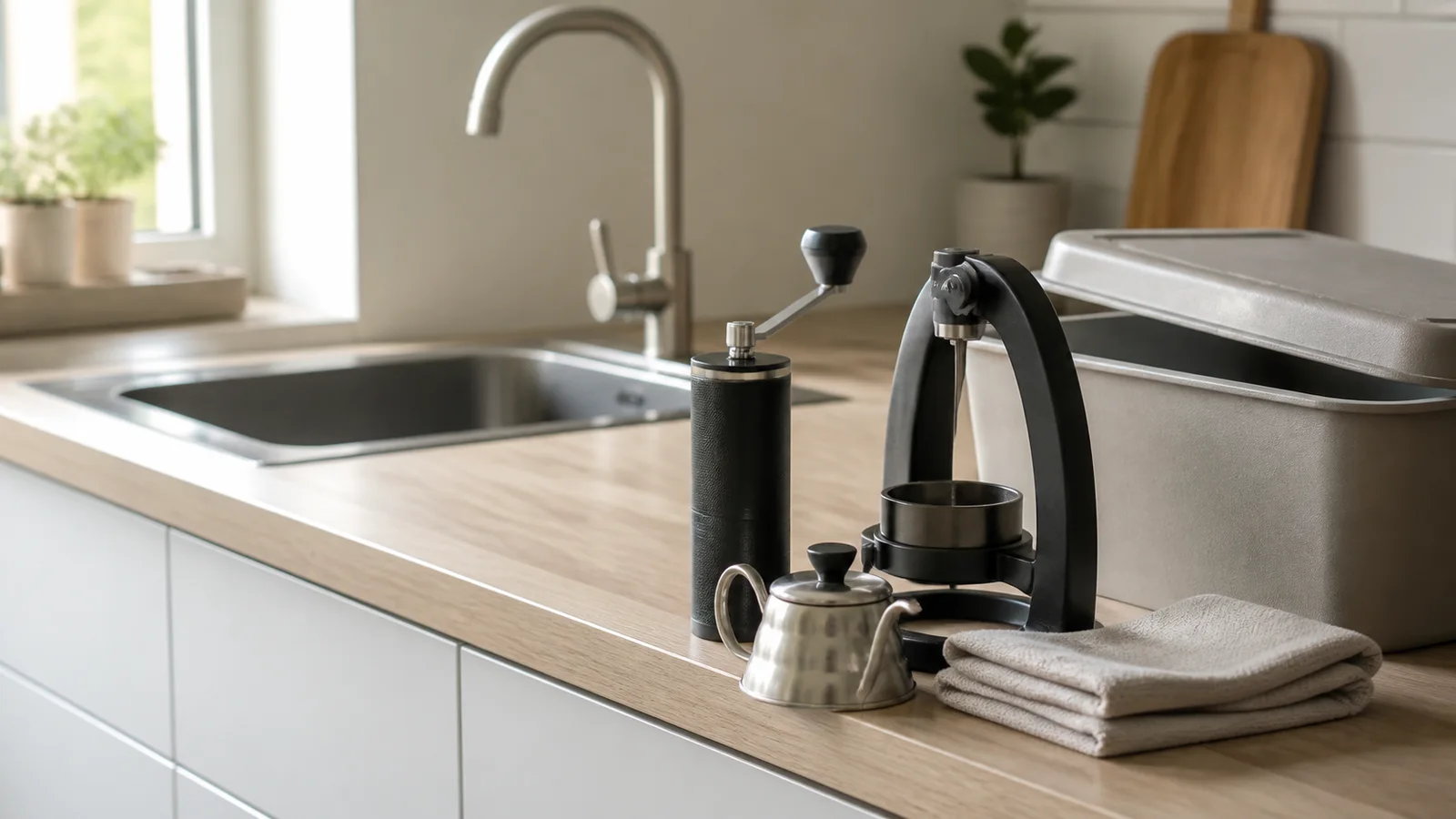
If your apartment counter has to serve cooking, dishes, or work most of the day, a stow-away espresso setup can make more sense than a machine that permanently occupies the best corner. The useful version is not a magic no-counter-space setup: you still need a safe hot-water source, room to prepare a shot, and a place for wet parts to dry. The goal is to keep the permanent footprint small and make packing away predictable.
A compact manual brewer such as the WACACO Picopresso is a credible fit when you enjoy hands-on espresso, normally make one drink at a time, and can accept that grinding, heating water, tamping, and cleanup remain your job. Skip this approach if you need daily milk steaming, fast button-driven drinks, or cannot comfortably manage fine manual-grinder work.
For the broader decision, see manual vs automatic espresso machines, best travel espresso machines for small spaces, and how to share a small-apartment espresso setup.
Who This Guide Is For
- Apartment renters whose only usable counter is also a cooking or dish-prep surface.
- Beginners who can make one deliberate espresso at a time and do not need a steam wand.
- Coffee drinkers who can keep a kettle or another manual-approved hot-water route separate from the brewer.
- People who have a dry cabinet, drawer, or lidded bin for coffee equipment.
This is not a good fit for anyone who wants a permanent café-style station, several milk drinks in a short morning window, or a routine that removes the need to dial in coffee. A small brewer still needs a capable grinder plan and a safe cleanup path.
What Usually Goes Wrong
The common mistake is measuring only the brewer. A compact hand-powered device may fit in a drawer, but the full routine also needs coffee, hot water, a cup, a towel, a place to knock out grounds, and time for rinsed parts to dry. Another mistake is packing damp parts into a closed box. That can turn a space-saving routine into an unpleasant maintenance problem.
Do not buy a compact brewer just because it looks portable. First decide where it will be used, where the kettle will sit, where hot parts can cool, and where the cleaned parts can air-dry before storage.
How to Choose
| Decision factor | Why it matters in a small space | What to verify |
|---|---|---|
| Storage volume | A drawer is useful only if the brewer, tools, and cloth fit without forcing other kitchen items out. | Interior width, depth, height, and a dry storage location. |
| Hot-water route | A manual brewer does not eliminate the need to heat and handle water. | Kettle instructions, outlet access, and a stable heat-safe counter position. |
| Grinder plan | Manual espresso exposes grind and dose mistakes instead of hiding them. | Whether the current grinder can produce the required fine range and can be stored dry. |
| Drying routine | Small removable parts need to be clean and dry before a closed-bin reset. | Manufacturer cleaning instructions and a clear towel or drying-zone routine. |
| Drink volume | Hand grinding and hand pumping are easier to repeat for one drink than for a line of lattes. | Typical weekday drink count, hand comfort, and milk-drink expectations. |
Shortlist and Tradeoffs
WACACO Picopresso — compact manual-brewer route
The WACACO Picopresso is the one product example because it naturally matches the question: it is a hand-powered brewer intended for a compact setup, and Wacaco says it needs externally heated water. Its official care guidance also says to rinse the basket and shower head, wipe the brewer, and let the parts dry separately after cleaning. Those are helpful boundaries for a put-away routine.
It suits a reader who wants a small, quiet espresso route and is willing to practice fine grinding, dosing, tamping, and hand pressure. Skip it if you want a one-button drink, integrated milk steaming, or a shortcut around grinder technique. The tradeoff is simple: less permanent counter commitment, more work every time you make coffee.
Before buying, check the current Amazon seller, exact bundle, included case and tools, dimensions, return terms, price, and availability. Also check the current Wacaco instructions rather than assuming every accessory or cleaning detail is identical across versions.
A Practical Put-Away Workflow
- Set up one temporary work zone. Put a dry towel beside a stable, heat-safe surface. Keep the brewer, cup, coffee, and cleanup cloth together rather than spreading them across the kitchen.
- Heat water according to your kettle instructions. Keep the hot-water route separate from packing and storage; do not handle a hot brewer as if it were ready for a drawer.
- Make one drink, then clear grounds and rinse only as the manufacturer instructs. A small portable brewer is still food-contact equipment, so do not improvise abrasive or incompatible cleaning methods.
- Dry components separately. Let the basket, shower area, and any rinsed parts finish drying on the towel. Do not close damp gear in a storage bin.
- Return only dry items to their home. Store the brewer and dry tools in a drawer, cabinet, or lidded bin away from sink splashes and food-prep clutter. Keep the used cloth outside the clean storage zone until it is washed.
This sequence frees the counter after each drink without pretending that cleanup disappears. If it feels too slow after a week, that is useful evidence that a permanent compact machine or a different coffee method may suit your real routine better.
What Not to Buy Yet
Do not start by adding every portable accessory. A large organizer, extra tampers, a second scale, or a dedicated coffee cart can defeat the point of a stow-away setup. Begin with the brewer, an appropriate grinder plan, a safe hot-water route, a cup, and one washable drying cloth.
Add storage only when you can name the specific problem: loose small parts, repeated sink splashes, or a drawer that mixes coffee tools with sharp kitchen tools. A storage container is support for a dry, orderly routine; it is not a substitute for cleaning or for a stable brewing surface.
Before You Buy
- Measure the counter spot used during brewing and the drawer, cabinet, or bin used after it.
- Confirm the exact model, seller, included accessories, return terms, current price, and availability on Amazon.
- Read the current manufacturer instructions for hot-water use, cleaning, drying, and parts.
- Check your kettle, outlet, sink, cabinet, hand comfort, grinder plan, and weekday drink volume.
Final Recommendation
Choose a stow-away manual espresso setup when your real priority is reclaiming the counter after one carefully made drink. A compact brewer can make that practical, but only if you are comfortable with a hands-on grinder-and-hot-water routine and give cleaned parts time to dry before storage. If you need fast milk drinks or several servings, skip the tiny setup and plan around the larger routine you will actually use.
Apartment Barista uses Amazon affiliate links. As an Amazon Associate, this site earns from qualifying purchases. Prices and availability can change, so confirm the current Amazon page before buying.