Quick Verdict
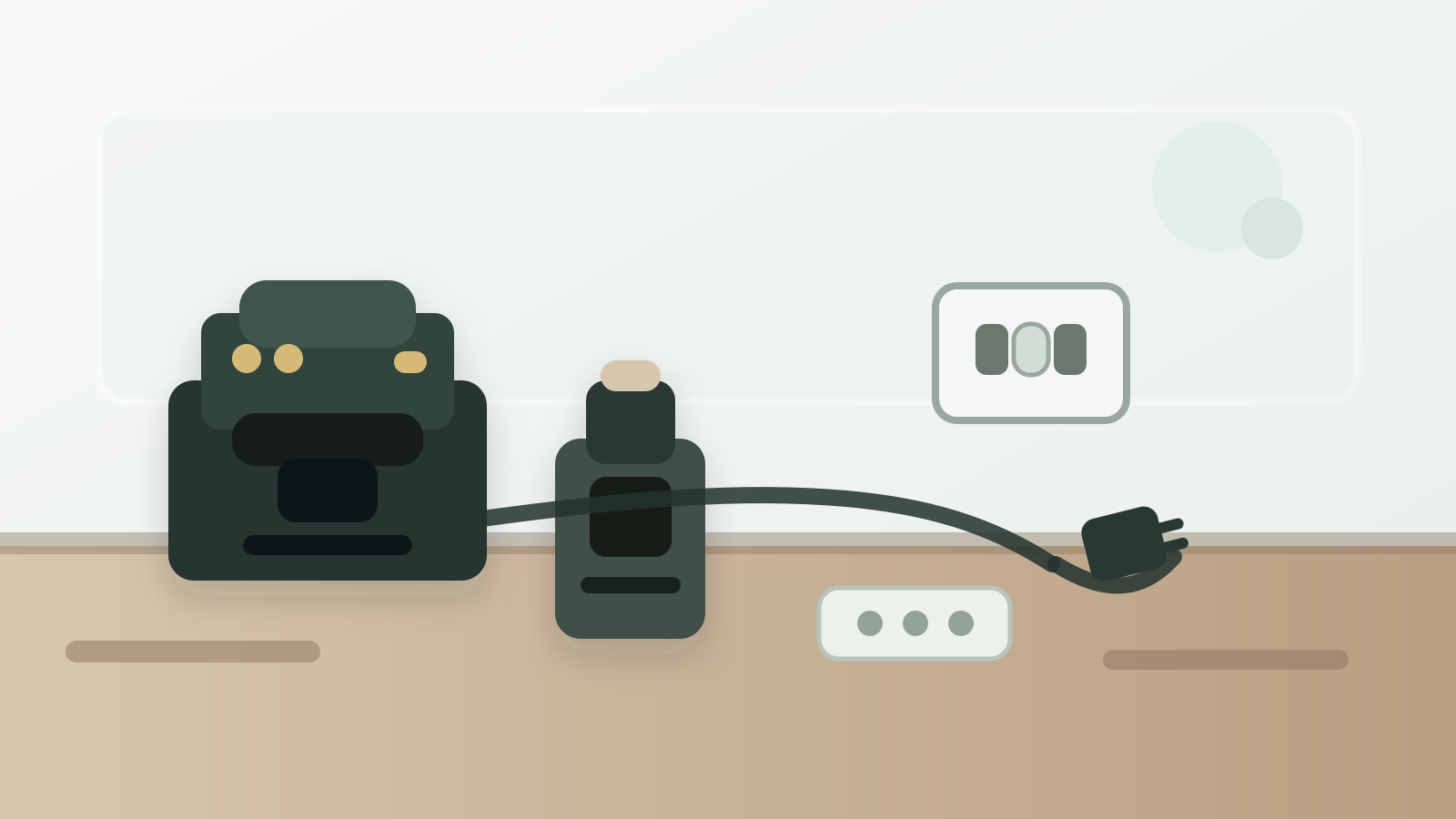
For an apartment espresso setup, the safest default is simple: put the machine where its own cord can reach a proper wall outlet without crossing the sink, getting pinched, sitting under a mat, or sharing a crowded power strip with other heat-making kitchen appliances.
If that cannot work, treat the counter location as a layout problem before treating it as a shopping problem. Move the grinder, organizer, drying mat, or coffee cart first. Do not buy a random extension cord or power strip just because the machine fits the counter.
This guide does not recommend specific cords, power strips, or electrical parts. Espresso machines can draw serious power, apartment wiring varies, and rental rules matter. Use this as a planning checklist, then follow your machine manual, lease or dorm policy, and a qualified electrician or housing office when you are unsure.
Read this with renter-friendly espresso setup without plumbing or drilling, best coffee station layouts for small apartments, and espresso setup near one small sink.
Apartment Barista uses Amazon affiliate links. As an Amazon Associate, this site earns from qualifying purchases. Prices, sellers, return terms, product details, and availability can change at any time, so check the current Amazon page before buying any coffee gear linked elsewhere on this site.
Who This Guide Is For
This guide is for:
- apartment renters with only one or two usable kitchen outlets
- dorm residents who must follow housing rules
- small-kitchen users planning a coffee station near a sink
- beginners setting up a compact machine, grinder, kettle, or frother
- renters who cannot add outlets, drill holes, or route cables permanently
This guide is not for:
- electrical installation work
- permanent wiring advice
- commercial coffee bars
- high-power prosumer machines that need special circuits
- anyone trying to bypass a manual, landlord rule, dorm rule, or local electrical requirement
What Real Users Are Trying to Solve
The real small-apartment question is rarely just "Can my machine sit here?"
It is usually a chain of smaller questions:
- Can the cord reach the wall outlet without stretching?
- Is the outlet close to the sink or wet cleanup area?
- Will the espresso machine share power with a grinder, kettle, microwave, air fryer, or toaster?
- Does the machine manual warn against adapters, damaged cords, or wet plugs?
- Will a cart or non-kitchen coffee station create a safer cord path than the crowded counter?
Public espresso discussions show why beginners ask this. Some users want to know whether a power strip divides wattage across outlets. Others ask whether a longer cord is acceptable. The safest answer is not "everyone does it." The useful answer is to check the actual appliance load, the product rating, the circuit, the cord path, and the manual.
The Short Placement Rule
Use this order:
- Wall outlet first: choose a spot where the espresso machine can plug directly into a wall outlet.
- Water path second: keep the cord, plug, and outlet away from sink splashes, wet hands, and drip tray spills.
- Load planning third: avoid running several high-draw kitchen appliances on the same outlet area at the same time.
- Cord path last: make sure the cord is visible, relaxed, unpinched, and not under a rug, mat, furniture, or appliance foot.
If one of those fails, change the station layout before adding more electrical gear.
Start With The Machine Manual
Before buying a machine or choosing a permanent counter spot, open the manual for the exact model.
Look for:
- whether the manufacturer says to plug the appliance directly into an outlet
- warnings about extension cords, adapters, wet plugs, or damaged cords
- required voltage and wattage or amperage
- whether the plug is grounded
- where the water tank, drip tray, and steam wand create wet zones
- instructions for unplugging before cleaning, moving, or storage
Do not assume two compact machines have the same electrical needs. A small machine can still have a heating element and pump. A grinder may be easier to move than the machine. A milk frother or kettle may add another high-draw item to the same small counter.
Apartment Outlet Fit Checks
Stand in front of the counter and check the actual path before you commit.
- Can the machine cord reach the wall outlet without pulling tight?
- Does the plug sit fully in the outlet, without sagging or feeling loose?
- Is the outlet away from direct sink splashes and wet cleanup?
- Can you unplug the machine without moving hot or wet parts?
- Is the cord behind the machine where it can overheat, kink, or get pinched?
- Does the cord cross the place where you empty the drip tray?
- Is the outlet shared with a microwave, toaster, kettle, air fryer, or refrigerator?
- Would using the grinder and machine at the same time crowd the same outlet area?
- If this is a dorm or managed apartment, do the rules restrict extension cords, power strips, kettles, or coffee makers?
If you are unsure about the circuit, outlet condition, GFCI protection, grounding, or load, ask your landlord, housing office, or a qualified electrician. This is one of the few coffee setup problems where guessing is not worth it.
Power Strips And Extension Cords
For espresso machines, the conservative approach is to avoid power strips and extension cords when you can.
The U.S. Fire Administration tells consumers not to overload outlets or power strips, to replace damaged cords, and to avoid putting cords where they can be pinched or damaged. ESFI describes extension cords as temporary, not permanent wiring, and warns against overloading cords, running them through walls or doorways, using one cord for more than one appliance, or chaining multiple plug outlets together. UL Solutions also explains that a power strip's number of outlets does not mean every outlet can safely run a high-draw device at once.
For an apartment coffee station, that translates into plain English:
- A power strip does not create more electrical capacity.
- More outlets do not mean more safe load.
- A surge protector is not a license to run every coffee appliance together.
- A cord under a mat, rug, cart wheel, or appliance foot is a bad cord path.
- A setup that depends on a permanent extension cord is probably a layout problem.
If your machine manual, housing policy, or local rules say not to use an extension cord or power strip, follow that instruction.
Better Layout Fixes Before Buying Anything
Try these before adding electrical accessories:
- Move the grinder to a nearby dry counter and keep the machine by the wall outlet.
- Store beans, cups, and tools away from the outlet zone so the machine gets the safest spot.
- Put the organizer or cart where power is not needed.
- Use a drawer for accessories instead of placing a tower of storage over the outlet.
- Choose a machine location that shortens the wet path to the sink without putting the cord in the wet path.
- Make the non-electric parts mobile, not the high-draw appliance.
In a small kitchen, the machine does not have to sit in the most decorative position. It should sit where water access, cleaning, and power all make sense.
What To Avoid
Avoid these common apartment coffee station mistakes:
- stretching a machine cord so the plug is under tension
- hiding a cord under a rug, silicone mat, runner, or furniture
- letting the cord run through the drip tray emptying path
- placing a power strip where sink water, steam, or wet hands reach it
- plugging a power strip into another power strip
- treating a surge protector as a permanent kitchen appliance solution
- running a kettle, espresso machine, toaster, and grinder from the same crowded area
- cutting, modifying, or forcing a plug
- ignoring a warm, loose, buzzing, cracked, or damaged outlet
If anything feels hot, smells like burning plastic, sparks, trips repeatedly, or makes the plug sit loosely, stop using that outlet or device and get help.
Dorm And Rental Rules
If this setup is for a dorm, rented room, or managed apartment, rules can be stricter than normal home advice.
Check:
- whether coffee makers, kettles, and espresso machines are allowed
- whether appliances need automatic shutoff
- whether exposed heating elements or hot plates are banned
- whether extension cords or power strips are limited
- whether UL, ETL, or other safety listing is required
- whether the appliance must stay in a shared kitchen instead of a bedroom
- whether the building has wattage or circuit restrictions
If the policy is unclear, ask the RA, housing office, landlord, or building manager before buying. A product being sold on Amazon does not mean it is allowed in your building.
For a policy-first setup, read best coffee setup for dorm rooms.
A Simple Counter Plan
Use this layout if you are starting from scratch:
- Put the espresso machine closest to the safest wall outlet.
- Keep the drip tray path clear so water does not cross the plug or cord.
- Put the grinder on a separate dry patch of counter if the outlet area is crowded.
- Keep the milk pitcher, cloth, and drying zone closer to the sink.
- Store non-daily tools in a drawer, not around the outlet.
- Keep the floor clear so nobody trips on a cord while carrying hot water or a drink.
If the only outlet is behind the sink or across a walkway, the machine may belong somewhere else. A less pretty coffee corner is better than a cord you have to work around every morning.
What Beginners Can Skip
Skip these at first:
- a power strip marketed as a coffee station upgrade
- decorative cord covers that hide a problem instead of solving it
- under-rug cable routing
- a rolling cart that requires the machine cord to cross a walking path
- a second high-draw appliance if the outlet area is already crowded
Buy layout certainty before buying more gear. Measure, read the manual, check the outlet path, and test the morning workflow with the machine unplugged before deciding where it lives.
Safety Sources Behind This Checklist
This article uses conservative public safety guidance rather than product marketing.
- The U.S. Fire Administration warns consumers not to overload outlets or power strips and to avoid damaged or pinched cords.
- ESFI extension cord guidance describes extension cords as temporary and says they should not replace permanent wiring.
- UL Solutions explains that power strips and surge protectors have electrical ratings and should not be treated as unlimited outlet expansion.
- Public espresso discussions show the real user confusion around power strips, extension cords, wattage, and apartment outlet reach, but forum comments should not override your appliance manual or local rules.
FAQ
Can I plug an espresso machine into a power strip?
The safest beginner answer is: avoid it if the machine can plug directly into a wall outlet. If you think you need a power strip, check the machine manual, the strip rating, the full load on the outlet or circuit, and your rental or dorm rules. When in doubt, ask an electrician or housing office.
Is a surge protector safer than a basic power strip?
A surge protector can help protect some electronics from power surges, but it does not create extra electrical capacity. It still has a rating, it can still be overloaded, and it still needs a safe cord path.
Can the grinder share the same outlet as the machine?
Sometimes a small grinder and machine may physically share an outlet area, but that does not mean every setup is safe. Check both appliances, avoid running multiple high-draw devices at the same time, and pay attention to circuit trips, warm plugs, damaged cords, or loose outlets.
How close can the setup be to the sink?
Close enough for cleanup is helpful, but the cord, plug, and outlet should not sit in the splash zone. Plan the drip tray path, milk pitcher rinse path, and cloth drying spot so wet cleanup does not cross the electrical path.
What if my apartment has only one useful kitchen outlet?
Make the machine the priority and move non-electric items first. If the outlet is unsafe, loose, overloaded, or in the wrong place, ask your landlord or a qualified electrician instead of building a permanent extension-cord setup.
Final Recommendation
Choose the espresso machine location by power and water workflow before decor. A compact machine is only apartment-friendly if the cord reaches safely, the outlet is not overloaded, the sink path stays dry around the plug, and the routine does not depend on a hidden or permanent extension cord.
If the best-looking coffee station fails those checks, change the layout. That is cheaper and safer than forcing the outlet to fit the coffee corner.
Disclosure
Apartment Barista uses Amazon affiliate links. As an Amazon Associate, this site earns from qualifying purchases. Prices and availability can change at any time and should be checked on Amazon before buying.