Quick Verdict
Usually, yes: treat a new decaf bean as its own espresso recipe instead of copying the grind setting, dose, or yield from your regular beans. That does not mean every decaf needs a second grinder or a complicated coffee bar. For a small apartment setup, the useful first step is to weigh the dose and output, write down the grinder setting and shot time, then change one variable at a time.
A scale with a timer is the one optional tool in this guide because it turns a frustrating memory game into a short, repeatable note. It cannot make two beans behave the same, and it is not a substitute for following your machine and grinder manuals.
Who This Guide Is For
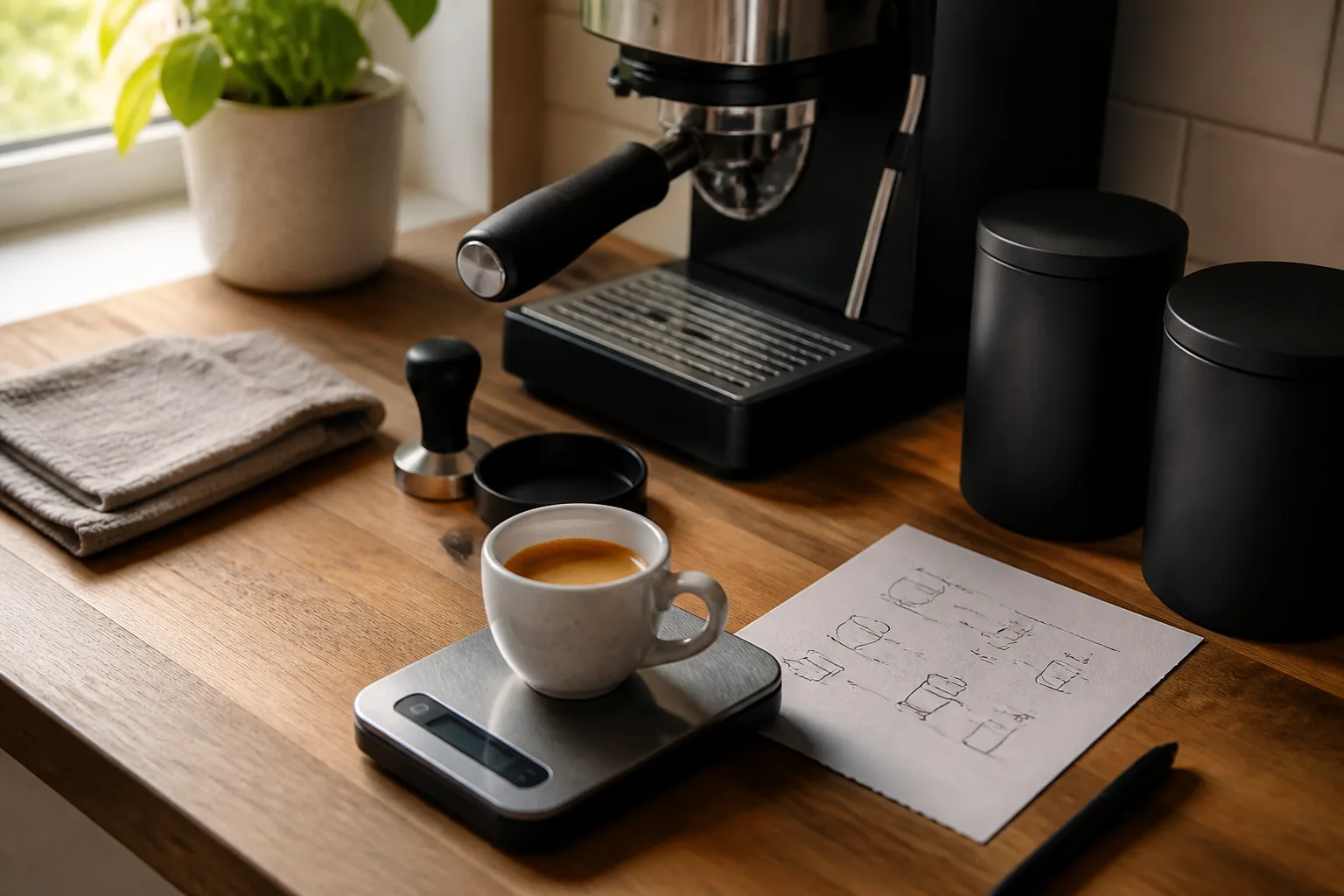
This is for a beginner who makes regular espresso in the morning and decaf later, shares a grinder with a decaf drinker, or wants to try a different bean without losing a recipe that already works. It is especially useful when the grinder, machine, scale, and cleanup tools all have to fit on one compact counter.
Skip this guide if avoiding even a small amount of retained coffee is medically important for you. A household that needs a strict separation should ask a qualified health professional what is appropriate and may need separate equipment rather than a workflow shortcut.
Why One Setting Is Not a Promise
Grind numbers are reference points on your grinder, not universal espresso recipes. Bean age, roast style, basket, dose, and machine can all change the result. Recent home-barista discussions show the same practical issue: a regular coffee and a decaf can call for different settings, and switching between them becomes easier when the drinker keeps simple notes instead of chasing someone else's number.
Breville's beginner dialing-in guidance makes the measurement part clear: dose is the dry coffee going in, yield is the liquid espresso coming out, and a scale lets you measure both. Use those measurements as a starting record—not as a promise that every decaf should taste the same at the same ratio or time.
A Small-Kitchen Decaf Recipe Card
Use a note on your phone, a card inside a cabinet, or a small paper log. Record only what helps you repeat a drink:
| Record | Why it matters | Keep it simple |
|---|---|---|
| Bean and roast date | A new bag can need a fresh adjustment | Write the roaster and date opened |
| Grinder setting | Lets you return close to a workable starting point | Note the number or clicks, not a universal target |
| Dose | Helps you avoid accidentally comparing different puck sizes | Weigh the dry coffee |
| Yield and time | Shows what reached the cup and how the shot flowed | Weigh output; use time as a clue |
| Taste note | Keeps the next change purposeful | Use a few words such as sour, harsh, thin, or balanced |
Start with the basket dose and preparation method your machine manual specifies. Pull one shot, taste it after it has cooled enough to judge safely, and make one adjustment for the next attempt. If the flow or taste is far from what you want, the safest next move is usually a small grind adjustment; if you change dose, yield, temperature, and distribution together, the note will not tell you what helped.
The Product That Helps Without Adding a Coffee Bar
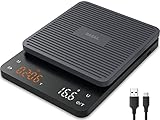
BAGAIL BASICS Coffee Scale with Timer
This is a practical measurement tool for a beginner who is switching between regular and decaf beans. A compact coffee scale with a timer can record the dose, output, and approximate shot time in the same routine, which makes it easier to compare two bean-specific notes. Confirm the current listing, footprint, height under your machine, included accessories, seller, return terms, price, and availability before buying.
It is a good fit if you currently guess by cup markings or keep losing track of which decaf setting worked. Buy later if your immediate issue is that the grinder cannot reach an espresso-capable range, the basket is incompatible, or you have not yet followed the machine manual's basic setup.
Switching From Regular to Decaf With One Grinder
- Empty the hopper only if your grinder's manual says this workflow is appropriate. Do not put hands or wet tools into the burr area.
- Add only the amount of beans you plan to grind if your grinder and routine support single dosing; otherwise keep the manufacturer's normal hopper workflow.
- Set the grinder to the last recorded decaf starting point, not the regular-bean setting.
- Weigh the dose, pull the shot, then record yield, time, and a short taste note.
- Clean up loose grounds and wipe spills before changing beans again. Follow the grinder manual for cleaning; a scale or a dosing cup does not eliminate retained coffee.
Do not present this as a caffeine-separation method. If someone must avoid caffeine for a health reason, the tolerance for carryover is personal and this article cannot determine it.
What Not to Buy Yet
Do not buy a second grinder just because the first decaf shot differs from your regular espresso. First see whether two labeled recipes and a measured dose solve the daily problem. A second grinder may make sense later when you switch beans many times a day, cannot keep a workable recipe without constant changes, or need a level of separation that one shared grinder cannot provide.
Likewise, wait on a larger coffee station, bottomless portafilter, puck screen, or extra dosing accessories until you can say which problem they solve. In a small kitchen, every added tool needs a drying and storage place.
Before You Buy or Change a Recipe
- Confirm your exact machine, basket, grinder, and current manuals.
- Check the scale's real footprint and height with your cup and drip tray, rather than assuming it fits.
- Keep a separate starting note for each bean; do not copy a recipe blindly from another grinder.
- Make one change at a time and stop if the result is unsafe, the equipment behaves unexpectedly, or the manual calls for service.
Final Recommendation
Give decaf its own short recipe card. Measure the dose and yield, record the grinder setting and time, then make one small adjustment at a time. That approach uses less counter space than buying a second full setup and gives you better information about whether a separate grinder is actually worth researching later.
For a broader setup decision, read our guide to regular and decaf espresso setups, our single-dose workflow guide, and our one-variable troubleshooting guide.