
Quick Verdict
Yes, a coffee station outside the kitchen can work in a small apartment, but only if you plan the wet parts first. The mistake is treating it like a dry bar. Coffee gear creates water trips, used grounds, drip tray liquid, milk residue, towels, cups, and small tools that need a home.
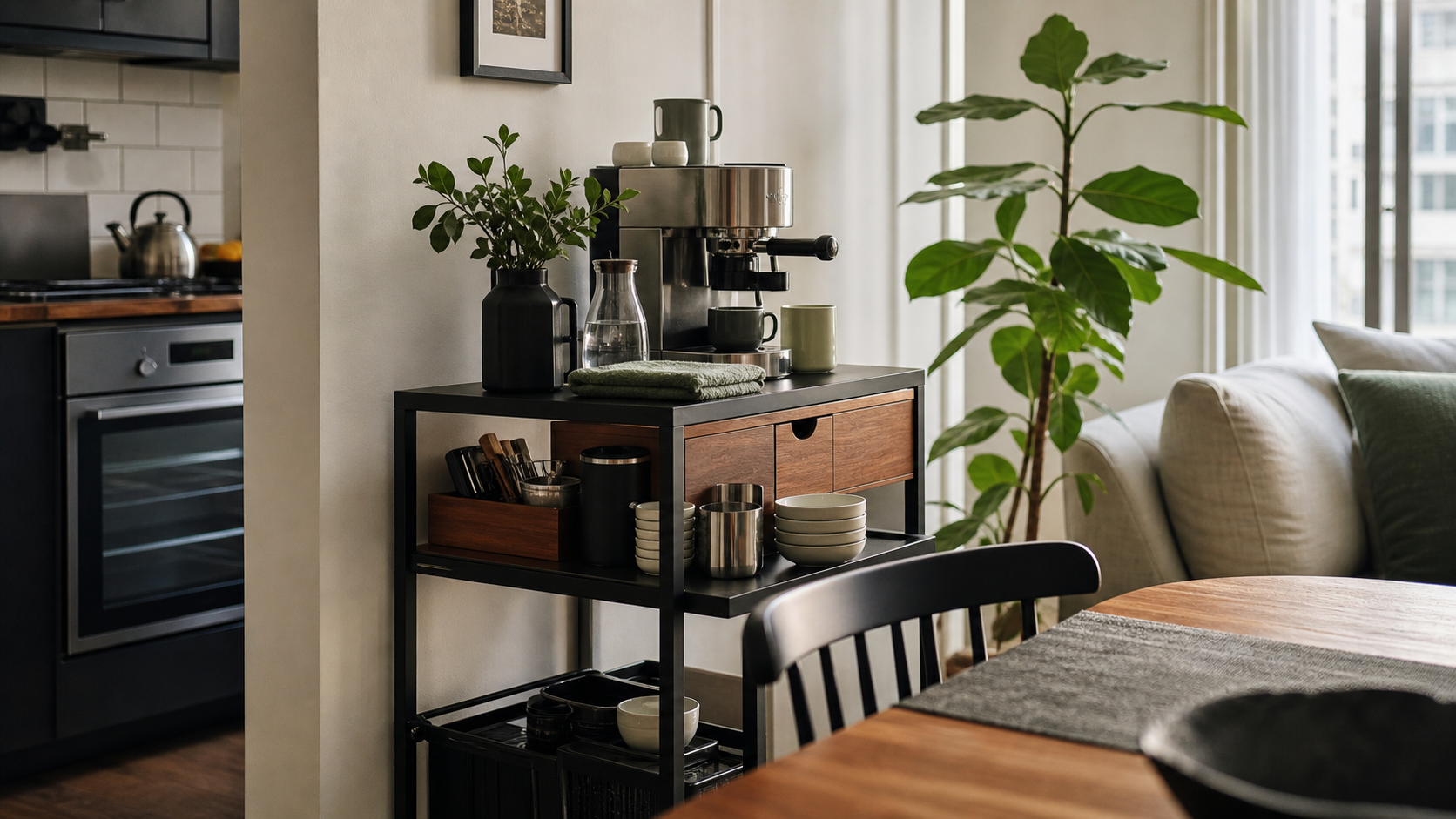
The best version is usually not a full espresso machine sitting far from the sink. It is a controlled station near a dining wall, living-room edge, or bar nook, with backup storage on a cart or in a cabinet and a short cleanup path back to the kitchen.
If your kitchen counter is too crowded, start with this rule:
- Keep heavy brewing equipment on the most stable surface.
- Keep water and milk cleanup close enough that you will actually do it.
- Use a cart, drawer, or cabinet for overflow, not as a dumping zone.
- Buy storage only after you know which items need daily access.
Apartment Barista uses Amazon affiliate links. As an Amazon Associate, this site earns from qualifying purchases. Prices, sellers, return terms, product details, and availability can change at any time, so check the current Amazon page before buying.
This guide pairs well with best coffee station layouts for small apartments, how to build a coffee bar in a small apartment, and best compact coffee bar cabinets.
Who This Guide Is For
This guide is for:
- renters whose kitchen counter cannot spare a coffee zone
- apartment users moving coffee gear to a dining room, living room, hallway nook, or bar cabinet
- beginners who want espresso or latte-style drinks but need a realistic cleanup plan
- people who want a nicer-looking station without making every morning slower
- small-space households trying to separate brewing gear from cooking prep
This guide is not for:
- commercial coffee service
- permanent plumbing or renovation projects
- heavy machines placed on weak decorative furniture
- readers who want to ignore sink distance, towel storage, or spill cleanup
- dorm rooms where appliance rules may prohibit the equipment
If you are in a dorm, start with best coffee setup for dorm rooms because school policy matters more than layout.
What Real Users Are Trying to Solve
Current public discussions around non-kitchen espresso stations usually come down to one question:
"Can I move coffee out of the kitchen without making the routine annoying or messy?"
The repeated pain points are practical:
- the kitchen is too small for machine, grinder, scale, cups, and prep space
- a dining-room or living-room station may not have a sink nearby
- milk drinks create urgent cleanup if a pitcher, frother, or steam wand sits too long
- drip trays and used grounds need a disposal plan
- open shelves can make a living area feel cluttered
- a station that looks good in a photo can fail after three busy mornings
That means the buying decision should start with workflow, not furniture style.
The Short Setup Rule
Use the "wet, heavy, daily" test before buying anything.
- Wet: water tank, drip tray, milk pitcher, towels, and cups need a sink path.
- Heavy: machines and grinders need a stable surface, not a wobbly accent table.
- Daily: beans, scale, towel, and cup need one-reach access.
If an item is not wet, heavy, or daily, it can usually live in a cart, drawer, or cabinet.
Quick Picks
| Pick | Best for | Why it fits |
|---|---|---|
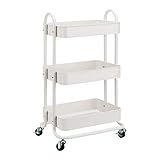
| Amazon Basics 3-Tier Rolling Utility Cart | Overflow storage | Moves beans, towels, mugs, filters, and backup supplies out of the kitchen without permanent installation |
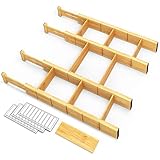
| SpaceAid Bamboo Drawer Dividers | Tool control | Turns one nearby drawer into a home for scale, cloths, cleaning supplies, small tools, and spare parts |
| Amazon Basics Microfiber Cleaning Cloths | Wet cleanup | Gives the station a simple wipe-down habit for drip trays, counters, pitchers, and steam-wand mess |
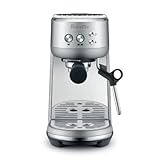
| Breville Bambino | Compact machine reference | Shows the kind of small countertop espresso machine that can work when the station is close enough to water |
These are setup anchors, not a fixed shopping cart. Confirm current Amazon seller, exact model or size, dimensions, return policy, assembly notes, load guidance, price, and availability before buying.
Pick the Right Non-Kitchen Zone
Dining room edge
A dining-room edge is often the best compromise. It may be close to the kitchen, it can hold a narrow cart or cabinet, and it usually feels more natural than putting coffee gear beside a sofa.
Good fit if:
- the sink is only a few steps away
- you have a wall outlet nearby
- the station will not block chairs or the dining path
- you can store towels and cleaning supplies out of sight
Skip it if the table area already gets crowded during meals. Coffee gear should not make another daily routine harder.
Living-room wall
A living-room station can work when the kitchen is truly too small. The tradeoff is that every mess becomes more visible, so closed storage and immediate cleanup matter more.
Good fit if:
- the wall has a stable outlet
- the furniture looks calm between uses
- cups, towels, beans, and tools can hide in drawers or bins
- the walk to the sink is short enough that you will rinse milk tools right away
Skip it if the setup will sit on a carpeted area with no tray, no towel routine, and no easy spill plan.
Bar nook or hallway niche
A bar nook can be excellent if it already has a counter, outlet, and storage. A hallway niche can work for dry coffee storage, but it is usually a weaker place for actual espresso prep.
Good fit if:
- the surface is stable and deep enough
- there is room to stand without blocking traffic
- cords do not cross a walking path
- the station can hold a tray or cloth for wet items
Skip it if the nook is only big enough for decoration. A coffee station needs a cup landing zone, not just a machine footprint.
Apartment Fit Checks Before You Buy
Measure the full routine. Do not only measure furniture width.
Check these before buying:
- distance from station to sink
- outlet location and cord path
- furniture depth, height, and load guidance
- open space in front for a cup, towel, or milk pitcher
- where the water tank will be filled
- where the drip tray will be emptied
- where wet towels will dry before laundry
- where used grounds, pods, or filters will go
- whether wheels, doors, or drawers block the walking path
- whether open storage will look too busy in the living area
If you drink milk beverages, be stricter. Milk cleanup should happen immediately, especially with a steam wand, handheld frother, electric pitcher, or milk pitcher.
Product Notes
Amazon Basics 3-Tier Rolling Utility Cart
Best for: overflow storage
Why it fits:
The rolling cart is the best first helper when the kitchen can still handle brewing but cannot handle all the support items. Use it for backup beans, filters, mugs, towels, cleaning supplies, and small accessories. It is renter-friendly because it does not require drilling or a built-in shelf.
Good fit if:
- you need storage more than another worktop
- you have a stable parking spot near the kitchen or dining edge
- you want a setup that can move apartments later
- your visible clutter is mostly cups, bags, towels, and backup supplies
Skip it if:
- you want to place a heavy espresso machine on it without checking load and stability
- it would block the oven, refrigerator, dishwasher, or main walking path
- open shelves will make your living area feel busier
Small-space note:
Treat the cart as overflow storage first. If the machine lives on the cart, the surface must be stable, level, and rated for the load, and you still need a safe cord path.
Amazon check:
Check current seller, selected color, dimensions, wheel style, load guidance, return policy, price, and availability before buying.
SpaceAid Bamboo Drawer Dividers
Best for: tool control
Why it fits:
Drawer dividers are useful when the non-kitchen station starts collecting tiny tools. A scale, towel, spare filters, cleaning tablets, scoop, WDT tool, and small brush should not all sit on top of the station. One organized drawer can make the whole setup look calmer.
Good fit if:
- you have a drawer near the station
- small tools are the main clutter problem
- you want cleaning items separated from drink-prep tools
- your routine may change as you add or remove accessories
Skip it if:
- the station has no usable drawer nearby
- your drawer is too shallow or too short for the dividers
- you need a sealed bin for wet or messy items
Small-space note:
Measure the inside of the drawer, not the drawer front. Keep milk and coffee cleanup cloths separate from food-prep towels.
Amazon check:
Check current seller, selected size, exact expansion range, included inserts, return policy, price, and availability before buying.
Amazon Basics Microfiber Cleaning Cloths
Best for: wet cleanup
Why it fits:
A non-kitchen coffee station needs a wipe-down habit more than it needs extra decor. Microfiber cloths give the station a dedicated way to wipe the counter, cup rings, drip tray edge, milk pitcher, and small spills without turning every morning into a paper-towel search.
Good fit if:
- the station is outside the kitchen and spills are more visible
- you make milk drinks and need a daily wipe-down habit
- you want reusable cloths stored in a drawer, bin, or cart
- you already know where used cloths will dry or go to laundry
Skip it if:
- you will not separate coffee cloths from food-prep cloths
- you need a machine-specific cleaner, descaler, or tablet instead
- wet cloth storage would create a smell or laundry problem
Small-space note:
Keep one clean cloth at the station and one used-cloth plan. A small apartment station gets messy when wet items have nowhere to go.
Amazon check:
Check current seller, pack size, cloth dimensions, washing guidance, return policy, price, and availability before buying.
Breville Bambino
Best for: compact machine reference point
Why it fits:
The Bambino is included as a compact espresso-machine reference, not because every outside-kitchen station should use it. It shows the kind of small countertop machine that can make sense if the station remains close enough to water and cleanup. It also keeps the guide connected to Apartment Barista readers who are planning a real espresso setup, not only a decorative coffee shelf.
Good fit if:
- you want true espresso in a small apartment footprint
- the station is close enough to the sink for water and drip tray cleanup
- you can keep a towel, cup, scale, and milk tool nearby
- you have a separate grinder or a pressurized-basket starter plan
Skip it if:
- the station would be far from water
- you mainly need dry coffee storage, not active espresso prep
- pump and steam-wand noise would bother roommates, calls, or sleeping family
- you do not have a safe, stable, level surface
Small-space note:
A compact machine still creates wet cleanup. If the station sits outside the kitchen, plan where the water tank, drip tray, portafilter, and milk pitcher go after each drink.
Amazon check:
Check current seller, exact model, included baskets and accessories, dimensions, return policy, price, and availability before buying.
The Setup I Would Build First
If the kitchen counter is too crowded, I would not start by moving the whole espresso routine into the living room.
I would build this in stages:
- Keep active brewing near the sink if possible.
- Move backup supplies to a rolling cart or cabinet.
- Put small tools and cloths in one drawer or bin.
- Try the routine for one week.
- Move the machine outside the kitchen only if the sink path still feels realistic.
For many renters, the best "outside the kitchen" station is actually a support station. The machine stays near water, while beans, mugs, towels, filters, pods, and cleaning supplies move to the dining edge or living-room wall.
What to Put on the Station
Keep these visible:
- one daily machine or brewer
- one or two cups
- one clean cloth
- one small water carafe only if it helps refill the tank safely
- daily beans or pods
Hide these:
- backup beans
- extra mugs
- cleaning tablets or descaler
- spare filters
- rarely used accessories
- extra towels
- decorative items that block the work surface
Move these immediately after use:
- used milk pitcher
- dirty frother whisk
- full drip tray
- wet portafilter
- used cloth
- loose grounds or pods
Common Mistakes
Mistake 1: Treating a coffee station like a dry cabinet
Coffee stations create wet tasks. If you do not plan for refills, rinsing, wiping, and drying, the station will become annoying even if it looks good.
Mistake 2: Putting a heavy machine on weak furniture
Small apartment furniture is often chosen for looks and size, not appliance stability. Check load guidance and wobble before trusting it with a machine, grinder, water, and cups.
Mistake 3: Moving milk drinks too far from the sink
Milk tools should be rinsed quickly. A latte station far from the sink can turn into dried milk, extra odor, and skipped cleanup.
Mistake 4: Buying open storage for a living area
Open carts are flexible, but they show everything. Use bins, drawers, or closed storage if the station sits in a room where visual clutter bothers you.
Mistake 5: Forgetting the trash path
Used grounds, pods, paper filters, and packaging need somewhere to go. If the trash path is awkward, the station will not stay clean.
FAQ
Can I put an espresso machine in the living room?
You can, but only if the surface is stable, the outlet path is safe, and the sink is close enough for water refills, drip tray emptying, and milk cleanup. For most renters, it is easier to keep the machine near the kitchen and move storage outside the kitchen first.
What should I put on a coffee cart?
Use a cart for backup supplies: beans, mugs, filters, towels, pods, cleaning supplies, and small accessories. Do not assume a cart should hold the machine unless it is stable, level, and rated for the load.
How do I handle water without a nearby sink?
Use a clean water carafe only for refilling, and keep a strict routine for emptying the drip tray and rinsing milk tools at the kitchen sink. Do not let the station become a place where wet parts sit all morning.
Is a non-kitchen coffee station better than a small counter setup?
It is better only when it makes the real routine easier. If moving the station outside the kitchen adds water trips, cord problems, and delayed cleanup, a smaller counter setup plus off-counter storage is usually smarter.
What should beginners skip at first?
Skip decorative shelves, extra mug displays, and accessory sets until you know the station works. Start with a stable surface, a cleanup cloth, storage for small tools, and a clear path to the sink.
Final Recommendation
Build the outside-kitchen station as a workflow, not a display. If the station is close to the sink, stable, and easy to wipe down, it can make a small apartment feel much more usable. If it is far from water and full of open clutter, it will probably make coffee slower.
Start with overflow storage and cleanup. Then decide whether the machine itself belongs outside the kitchen.
Disclosure
Apartment Barista uses Amazon affiliate links. As an Amazon Associate, this site earns from qualifying purchases. Prices and availability can change at any time and should be checked on Amazon before buying.