
Quick Verdict
The easiest coffee bar for a small apartment is not a full bar cart covered in gear. It is one reliable daily zone: a stable counter spot for the machine, a grinder or coffee storage plan beside it, and a drawer or caddy for the small tools that otherwise spread everywhere.
Start with the layout before buying more products. Put the machine near water, an outlet, and the sink. Leave enough open counter space for a cup, scale, portafilter, milk pitcher, or mug. Then add storage only where clutter actually appears.
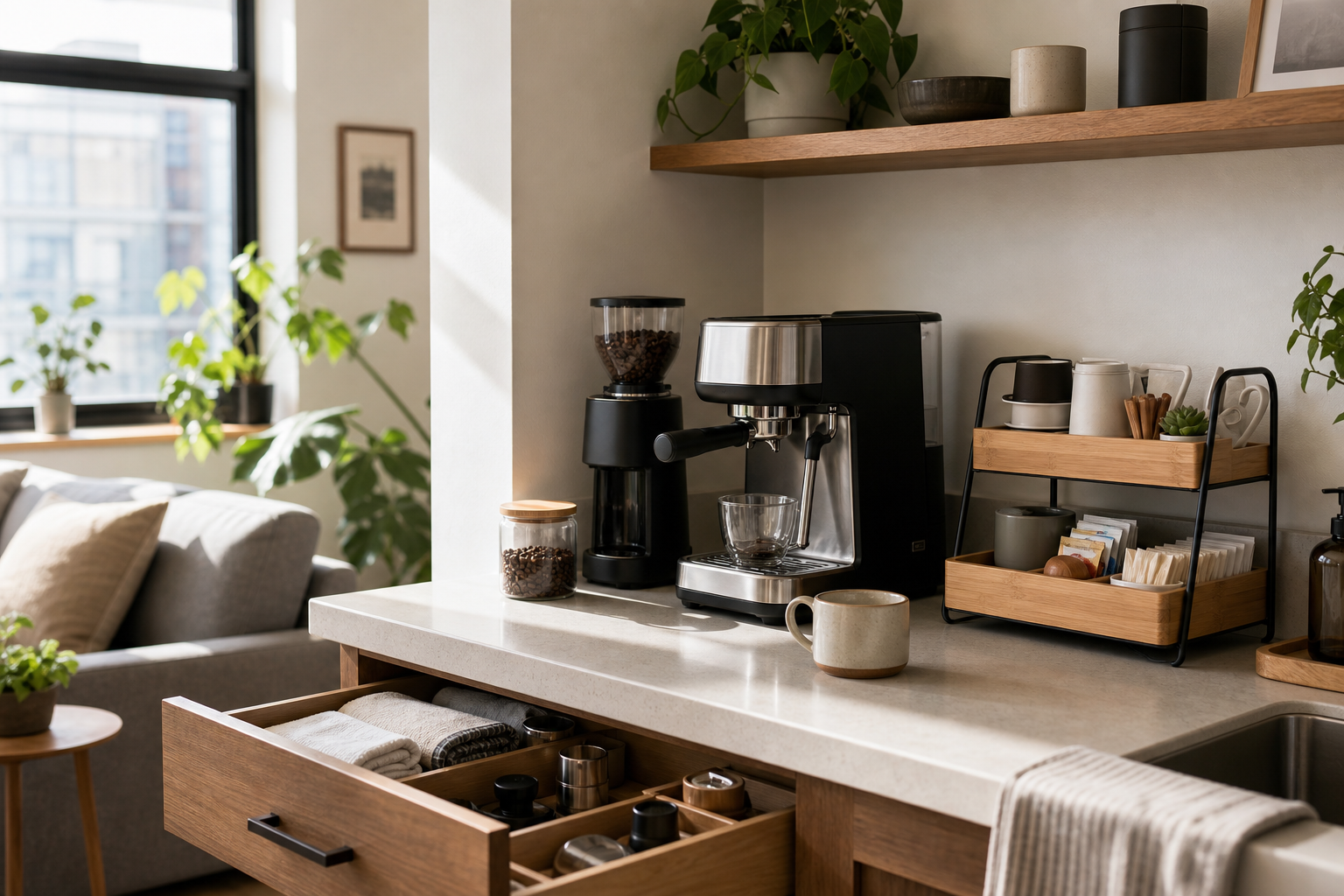
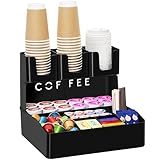
For a practical starter layout, the Lifewit 2-tier Coffee Station Organizer handles light counter supplies, the Breville Bambino is the compact espresso-machine reference point, the Baratza Encore ESP covers the separate grinder role, and the SpaceAid Bamboo Drawer Dividers turn one drawer into storage for towels, cleaning tablets, a scale, tamper, and other small tools.
If you are still choosing the gear itself, read this with the best coffee station organizers for small apartments, best compact espresso machines for small kitchens, and best burr grinders for beginner espresso.
Who This Guide Is For
This guide is for:
- apartment renters planning a small coffee corner
- small-kitchen users who need a daily routine, not a display shelf
- beginners choosing where a machine, grinder, beans, and tools should live
- latte and oat milk latte drinkers who need space for milk tools
- people who want a renter-friendly setup without drilling, plumbing, or built-ins
This guide is not for:
- commercial cafe layouts
- built-in cabinetry projects
- people with a full spare counter for a large home bar
- advanced espresso hobbyists building a multi-grinder station
- buyers looking only for decorative coffee bar signs and styling pieces
The Need Behind This Guide
The real problem is:
"I want a coffee bar in my apartment, but I do not want my kitchen to feel smaller or messier after I build it."
Small apartment coffee stations fail for a few predictable reasons:
- the machine is placed where the water tank is hard to refill
- the grinder is added after the setup already has no open counter space
- mugs, pods, beans, filters, towels, and cleaning supplies all live in one pile
- decorative shelves are bought before the daily workflow is tested
- the setup looks good when empty but has no landing spot for a used spoon, cup, or milk pitcher
- cleaning supplies are stored too far away, so maintenance gets skipped
This guide uses current Amazon and brand-page research plus small-space workflow logic. It is not based on hands-on testing. Treat the product picks as layout anchors, then confirm the latest Amazon seller, return policy, dimensions, selected color or size, price, and availability before buying.
Quick Picks for the Layout
| Pick | Setup role | Why it fits |
|---|---|---|
| Lifewit 2-tier Coffee Station Organizer | Counter organizer pick | Keeps light daily supplies visible without needing a full shelf |
| Breville Bambino | Compact machine pick | Shows the kind of narrow countertop machine that can fit beside a grinder |
| Baratza Encore ESP | Entry grinder pick | Gives espresso beginners a separate grinder path without a large all-in-one machine |
| SpaceAid Bamboo Drawer Dividers | Drawer and cleaning storage pick | Turns one nearby drawer into storage for tools, towels, and maintenance supplies |
Step 1: Choose the Right Spot
Pick the coffee bar location before you buy storage. The best spot has four things:
- a nearby outlet
- a reasonable path to the sink
- enough depth for the machine and cord
- enough open space in front for cups, tools, and cleanup
Do not place the machine where you have to slide it out every morning to fill the tank. Also avoid corners where the steam wand, grinder lid, or cabinet door cannot open properly.
For renters, a counter is usually safer than a narrow decorative table. Espresso machines and grinders need a stable surface. If you use a rolling cart, use it for storage and backup supplies unless the cart is clearly stable and rated for the load.
Step 2: Build Around One Daily Drink
Do not design the station for every possible drink. Design it for the drink you actually make most often.
If you drink espresso or Americanos, you need machine access, grinder access, a cup, a scale, and a simple wipe-down routine.
If you drink lattes, add space for a milk pitcher, frother or steam wand movement, and a sink path for rinsing milk tools right away.
If you use pods, you need pod storage and mug access more than a grinder zone.
If you make both espresso and drip coffee, keep the espresso workflow first and move backup brew gear into a drawer, cabinet, or cart.
Step 3: Keep the Counter for Active Work
The counter should hold only the items you touch every day. A small coffee bar can still feel roomy if the daily surface is clear.
A good espresso counter layout is:
- compact machine on one side
- grinder next to it or slightly behind it
- bean container or small bag near the grinder
- one landing spot for cup and scale
- small caddy only for light items used daily
The Lifewit organizer fits the light-supply role. Use it for pods, filters, sweetener packets, stirrers, tea bags, or a few cups. Do not load it with every accessory you own. If the caddy becomes full of spare parts, the station will look organized but feel crowded.
Step 4: Put Small Tools in a Drawer
Most apartment coffee bars need one organized drawer more than another visible shelf. A drawer is the best home for:
- scale
- microfiber towel
- cleaning tablets or descaler packet
- tamper
- WDT tool
- filters
- milk thermometer
- extra spoon
- spare gaskets or small parts
SpaceAid drawer dividers are useful because the compartments can change as your routine changes. A beginner might start with a towel, scale, and cleaning supply. Later, the same drawer can hold a tamper, dosing funnel, WDT tool, or milk pitcher.
Keep cleaning supplies labeled and separate from food items. Follow the machine manual before using any cleaning tablet, descaler, or detergent.
Step 5: Decide Whether the Grinder Lives Out
A grinder is usually worth a permanent spot if you make espresso often. Moving it in and out of a cabinet gets annoying fast, and espresso grind settings are easier to manage when the grinder is part of the daily station.
The Baratza Encore ESP is the grinder reference point here because it supports a beginner-friendly separate-machine setup. Current Amazon product information lists an espresso-focused dual-range adjustment system, and the Amazon page shows a compact upright size. The main tradeoff is that a separate grinder adds counter footprint and noise.
If you only make coffee on weekends, store the grinder in a cabinet and leave the machine area simpler. If you make espresso most mornings, give the grinder a real home and move decorative items away.
Step 6: Plan the Cleaning Path
A coffee bar is not finished until cleanup has a home. Put these items close enough that you will actually use them:
- microfiber towel
- brush or cleaning tool
- machine-specific cleaning supply
- small trash or puck disposal plan
- spot to dry the milk pitcher
- drawer section for spare filters and tablets
For milk drinks, rinsing immediately matters. Oat milk and dairy milk can dry onto pitchers, frother whisks, and steam wands. Keep the station close enough to the sink that rinsing does not feel like a separate chore.
For espresso, wipe the counter at the end of the routine. Grounds spread quickly in a small kitchen, and a clean station makes the next morning easier.
Step 7: Add Decor Last
Decor is not the enemy, but it should come after the workflow. A small framed print, tray, plant, or mug display can make the station feel finished. It should not block the water tank, cup space, or grinder.
Before buying decorative shelves, live with the setup for one week. Notice what moves, what gets wet, what needs rinsing, and which items never leave the drawer. Then add only the decor that supports the layout.
Where Each Product Fits
Lifewit 2-tier Coffee Station Organizer
Best for: Counter organizer pick
Why it fits:
This is the counter caddy role, not the whole coffee bar. Current Amazon research shows a two-tier, 10-compartment organizer format, which is useful for light daily items such as packets, pods, filters, stirrers, and cups.
Good fit if:
- you have loose small supplies on the counter
- you use pods, packets, tea bags, or filters
- you want one visible caddy instead of several small containers
- your counter has enough height under cabinets
Skip it if:
- your clutter is mostly espresso tools
- you dislike visible countertop storage
- you need storage for heavy gear
- your setup already has a clean drawer or cabinet system
Small-space note:
Use it only for items you touch often. Backup supplies belong in a cabinet, drawer, or cart.
Amazon check:
Check current Amazon seller, exact dimensions, selected color, return policy, price, and availability before buying.
Breville Bambino
Best for: Compact machine pick
Why it fits:
The Breville Bambino is the compact-machine example because current Breville materials list a narrow footprint and a fast heat-up workflow, and the Amazon page shows an apartment-friendly countertop size. It gives beginners an espresso machine anchor without moving into a large all-in-one setup.
Good fit if:
- you want espresso or milk drinks in a small kitchen
- you can leave a narrow machine on the counter
- you plan to pair the machine with a separate grinder
- you want a no-plumbing renter-friendly setup
Skip it if:
- you want fully automatic milk
- you have no room for a grinder, scale, or cleaning supplies
- you want a machine with a built-in grinder
- you do not want to learn espresso basics
Small-space note:
Leave room beside the machine for the portafilter, cup, milk pitcher, and towel. A compact machine still needs working space.
Amazon check:
Check current Amazon seller, exact model, color, dimensions, included accessories, return policy, price, and availability before buying.
Baratza Encore ESP
Best for: Entry grinder pick
Why it fits:
The Baratza Encore ESP is the separate grinder role for beginners who want espresso control. Current Amazon product information highlights a dual-range adjustment system for espresso and filter brewing, plus quick-release burr access for easier maintenance.
Good fit if:
- you want to grind fresh coffee for espresso
- you have room for one upright grinder
- you want a grinder that can also handle non-espresso brew methods
- you prefer separate machine and grinder upgrades
Skip it if:
- grinder noise will be a major apartment issue
- you have no counter or cabinet spot for it
- you want a premium single-dose espresso grinder
- you mostly use pods or pre-ground coffee
Small-space note:
Place the grinder where you can open the hopper, remove the dosing cup, and wipe grounds without bumping the machine.
Amazon check:
Check current Amazon seller, exact model, selected color, included dosing cup, return policy, dimensions, price, and availability before buying.
SpaceAid Bamboo Drawer Dividers
Best for: Drawer and cleaning storage pick
Why it fits:
The SpaceAid dividers are the hidden-storage pick. Current Amazon research shows adjustable dividers, inserts, and labels. That makes them useful for a coffee drawer that needs to hold tools now and different tools later.
Good fit if:
- you have one drawer close to the coffee station
- you want to hide towels, filters, cleaning supplies, and tools
- you need flexible compartments rather than one fixed tray
- you want labels for maintenance items
Skip it if:
- your drawer does not fit the divider length range
- you want a shallow tray for tiny parts
- you cannot measure the drawer before buying
- you prefer everything visible on the counter
Small-space note:
Measure the inside of the drawer before checkout. A drawer divider that almost fits is still a bad buy.
Amazon check:
Check current Amazon seller, selected size, selected color, length range, return policy, price, and availability before buying.
Three Small-Apartment Layouts
The one-counter setup
Use this when you have a short but usable counter section.
- machine on the counter
- grinder beside the machine
- beans in a small container or bag near the grinder
- caddy for filters, pods, or packets only if needed
- drawer for tools and cleaning supplies
This is the best setup for people who make espresso most mornings.
The cabinet-and-drawer setup
Use this when the counter is tiny.
- machine stays out
- grinder comes out only when needed
- tools live in a divided drawer
- beans stay in a cabinet away from heat and steam
- cleaning supplies stay labeled in the same drawer or nearby cabinet
This is less convenient, but it keeps the kitchen calmer.
The renter cart setup
Use this when you have floor space but not counter space.
- machine and grinder stay on a stable counter when possible
- cart holds backup beans, filters, mugs, towels, and cleaning supplies
- top cart shelf can hold light daily items
- heavy appliances do not go on the cart unless the cart is clearly suitable
This is useful when the apartment has one awkward kitchen wall or no spare cabinet space.
Common Mistakes
Buying storage before choosing the workflow. The organizer should solve a real problem, not create a prettier version of the same clutter.
Using every inch of counter space. Leave an open landing spot. Coffee making needs movement.
Forgetting the water tank. A machine that fits visually may still be annoying if you cannot refill it easily.
Putting cleaning supplies too far away. If the towel, brush, or cleaner lives in another room, the station will get messy.
Making the station too decorative. Mugs, plants, trays, and signs are fine, but they should not block the machine, grinder, or sink path.
Buying a grinder with no place to use it. A separate grinder is valuable for espresso, but it needs space to open, dose, and clean.
FAQ
How much space do I need for a small apartment coffee bar?
You need enough stable counter space for the machine, a cup or scale in front, and room to access the water tank. If you use a grinder, plan a separate spot for it instead of squeezing it into leftover space.
Can I build a coffee bar without drilling shelves?
Yes. Use a counter zone, drawer dividers, cabinet storage, or a movable cart. Renters should avoid permanent changes unless the lease clearly allows them.
Should the grinder sit next to the espresso machine?
If you make espresso often, yes. It makes the routine faster and cleaner. If you make espresso only occasionally, you can store the grinder nearby and bring it out when needed.
What should stay on the counter?
Keep the machine, grinder, and one or two daily-use items on the counter. Store backup pods, filters, cleaning supplies, extra mugs, and rarely used accessories in a drawer, cabinet, or cart.
Where should cleaning supplies go?
Keep them close but separated from food and drink items. A labeled drawer section works well for towels, brushes, cleaning tablets, and descaler packets. Always follow your machine manual.
Do I need a rolling cart?
Only if you have floor space and not enough cabinet or counter storage. A cart is best for backup supplies and light daily items, not necessarily for heavy machines.
What should I buy first?
Buy the machine and grinder plan first, then storage. If you buy organizers before knowing what gear you use daily, you may choose the wrong size or layout.
What can wait?
Decorative shelves, mug trees, syrup racks, extra trays, and backup accessory kits can wait. Build the daily routine first, then add style.
Disclosure
Apartment Barista uses Amazon affiliate links. As an Amazon Associate, this site earns from qualifying purchases. Prices and availability can change at any time and should be checked on Amazon before buying.