Quick Verdict
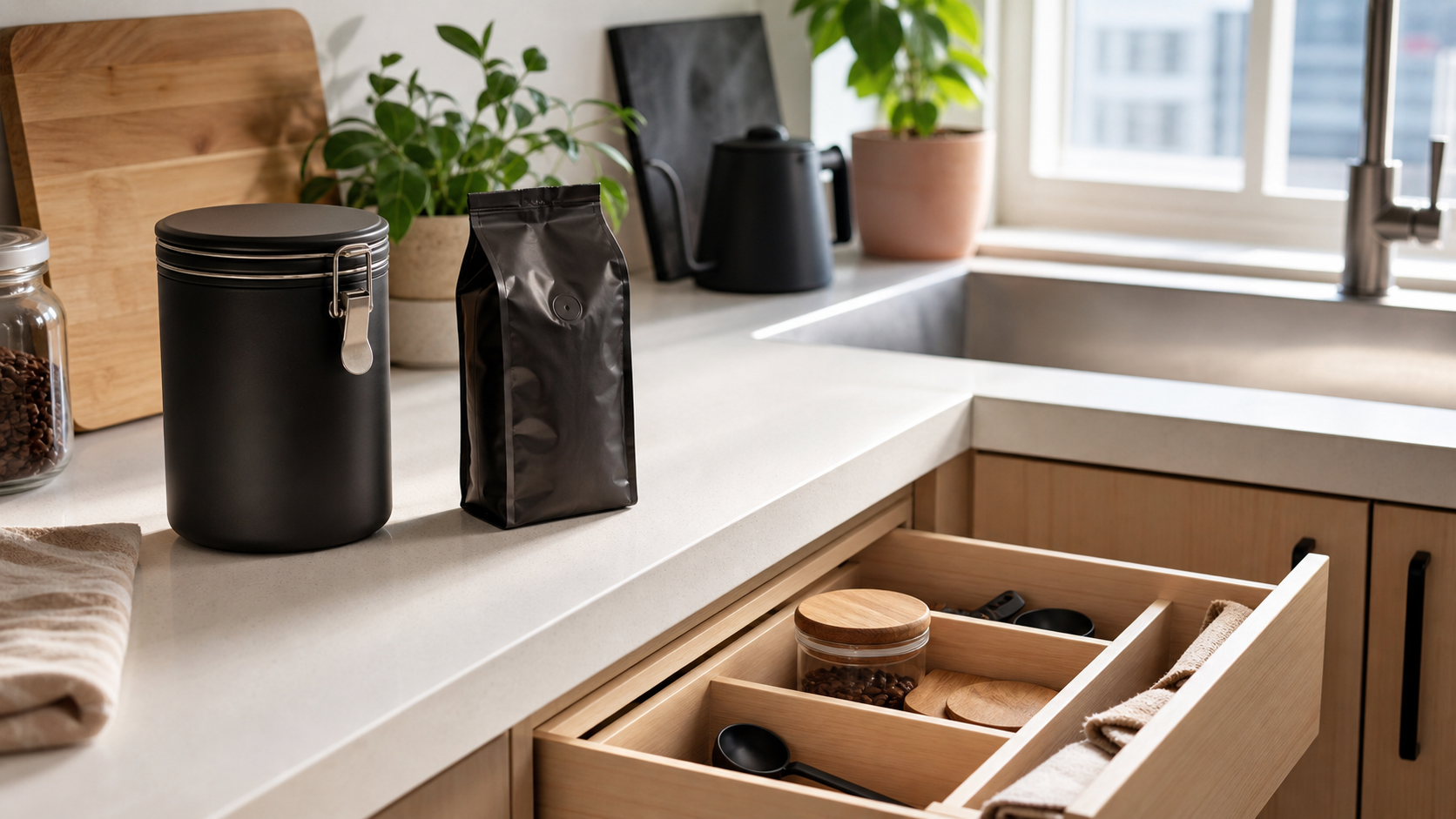
If your apartment kitchen is humid, the best bean-storage upgrade is usually a better location before a better container. Keep the current beans in a sealed bag or airtight container, then put that coffee in the coolest, driest, darkest cabinet or drawer you can actually reach every morning.
The worst spots are usually the convenient ones: beside the sink, above the dishwasher, next to the stove, on top of a warm espresso machine, or in a clear jar on a sunny counter. Humidity, heat, light, and repeated opening all work against the flavor you paid for.
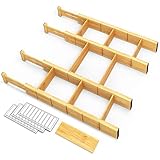
For a simple product path, the OXO Steel POP Coffee Container with Scoop is the daily airtight-container pick, and SpaceAid Bamboo Drawer Dividers are the drawer-organization pick when your best dry storage is a drawer instead of a counter. The third "product" is not another gadget: buy smaller bags often enough that the coffee is used before it becomes a forgotten backup bag.
Apartment Barista uses Amazon affiliate links. As an Amazon Associate, this site earns from qualifying purchases. Prices, sellers, return terms, product details, and availability can change, so check the current Amazon page before buying.
If you want the broader version of this topic, start with how to store coffee beans in a small kitchen. For layout help, read best coffee station organizers for small apartments and single-dose espresso workflow for small apartments.
Who This Guide Is For
This guide is for:
- apartment renters in humid climates or damp kitchens
- small-kitchen users whose coffee has to live near a sink, stove, window, or dishwasher
- espresso beginners buying whole beans for a grinder
- readers with no pantry and only one or two usable drawers
- people deciding whether a canister, drawer, or smaller bag habit matters most
This guide is not for:
- commercial cafe storage
- green coffee storage
- long-term emergency storage
- readers who already freeze single-dose portions carefully
- anyone looking for decorative coffee-bar jars first and daily freshness second
The Humid-Kitchen Storage Rule
Use this order:
- Pick the driest location first.
- Keep beans sealed there.
- Buy a bag size you can finish without turning coffee into pantry clutter.
- Clean the container before adding a different coffee.
The container helps, but it does not fix a bad location. A nice canister sitting beside steam, a sunny window, or a hot appliance is still a weak storage plan.
Current public coffee-storage guidance keeps returning to the same enemies: air, moisture, heat, and light. In a humid apartment, moisture and location deserve extra attention because the coffee station is often squeezed between a sink, dishwasher, stove, and window.
Quick Picks
| Pick | Best for | Why it fits |
|---|---|---|
| OXO Steel POP Coffee Container with Scoop | Airtight daily bean container | A simple tinted container for one current bag when the original bag does not close neatly. |
| SpaceAid Bamboo Drawer Dividers | Dry drawer organization | Helps turn one nearby drawer into zones for bean bags, clips, filters, towels, and small tools. |
| Smaller whole-bean bags | Humid-apartment buying rhythm | Reduces the amount of open coffee sitting around a damp or warm kitchen. |
Do not treat this table as a fixed-price shopping list. Check current Amazon price, seller, exact size, dimensions, care instructions, return policy, and availability before buying.
Apartment Fit Checks
Before buying another storage product, check your kitchen in this order:
- Find the sink splash zone. Do not keep daily beans where wet dishes, hand washing, or pitcher rinsing can reach them.
- Find the heat zone. Avoid the stove, toaster oven, dishwasher vent, sunny window, and the top of the espresso machine.
- Open the candidate drawer or cabinet for 30 seconds. If it smells like cleaners, onions, trash bags, or strong spices, choose another spot.
- Measure the cabinet or drawer height before buying a container or dividers.
- Check whether the storage spot is still convenient when the grinder, scale, mug, and portafilter are out.
- Decide where the scoop, bag clip, and backup bag will live so the counter does not become the backup pantry.
The right answer may be boring: a resealed coffee bag inside a dry drawer can be better than a beautiful jar on a humid counter.
Product Examples
OXO Steel POP Coffee Container with Scoop
Best for: airtight daily bean container
Why it fits this need:
The OXO Steel POP Coffee Container is the daily container example because current Amazon-facing information shows a tinted body, airtight lid design, and included scoop. For a humid apartment kitchen, that is useful only if the container goes into a dry, dark, cool spot.
Good fit if:
- your coffee bag does not reseal cleanly
- you want one tidy home for the current beans
- your best storage spot is a shaded counter, cabinet, or drawer
- you want the scoop stored with the container
- you buy roughly one current bag at a time
Skip it if:
- your current coffee bag reseals well and already fits in a dry drawer
- you buy large bulk bags that will not fit
- you want a vacuum-style canister
- you will keep it next to steam, sun, or stove heat
- you do not want to handwash the lid if the current care instructions still require it
Small-space notes:
Measure shelf height and door swing before buying. A container can technically hold coffee and still be annoying if it blocks the grinder, crowds the cabinet, or has to be moved every morning.
Tradeoff:
This is organization plus basic airtight storage, not a guarantee that old beans will taste fresh. If your kitchen is humid, location and bag size still matter.
Amazon check:
Check current Amazon seller, exact OXO model, capacity, dimensions, lid care instructions, return policy, price, and availability.
SpaceAid Bamboo Drawer Dividers
Best for: dry drawer organization
Why it fits this need:
The SpaceAid dividers are useful when the best bean-storage spot is not the counter. Current Amazon-facing information shows adjustable dividers with inserts and labels, which can help one drawer hold bean bags, clips, filters, scoops, and small espresso tools without spreading them across a damp counter.
Good fit if:
- you have one dry drawer near the coffee station
- you keep resealable bags instead of a canister
- you want backup bags and clips off the counter
- you also need a place for filters, cloths, or small espresso tools
- your drawers are deep enough for dividers and coffee bags
Skip it if:
- your drawer is shallow, warped, damp, or hard to open
- you need airtight protection more than organization
- you store cleaners or strong-smelling food in the same drawer
- you dislike measuring organizers before buying
- you do not have a realistic drawer near the coffee routine
Small-space notes:
Measure drawer length, width, and height. Also test whether the drawer still closes when a coffee bag stands, folds, or lies flat inside it.
Tradeoff:
Drawer dividers do not protect coffee from air by themselves. Pair them with a tightly closed bag or an airtight container if freshness is the main problem.
Amazon check:
Check current Amazon seller, exact divider count, drawer-size range, selected color, included inserts, labels, return policy, price, and availability.
The Small-Bag Buying Rhythm
In a humid apartment, storage is also a shopping habit.
If you buy more coffee than you can use comfortably, every storage decision gets harder:
- the bag stays open longer
- backup bags compete with food storage
- the counter becomes a holding area
- old beans mix with new beans
- the container may need cleaning more often
For most beginners, the easier rhythm is one current bag plus one optional backup bag. If the backup bag makes your only dry cabinet crowded, skip the backup and buy more often.
Do not use this article to decide a fixed freshness deadline. Roast date, packaging, grind timing, humidity, storage location, and your taste all matter. The practical point is simpler: smaller amounts are easier to store well in a tiny humid kitchen.
What I Would Do First
First, move the beans away from water, heat, and sun. That costs nothing.
Second, keep the beans in the original resealable bag if it closes well. Put that bag in a dry cabinet or drawer.
Third, buy one airtight container only if the bag is messy, does not close well, or makes the station hard to use.
Fourth, organize the drawer if coffee supplies are spreading across the counter. In a humid apartment, a calm dry drawer often beats visible counter storage.
Fifth, stop buying large backup bags until you know your real weekly coffee use.
Common Mistakes
Putting beans beside the sink because the grinder is nearby. Convenience is useful, but wet zones are a poor storage default.
Using the top of the espresso machine as a coffee shelf. Machines can be warm, wet, and crowded during the daily routine.
Choosing a clear jar because it looks clean. If the jar sits in strong sun, the display is working against the coffee.
Buying a vacuum canister before fixing the location. More expensive storage cannot rescue beans from heat, light, moisture, and old coffee oils.
Keeping beans near cleaners or strong-smelling foods. Coffee can pick up odors, so the dry drawer also needs to be a clean-smelling drawer.
Buying a large bulk bag because it feels efficient. In a tiny humid kitchen, bulk can turn into stale clutter.
FAQ
Is humidity really a problem for coffee beans?
It can be. Coffee storage guidance commonly warns against moisture, and humid apartments make moisture harder to avoid. The practical move is to keep beans sealed and away from sinks, dishwashers, wet towels, and steam.
Should I store coffee beans in the refrigerator?
For daily use, usually no. Opening a cold container repeatedly can add condensation risk and odor problems. A cool, dark, dry cabinet or drawer is simpler for most apartment beginners.
Is the original coffee bag good enough?
Sometimes, yes. If the bag reseals tightly and fits in a dry, dark spot, start there. Buy a container when the bag does not close well, leaks beans, or makes the counter messy.
Should I buy a vacuum canister?
Not first. A vacuum canister can make sense for some people, but beginners should fix location, bag size, and sealing habits before buying a more complicated container.
Where should beans go if every cabinet is near the stove?
Look for a lower drawer, a shaded shelf away from the cooking zone, or a dry storage bin near the coffee setup. If the kitchen is truly cramped, buy smaller bags so the daily coffee does not need a large permanent home.
Can I keep beans next to the grinder?
Yes, if that spot is cool, dry, dark, and away from steam. If the grinder sits beside the sink or stove, keep the beans in a drawer or cabinet and move only the dose or bag when you brew.
Disclosure
Apartment Barista uses Amazon affiliate links. As an Amazon Associate, this site earns from qualifying purchases. Prices, sellers, return terms, product details, and availability can change at any time and should be checked on Amazon before buying.