
Quick Verdict
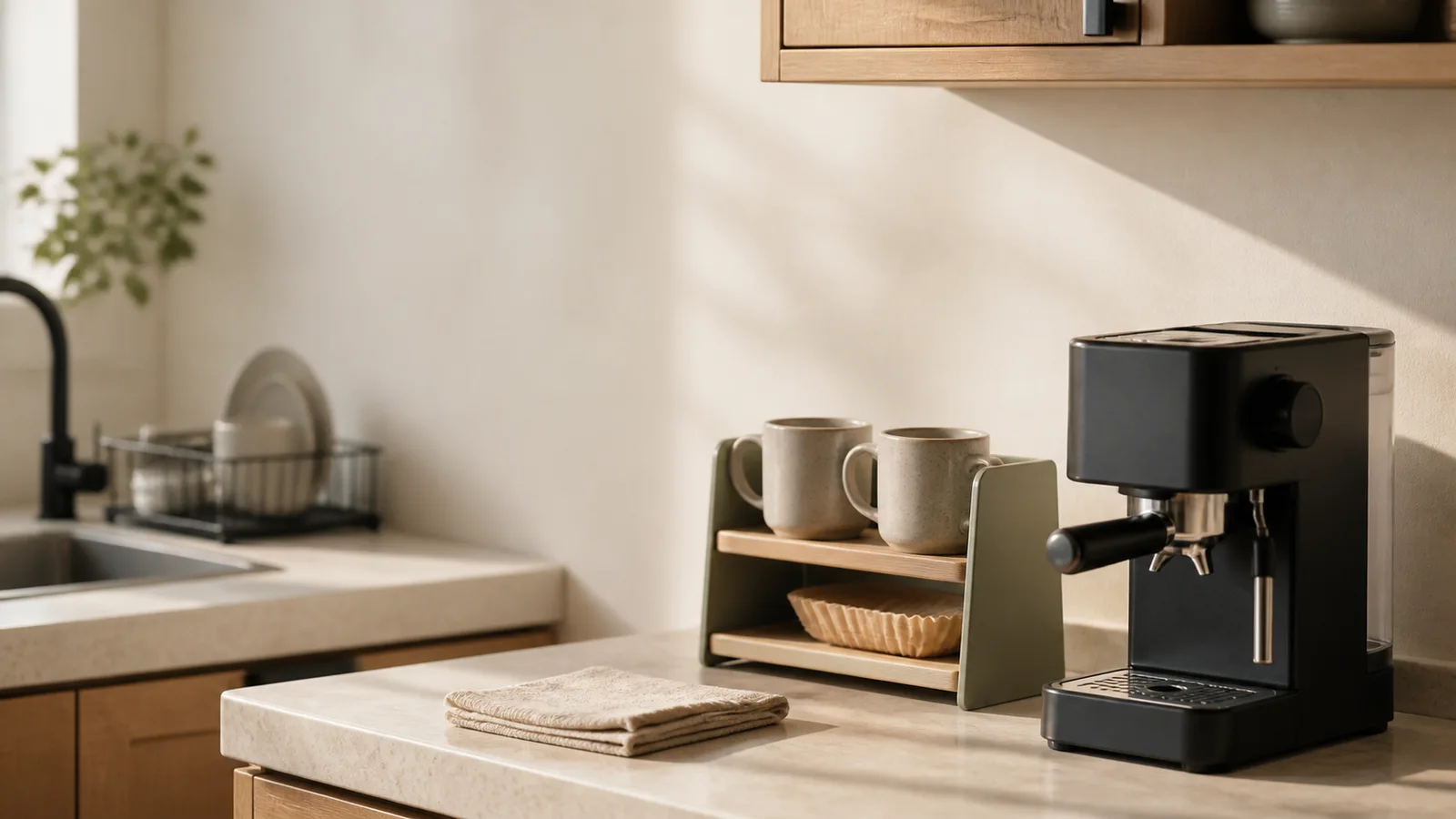
Put the two mugs you use most often close to the coffee routine, but do not turn the espresso prep area into mug storage. In a small apartment, the useful decision is usually daily mugs within one reach, backup mugs elsewhere, and a clear route from machine to sink.
Who This Guide Is For
This guide is for an apartment coffee drinker whose mugs are taking over a narrow counter, a shared shelf, or the space beside a compact espresso machine. It is especially useful if you make one or two drinks at a time and want cups ready without moving the grinder, blocking the drip tray, or piling clean mugs near wet tools.
Skip this guide if you have a deep cabinet that already holds your everyday mugs comfortably, or if the real problem is that your machine, grinder, and sink workflow do not fit the counter at all. In that case, start with a full setup measurement rather than another organizer.
What Usually Goes Wrong
A mug collection often expands into the only usable prep zone. Cups end up behind the grinder, on top of a damp dish towel, or stacked where they must be moved before every drink. The result is not just visual clutter: it adds extra handling to a routine that already includes dosing, brewing, rinsing, and putting wet parts aside.
A small coffee corner works better when it has three distinct zones:
- Dry daily-use zone: one or two clean mugs plus light supplies.
- Prep zone: clear space for the portafilter, scale, and cup during brewing.
- Wet reset zone: a sink-side place for rinsed cups and parts to dry, kept away from beans and grinder cleanup.
Choose the Mug Location Before You Buy Storage
| Question | Why it matters in a small kitchen | What to check |
|---|---|---|
| How many mugs are used daily? | Storing every mug at the station wastes prep space | Count the mugs used on a normal weekday |
| Is the surface stable and dry? | Cups need a steady home away from brewing and wet cleanup | Check the organizer base, counter edge, and nearby steam or splash zone |
| Can you still remove the water tank and drip tray? | A cup organizer must not block machine maintenance | Test the full open-and-remove path before assigning a spot |
| Where do rinsed mugs dry? | Clean storage and wet tools should not merge | Keep a separate sink-side drying route |
A Simple Small-Station Layout
Start with the smallest version that solves the problem. Keep the mug you are using on the brew scale or tray only while making the drink. Afterward, move the rinsed mug to the sink-side drying route and return it to the dry zone only when it is clean and dry.
If you use a countertop organizer, reserve it for light daily supplies and a limited number of cups. Do not treat a compact caddy as a platform for an espresso machine, grinder, or other heavy appliance. Measure its full height if it will sit below a cabinet, and leave a hand-width of clear access around the machine controls and water tank.
Shortlist and Tradeoffs
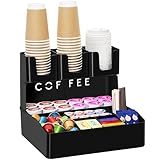
Lifewit 2-tier Coffee Station Organizer
Best for: a reader who needs a visible home for a small rotation of cups and light coffee supplies, not a full cabinet.
The two-tier, multi-compartment format makes sense when cups, packets, filters, and stirrers are scattered across a short counter. Its tradeoff is that visible storage can look crowded quickly. Use only the compartments that preserve your brewing area, and skip it if the organizer footprint would force cups into the machine-service or wet-cleanup zone.
Before buying, confirm the current listing, exact dimensions, selected color, seller, return terms, and availability.
Amazon Basics Microfiber Cleaning Cloths
Best for: the low-clutter reset step before buying more storage.
A small rotation of dedicated cloths can be more useful than a larger organizer when the mugs are not the real cause of the mess. Use a clean, dry cloth for ordinary counter and grinder dust; follow the exact machine manual for steam-wand and machine-specific care. The tradeoff is simple: cloths only help when they are washed, dried, and kept separate from the clean-mug zone.
Skip this as a storage solution if you need a stable place for cups. Buy later only if your existing cloth routine is genuinely failing.
What Not to Buy Yet
Do not buy a large mug rack, rolling cart, or wall-mounted solution just because two cups are on the counter. First test whether a cabinet shelf plus a one-mug daily zone solves the problem. Add a compact organizer only when you can name the items it will hold and show that it leaves the brewing and cleanup routes clear.
Before You Buy
- Count the mugs used on a normal day; store the rest away from the coffee station.
- Measure the counter footprint and the full height under any cabinet.
- Confirm that water-tank, hopper, drip-tray, portafilter, and cord access remain unobstructed.
- Check the current Amazon seller, dimensions, materials, return terms, price, and availability.
- Keep cups and dry supplies away from the sink-side drying area and follow your machine manual for cleanup.
Final Recommendation
For most small espresso kitchens, the best mug storage is modest: keep only the daily rotation close by, protect the clear prep zone, and give wet cups a separate reset path. A compact coffee-station organizer is worth considering only when it makes that routine easier without becoming more counter clutter.