

Quick Verdict
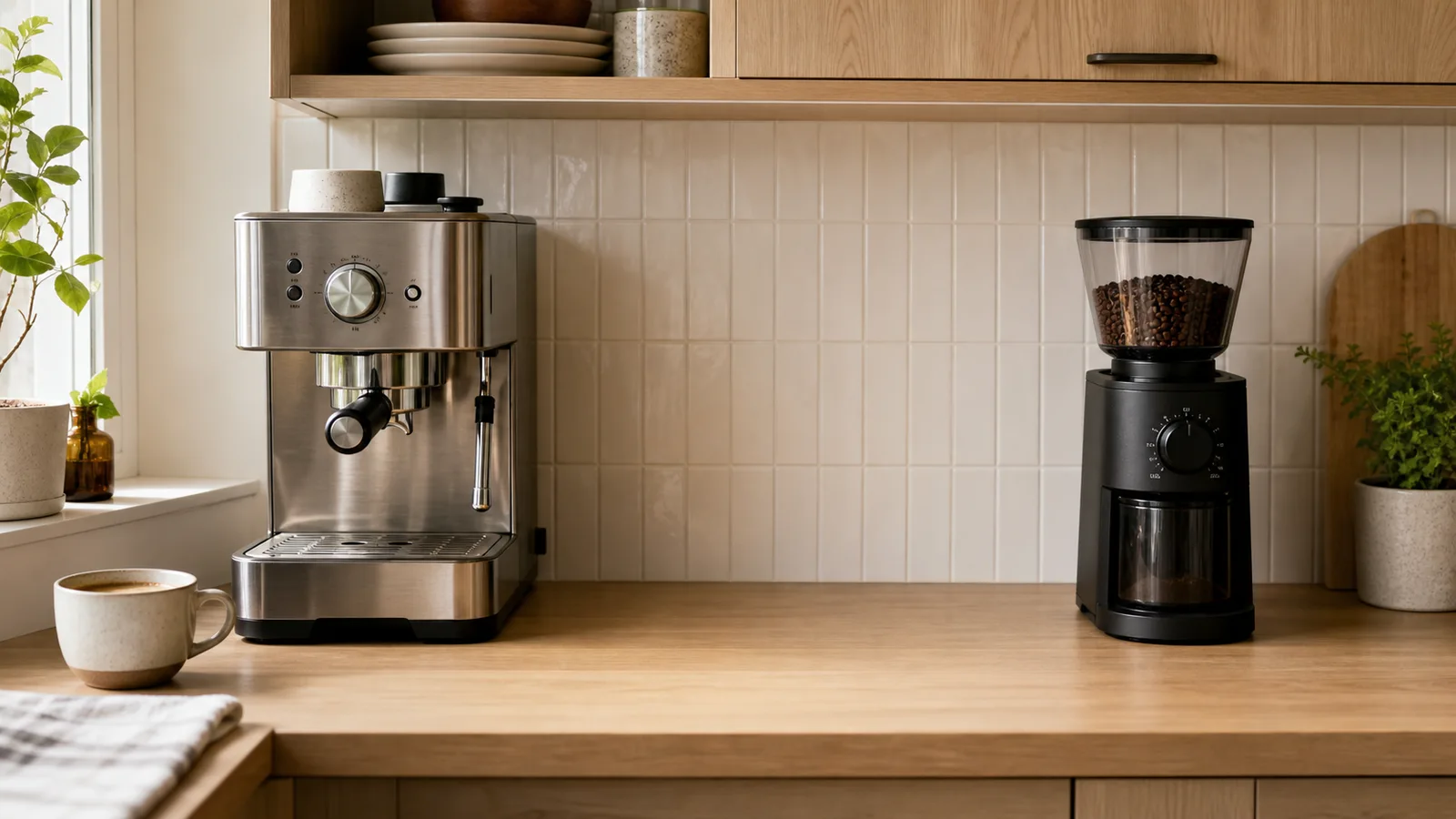
Choose an all-in-one machine with a built-in grinder when one clearly defined counter spot, one everyday bean, and fewer separate objects matter more than changing one part of the setup later. Choose a compact machine plus a separate espresso-capable grinder when you can give each item a real home and want more flexibility to improve, repair, or rearrange one part without replacing the other.
For most small apartments, the decision is not simply which option has the smaller number on a spec sheet. Measure the whole working zone: where beans go in, where the portafilter locks in, where you tamp, where a cup and scale sit, and where you wipe up grounds.
Who This Guide Is For
This guide is for a beginner who wants milk drinks or espresso at home but has a narrow counter, a shared kitchen, or a desire to avoid buying a pile of equipment at once. It is especially useful if you are choosing between an integrated-grinder machine and a compact brewer paired with a separate grinder.
Skip this comparison if you only want a one-button drink with no grinding or puck-prep routine. A capsule or fully automatic workflow may be the more honest starting point for that goal.
What Usually Goes Wrong
A built-in grinder can look like the obvious space saver because it combines two appliances. But the full machine may still need a wider prep area, clearance to add beans, room to remove a water tank or drip tray, and a stable place for a towel and knock-box routine.
The opposite mistake is treating a compact machine and compact grinder as two tiny items that can live anywhere. They need a deliberate order of use. If you cannot comfortably dose, tamp, brew, steam, and clean without stacking gear in the sink, the separate setup is not actually low-clutter.
How to Choose
| Decision factor | Why it matters in a small space | What to verify |
|---|---|---|
| One fixed counter spot | An integrated machine keeps the grinder and brewer together, but the whole unit still needs service and prep clearance. | Full width, depth, height, water access, bean-loading room, and cable route. |
| Two workable zones | Separate gear can be easier to move, store, or upgrade, but only if each item has a safe, dry home. | Grinder height, dosing-cup access, tamping area, and whether the setup blocks normal kitchen prep. |
| Your daily bean routine | A hopper suits a stable routine; frequent regular/decaf switching can create extra emptying and dialing-in work. | Hopper workflow, retention guidance, and whether you will realistically keep a second container or grinder. |
| Cleanup and repairs | Milk residue, grounds, and routine maintenance do not disappear because a grinder is built in. | Current manuals, removable parts, cleaning instructions, warranty, and local repair options. |
Shortlist and Tradeoffs
Built-in grinder route: Breville Barista Express
The Barista Express is a research candidate for the reader who genuinely needs a single, permanent coffee station and is ready to learn a hands-on portafilter and steam-wand workflow. Its integrated conical burr grinder can reduce the number of separate appliances on the counter. That convenience is most useful when you expect to keep one main bean in the hopper and want one repeatable weekday station.
The tradeoff is that an integrated layout links your grinder and machine decisions. Do not assume it will fit just because its width looks manageable: check the full depth, top clearance, water access, and the area you need in front for tamping and cleanup. Skip or buy later if you know you want to experiment with different grinders, frequently switch beans, or need the machine and grinder stored in separate places.
Separate brewer route: Breville Bambino
The Breville Bambino is the compact brewer reference for a staged setup. It can make sense when you want the machine's counter footprint to stay modest and you prefer to choose a grinder separately. A staged path can also be more realistic for a beginner who starts with the included basket path and decides later whether a fresh-bean espresso routine is worth the extra space and daily work.
A small brewer does not remove the need for a grinder if you want to use fresh beans for non-pressurized espresso. Skip this route if you have no honest place for a grinder, scale, or tamping step. Check the exact model, included baskets, water access, milk workflow, and current manual before buying.
Separate grinder route: Baratza Encore ESP
The Baratza Encore ESP is a relevant separate-grinder candidate because its espresso-focused adjustment range and dosing-cup workflow make the grinder a distinct part of the setup rather than an afterthought. That separation can be helpful if a future change to your grinder, machine, or bean routine should not force you to replace everything together.
The tradeoff is vertical space and an additional counter task. Baratza's current dimensions and hopper workflow should be checked against your cabinets, not just against an empty counter. Skip or delay it if manual grinding, bean storage, dialing in, and cleanup would make your mornings less manageable; a simpler coffee routine is better than equipment you avoid using.
A Small-Kitchen Workflow That Actually Fits
- Decide whether the setup lives in one permanent spot or needs to be put away after use. A fixed all-in-one station can be simpler; a separate setup needs a repeatable storage route.
- Measure the work triangle, not only the appliance body: bean loading, dosing, tamping, brewing, milk preparation, rinsing, and drying.
- Keep one clean, dry cloth nearby for grounds and water. Keep used milk cloths out of the clean dosing area.
- If you use one hopper, keep the bean routine simple. If you switch between regular and decaf, plan where the second bean container, remaining grounds, and changing grind setting will go before buying.
- Read the current manufacturer instructions for water, cleaning, steam-wand care, and permitted removable parts.
What Not to Buy Yet
Do not add a bottomless portafilter, large accessory kit, second hopper, or extra storage cart just to make the first setup feel complete. Start with the machine-and-grinder choice, a way to measure and repeat your coffee when you are ready, and a cleanup routine you can maintain. Add a second bean solution only after regular/decaf switching is a real repeated problem.
Before You Buy
- Confirm the exact model, seller, return terms, current price, and availability on Amazon.
- Compare total machine or machine-plus-grinder dimensions with your counter, cabinets, outlet, sink route, and normal food-prep space.
- Read the current manufacturer manuals before assuming included baskets, cleaning steps, or hopper access are the same across versions.
- Decide whether you want a single-bean convenience station or the flexibility to change one component later.
Final Recommendation
If your apartment has one reliable coffee corner and you value a unified routine, an integrated-grinder machine can be a sensible first station. If you can support two deliberate work zones and want your grinder choice to remain independent, a compact brewer plus a separate espresso grinder is usually the more adaptable path. In either case, buy for the routine you can repeat and clean, not for a crowded countertop fantasy.